
Meet Phillip Reed

1916 – First Shop Force: Lewis Reed, (first name unknown) Long and Phillip Reed
Reed Brothers Dodge started Sales and Service operations in 1915 with a handful of key employees. Phillip Reed was a brother of Lewis Reed and a part of the dealership’s first work force. Phillip came to work for the dealership in 1916 as a mechanic until 1944. He was an original incorporator and charter member of the Rockville Volunteer Fire Department when the fire company was organized on March 9, 1921.

Phillip Reed
108 Years Ago at Rockville High School

1911 Originally known as Montgomery County High School, later as Rockville High School. Photo by Lewis Reed
In honor of this year’s commencement, here is a look back at some 1910 class photos from Montgomery County High School that were taken by Lewis Reed. This is a collection of group photos of school children, some with the teacher, taken in 1910 from Montgomery County High School (Old Rockville High School). I wanted to share these photographs, because they offer a visual history of a part of Rockville’s past taken more than 100 years ago.
Most of the photos are labeled with only the year, so if you have corrections to the names or can identify other individuals, please contact me or leave a comment below. Several students have been identified by the Montgomery County Historical Society, which I have included.
In this era, students from grades one through eleven attended the public school at Montgomery Avenue and Monroe Street. Named Montgomery County High School with the addition of upper grades in 1892, as the school board opened other facilities it became Rockville High School and then, in 1935, Richard Montgomery High School. Students came to the school by train, trolley, and later by school bus from all corners of the county.
Step back in time into a much simpler past and get a look at class photos of Rockville High School students from over 108 years ago. As always, click the photos to get a better look. Some of the expressions on these students faces are priceless!
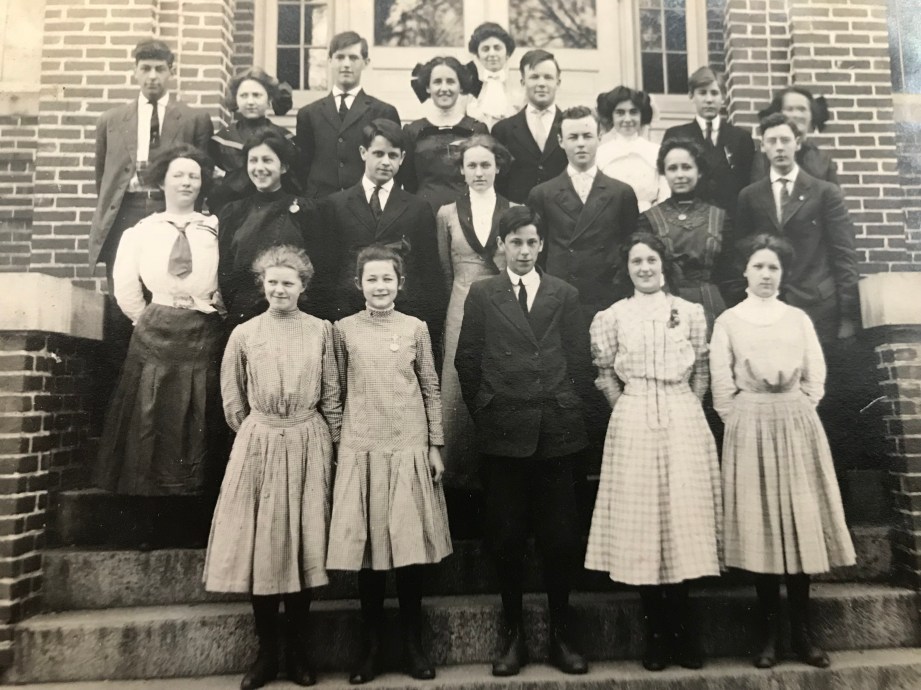
Old Rockville High School class c. 1910. Photo by Lewis Reed
Back row: Edward Story, Lena Ricketts, Tom Young, Louise Larcombe, Miss Ford, Fred Hays, Lucius Lamar, name unknown, name unknown.
Middle Row: name unknown, name unknown, Jesse Wathen, Jesse Higgins, name unknown, name unknown, Mary Hyatt, name unknown, name unknown.
Front Row: Maude England, Rebecca Lamar, (first name unknown) Garrett, Helen Pumphrey, (first name unknown) Lehman.
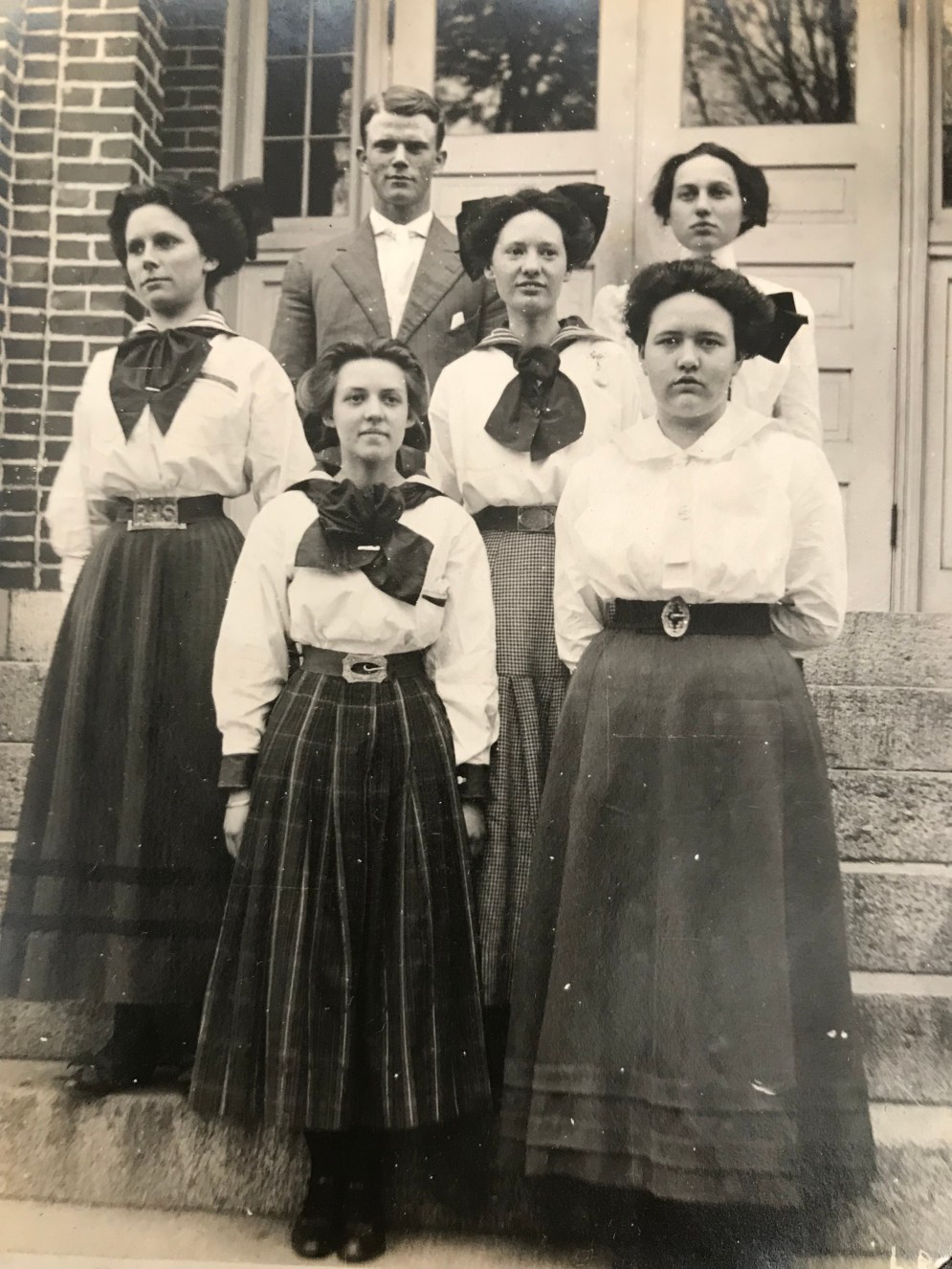
Old Rockville High School graduates 1910. Photo by Lewis Reed
Back: Harry Beall, Katherine Hughes.
Middle: names unknown
Front: Edith Prettyman, (first name unknown) Darby

Old Rockville High School First Baseball Team 1910. Photo by Lewis Reed
Front: Billy Beck, Tom Young, Ed Storey, Harry Beall, Roy Warfield.
Back: (first name unknown) Hicks, Lucius Lamar, name unknown, name unknown, Jesse Higgins, name unknown, name unknown, Fred Hays, Roger Whiteford.
Holding pennant: Griffith Warfield
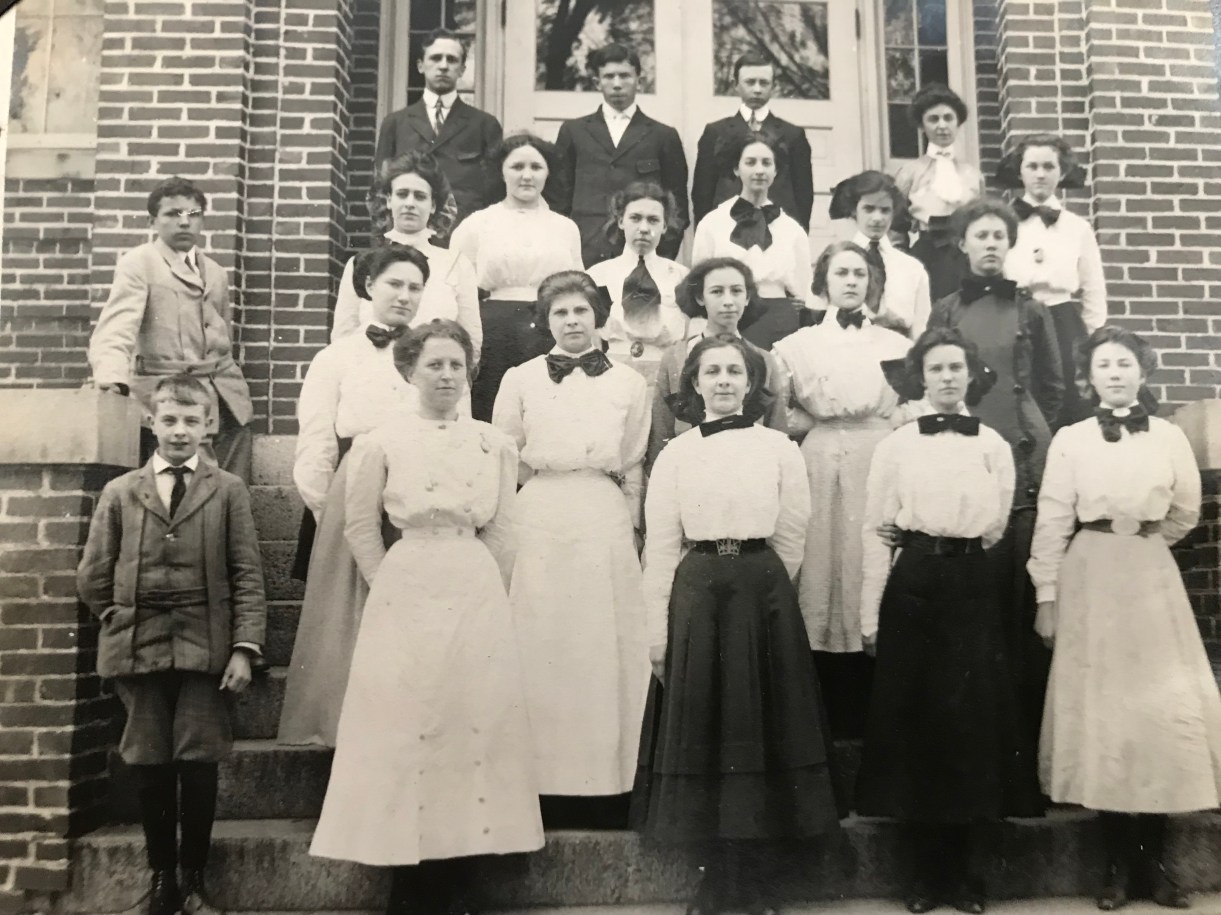
Montgomery County High School 1910

Montgomery County High School 1910

Montgomery County High School 1910
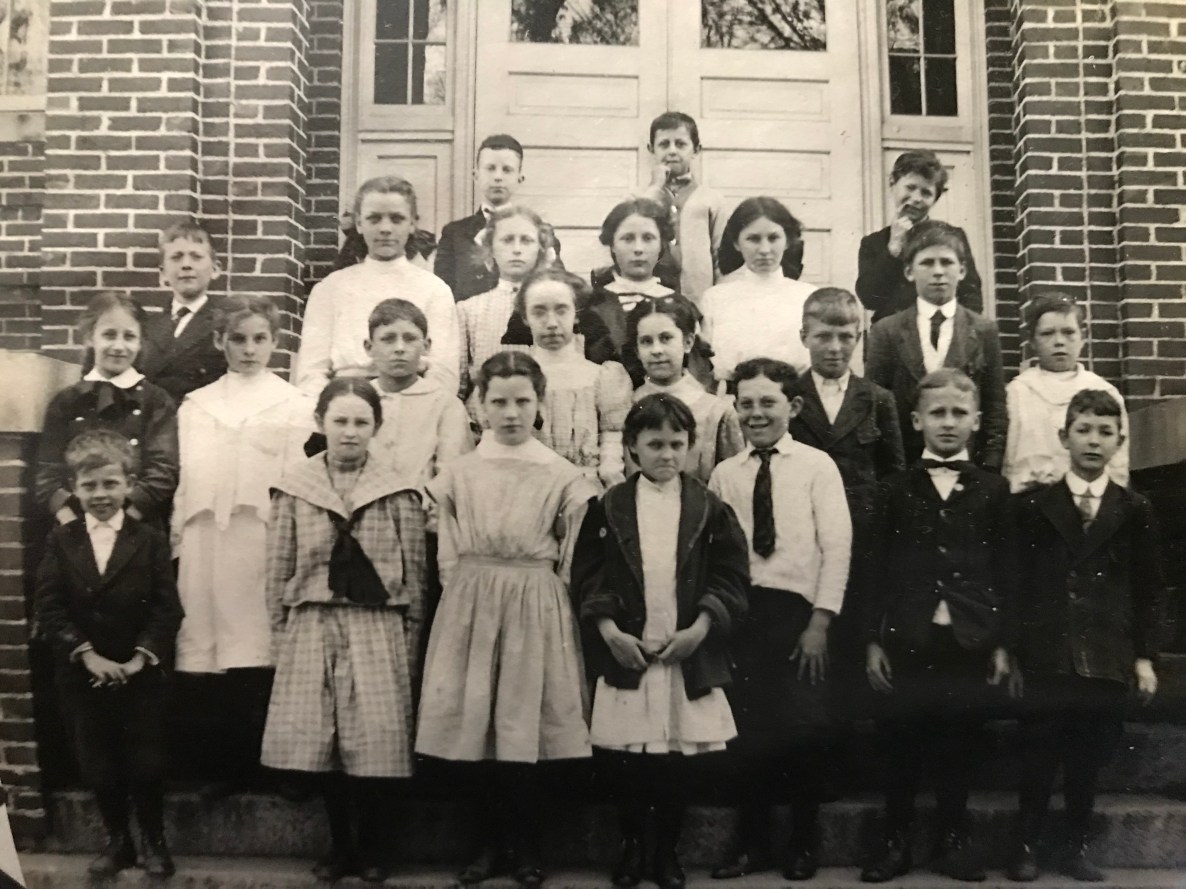
Montgomery County High School 1910
New Blog Feature: Then & Now
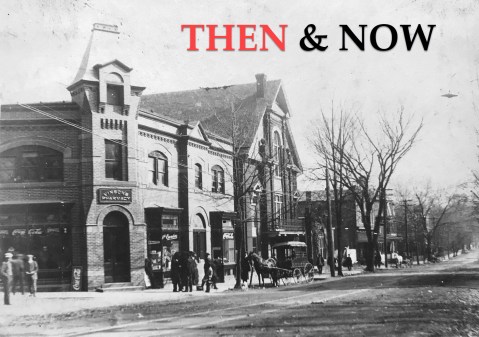
Looking back at photography from the past is a fascinating experience for me, and with a newfound interest in history, it occurred to me that with the vast number of historical photographs in Lewis Reed’s Collection, that this blog would be a great place to feature a series of Then & Now photography. I started doing this about a year ago as a research tool, now I mostly do it because of my passion for history and fascination with the subject. With that in mind, I will occasionally be spotlighting some “Then & Now” images from his collection that will show photographs of buildings, street scenes, and other historical locales alongside photographs of how they appear today.
Some of the historic locations in this series includes the Smithsonian, Capitol, Union Station, Old Post Office, Library of Congress, Raleigh Hotel, Key Bridge and other important sites in and around the Maryland, Virginia, and Washington, D.C. area. There are also photographs of many non-Maryland locations including the historic landmark “Lucy the Elephant”, Gettysburg Battlefield, Mount Vernon, Pennsylvania Monument and United States Regulars Monuments under construction, and Quebec Bridge (the 8th Wonder of the World).
I have no formal history training, just a general interest in local history where I grew up. I will post one of Lewis Reed’s photographs matched with a corresponding contemporary shot of the same area, and supply a few sentences of context. All of them will in some way will offer a visual history of how things have changed over the years. I look forward to sharing them with you.
Chrysler Buys Dodge

1928 Chrysler logo
May 28, 1928 marks an important milestone in the history of Chrysler. It was on this day in 1928 that Dodge Brothers, Horace and John Dodge, became a part of Chrysler. It was on this same date that Lewis Reed, founder of Reed Brothers Dodge in Rockville, Maryland also became an original member of the Chrysler family.
During 1920, the Dodge Brothers company lost its founding fathers. John Dodge died in January, and his younger brother Horace succumbed the following December. A New York investment banking firm paid the brothers’ widows, in a single cash payment, $146 million for the Dodge Brothers firm. Within three years, the bankers initiated negotiations, and on May 28, 1928, Walter P. Chrysler purchased Dodge Brothers, Inc. for $170 million, making it, at the time, the largest business transaction in history. When the transaction was complete, the Chrysler Corporation had grown five-fold overnight to become the third of Detroit’s “Big Three” automakers.
The first Plymouth was built in 1928 and Plymouths were sold at Reed Brothers until 1969, when the Plymouth brand was given to the Chrysler dealers.
Then & Now: Washington Union Station 106 Years Apart
In this special post, I have combined one of Lewis Reed’s original photograph’s for “then” and matched it with a corresponding contemporary shot for “now” to see how the location has changed or remained nearly the same through the years. I started doing this as a research tool, now I mostly do it because of my passion for history and fascination with the subject. In the following photographs, you can see the difference 106 years can make.
Washington Union Station (THEN): Seen in the black & white photograph taken by Lewis Reed in 1912, is Union Station in Washington, DC. Union Station is one of the country’s first great union railroad terminals. Designed by renowned architect, Daniel Burnham, the station opened on October 27, 1907 and was completed in April 1908. At the height of its traffic, during World War II, as many as 200,000 passengers passed through the station in a single day. Today, Union Station is one of the busiest rail facilities and shopping destinations in the United States, and is visited by over 40 million people a year.
Visible in both photos is the Columbus Fountain also known as the Columbus Memorial which serves as a tribute to the explorer Christopher Columbus. The fountain sits in the center of the Columbus traffic circle in front of Union Station.
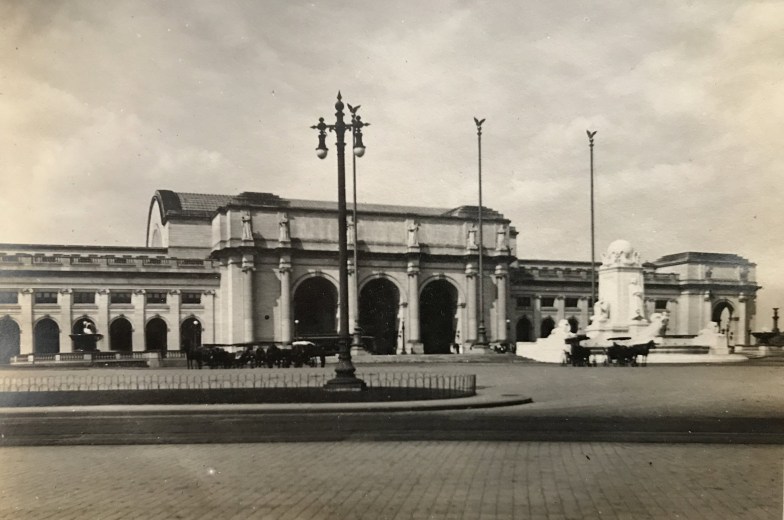
Washington Union Station, 1912. Photo by Lewis Reed
Washington Union Station (NOW): The same view over a century later. The difference? Color.
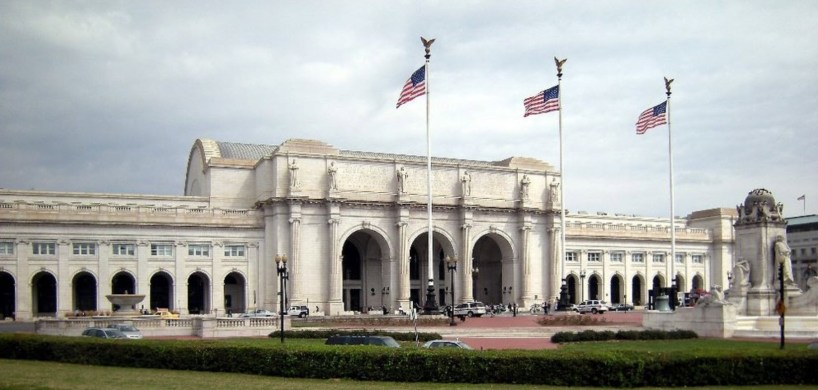
Washington Union Station today
Books

Related Resources


Copyright Notice

Reed Brothers Dodge History (1915-2012) by Jeanne Gartner is licensed under a Creative Commons Attribution-NonCommercial 3.0 Unported License.
 Reed Brothers Dodge History 1915 – 2012
Recent Comments