
Happy Valentine’s (and Ferris Wheel) Day!

Ferris Wheel at Rockville Fair, circa 1920s. Photo by Lewis Reed
Did you know that February 14th is not only Valentine’s Day, but also Ferris Wheel Day? This unofficial national holiday is held on this day to honor the birth of the inventor of the Ferris Wheel, George Washington Gale Ferris, Jr. What better way to celebrate Ferris Wheel Day than enjoying this old photograph of the Ferris Wheel taken at the Rockville Fairgrounds, courtesy of Lewis Reed. The fairgrounds were just outside Rockville, about where Richard Montgomery High School is today. The Fair lasted four days, from August 21st to the 24th, and drew visitors from local counties, Washington, and Baltimore.
For the singles and the “enough already with the Valentines”, here is your perfect alternative excuse. Go wish all your friends and family a Happy Ferris Wheel Day!
1915 Street Scene in Middlesex VA

Motorcyclists and cars getting gas at a curbside pump at Middlesex Ford Agency, circa 1915. Photo by Lewis Reed
It is always interesting to see photos from days gone past. The interesting street scene above was taken by Lewis Reed in Middlesex, Virginia. All of the cars in the view are late model vehicles. The Middlesex Garage, which appears to be a Ford Agency that advertises gasoline, oils and lubricants for sale, is also visible. A closer look reveals the price of gasoline as 15 cents. Also visible in the photo are trolley tracks running down the middle of the dirt road.
Below are motorcyclists posing on the street in Middlesex. Edgar Reed is shown on the left on his Excelsior motorcycle.
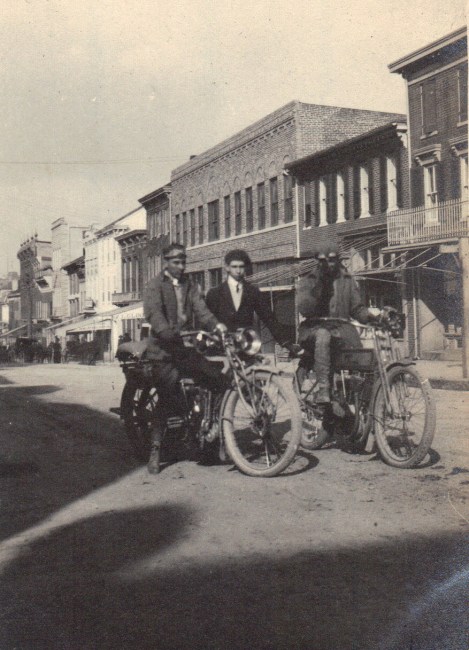
Motorcyclists in Middlesex VA, circa 1915. Edgar Reed is on the left. Photo by Lewis Reed
Middlesex County is located on the Middle Peninsula in the U.S. state of Virginia. Middlesex has remained largely rural over the years with farming, forestry, fin and shell fishing and tourism providing the principal elements of its economic base. Its geographical location has helped it to retain its rural character while also making it the perfect place to recapture childhood memories of summer days spent on a boat, catching crabs and water skiing.
105 Years Ago: Rockville’s First Gulf “Gas Station”
Curbside gasoline pumps were the predecessor to today’s contemporary fuel pumps. Before the advent of curbside pumps, gasoline was pumped from storage barrels, then hand poured into the automobile from tins. In 1901, a new underground container system was patented. The system used underground holding tanks which allowed the storage and subsequent distribution of gasoline to the surface via a curbside pump. It is considered the first vehicle fuel dispenser.
One hundred and five years ago, Rockville Garage began selling gas at their original location in Old Rockville at the triangle at Veirs Mill Road and Rockville Pike. It was a perfect site for the filling station due to being on a high visibility corner which gave the dealership maximum visibility to the largest volume of cross traffic. Their first “gas station” consisted of a single pump and one small tank. Rockville Garage dispensed gasoline produced by the Gulf Oil Co. and later offered Texaco gasoline as well. Reed Brothers is credited as the first Gulf gasoline dealer in the Washington, DC area.
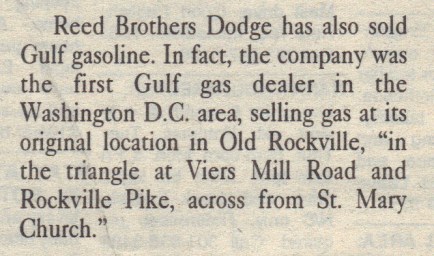
Clipped from The Frederick News-Post, Thursday, May 8, 1997
Rockville’s First Gulf “Gas Station” – A Single Pump
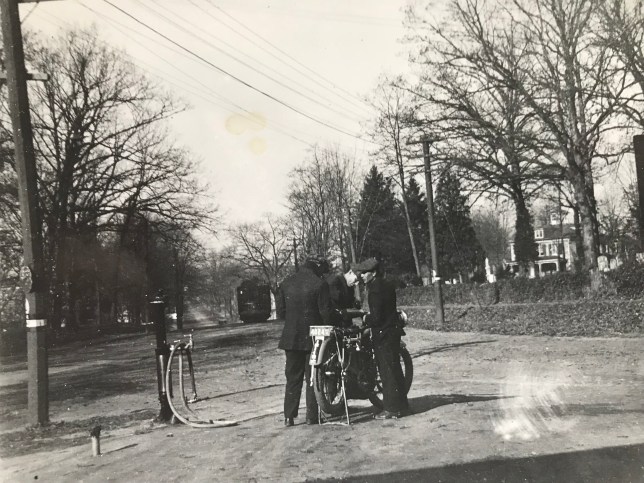
1915 Rockville Garage First Gas Station – A Single Pump. View looking west on Main Street of Rockville showing early trolley car. Originally printed from one of Lewis Reed’s glass negatives, this 1915 black-and-white photograph provides insight for understanding and preserving early U.S. petroleum history.
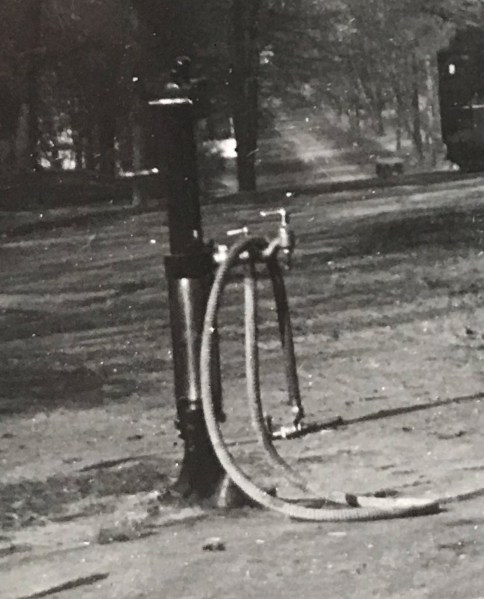
Close-up of the curbside pump in front of Lewis Reed’s Rockville Garage. The pump was mounted just inside the entrance and was served by one small storage tank buried beneath the ground.
The close-up image above illustrates the utilitarian design of the early gas pumps. These early pumps were roughly four feet tall and were supplied with a hose for dispensing fuel directly to the automobile. Although hardly an ideal system, pumps and underground tanks along the curb were an improvement over the earliest filling stations where gasoline was poured from hand containers. This curbside pump would remain in use until roughly 1917.

November 1915 Rockville Maryland Sanborn Map, Sheet 5 (zoomed in)
The zoomed-in image of the November 1915 Sanborn map shows the one-story Rockville Garage at the junction of Rockville & Georgetown Turnpike and Washington Road. These maps are quite specific, not only in representing graphically the dimensions of buildings and spaces around them, but also in the details of the construction materials and activities that took place there. Notes on this map indicate that the garage had a 15-car capacity as well as a single gasoline pump. They also noted the buried gas tank and where it was located with a small circle.

The same view today, fondly known as “the mixing bowl.”
Dirt Roads of Rural Montgomery County
In the early 19th century, most roads were dreadful. Rural roads were often hard and bumpy; in warm months, they were dry and dusty, while in the spring they were wet and muddy. In winter, they could be covered with ice or snow. Most roads were so narrow that if two buggies met, one might be forced into a ditch along the side of the road. In those days there were few bridges, so drivers simply drove their wagons through rivers and streams.
The popularity of the car coincided with the improvement of public roads around Rockville. Rockville Pike’s reputation as “one of the worst pieces of main highway in the state” helped initiate Maryland’s Good Roads Movement. Responding to citizen demands, the newly created State Roads Commission incorporated the Pike into the state highway system. By 1929, when Montgomery County residents owned 13,000 cars, the Pike and Montgomery Avenue had been paved, but less traveled Veirs Mill Road remained a narrow dirt road for decades. By the end of 1935, the highway was paved as a macadam road.
Veirs Mill Road
History: Veirs Mill Road is named for a grist and sawmill on Rock Creek built by Samuel Clark Veirs in 1838 and operated by his family until 1924. This mill drew business from Rockville and Mitchell’s Crossroads, which later became Wheaton, along its namesake road. Below, two images of Viers Mill Road, c. 1911, showing deep ruts in the surface. Wagon wheels and tires of the time were very thin, and would sink straight into ruts, sometimes getting stuck.
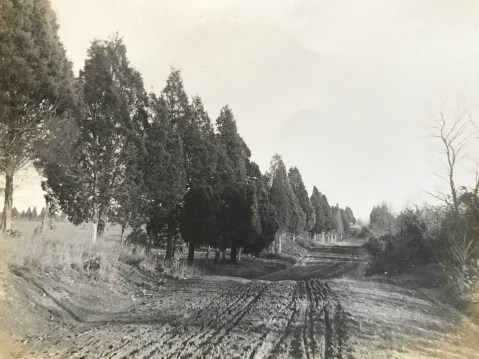
Veirs Mill Road looking east prior to paving. Photo by Lewis Reed, 1911
Stalled in the mud… “Although he put on the entire 20-horsepower of his machine and called in assistance of several neighbors, it was not until shovels and crowbars had been procured to move his car… he was able to resume his journey. This experience not only caused more than an hour’s delay in reaching the city but the wear and tear on himself, those who rendered assistance, and incidentally, the machine. Thus, at least two months of the life of a $3,000 auto was spent in simply traversing a short stretch of roadway.

Veirs Mill Road looking east prior to paving. Photo by Lewis Reed, 1911
Montgomery County had 790 miles of unimproved dirt roads in 1899 and only 45 miles of stone, gravel, or macadam roads. The only good roads in the County were the turnpikes in the northeast; they accounted for all but 8 miles of the improved highways. The Union Turnpike Company operated from the District line at Silver Spring to Brookeville, from Olney to Ashton,and from Sandy Spring to Glenmont. The Washington, Colesville, and Ashton Turnpike Company maintained Colesville Road from Ashton to Silver Spring.
Darnestown Road
Lewis Reed grew up in Darnestown, so many of his streetscapes depict that specific region of Montgomery County.
History: The Darnestown area, which was located at the intersection of Darnestown and Seneca Roads, was settled in the 1750s. Darnestown Road (or Route 28) was an old Indian trail and is recognized as one of the oldest roads in Montgomery County, Maryland. During the 1870s through 1900, Darnestown was a thriving business hub due to its trade linked to the canal. Darnestown became an important place for commerce in the area. Seneca Road led to a sandstone mill and the C&O canal at Seneca Village. From Darnestown one could travel either by stagecoach along Darnestown Road or board a packet boat on the canal at Seneca.
After the Civil War, Darnestown experienced an economic downturn due to the increased popularity of the railroad, which bypassed the area. The mill business decreased and some farmers tried their hand at tobacco farming. This proved to be unprofitable for most and many people left the area. It wasn’t until World War II that Darnestown began to grow and prosper again.
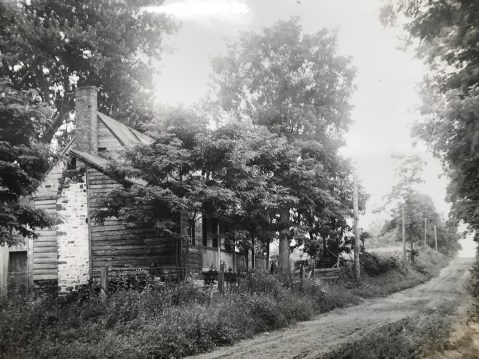
Route 28, Darnestown Road 1907 – Martin Thompson House, owned by Lewis Reed’s maternal grandfather.
Route 28, in Darnestown is depicted in this photo before paving. What is now Route 28 is one of the earliest roads in the county, and was one of the main ways farmers in Poolesville, Darnestown, Dickerson, and Barnesville reached the courthouse in Rockville.
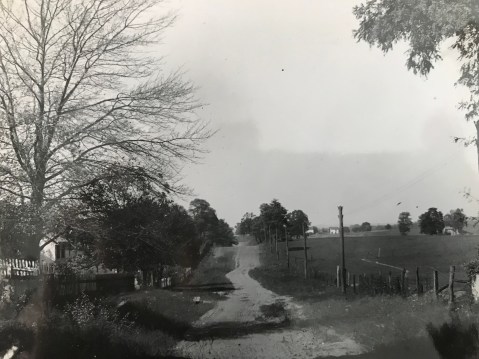
Darnestown. Photo by Lewis Reed
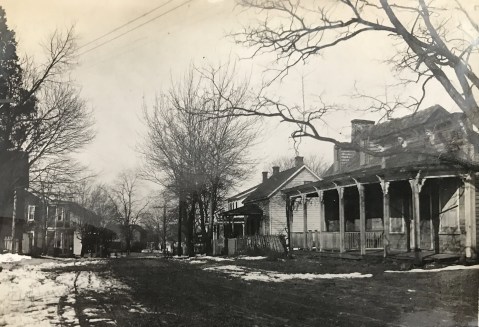
Darnestown, Rt 28. Photo by Lewis Reed
At the time the photo above was taken, the Griffith family owned the house and lot in the foreground. The frame and log house may have been built as early as the 1850s; by 1863 it was used as a house and store by Samuel Fisher. Fisher eventually sold the property to Ulysses Griffith and James Windsor, who also used it as a store. Griffith and Windsor continued as partners for ten years, until Windsor built his own store and house at the southwest corner of Seneca and Darnestown roads.
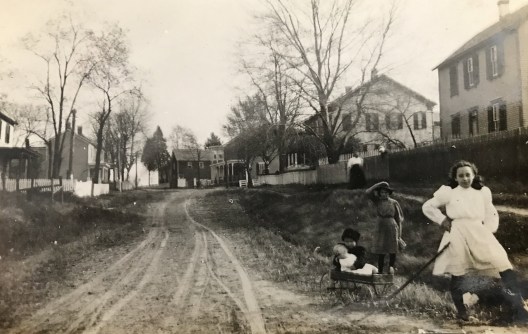
Darnestown along Rt 28. Photo by Lewis Reed
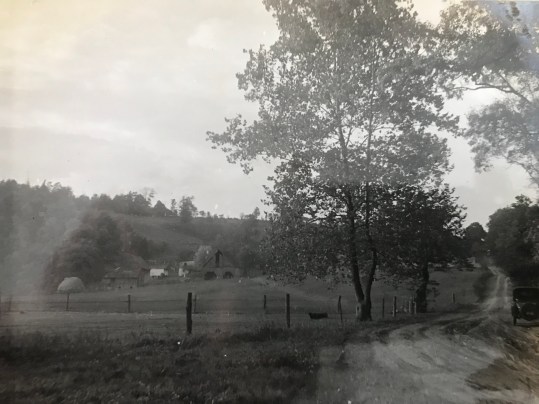
Darnestown. Photo by Lewis Reed

Darnestown dirt road. Photo by Lewis Reed
Seneca Road
History: The first segment of MD 112 was a 1-mile concrete road south from MD 28 in Darnestown that was built in 1923.The highway was extended southwest to the hamlet of Seneca just east of Seneca Creek in 1929 and 1930. MD 112’s western terminus was originally a short distance west of MD 190; the highway was truncated at MD 190 between 1975 and 1977.

Seneca Road. Note the horse and buggy traveling up the road in the distance. A motorcycle (perhaps Lewis Reed’s) sits on the side of the road near the dead tree. Photo by Lewis Reed
Norbeck Road (Rt, 28)
Route 28 has existed since before the Civil War, and it remained a mud path for years into the automobile age.
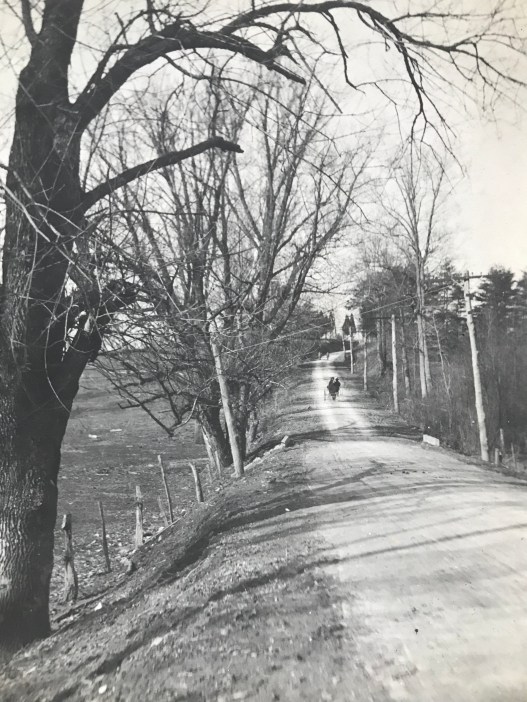
Norbeck Road, near Rockville. In the far distance are two pedestrians; in the nearer distance a one- or two-person buggy is traveling away from the camera. Photo by Lewis Reed
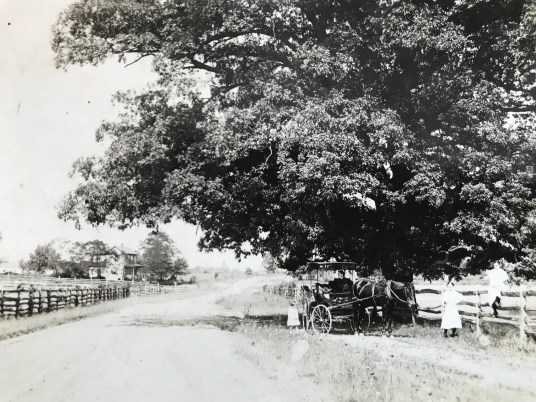
Horse and Buggy on Hunting Hill Rockville. Photo by Lewis Reed
Hunting Hill and Quince Orchard, the first of eight small communities along Route 28 west of Rockville, have been transformed largely because of a single building on a historic estate. In 1942, Otis Beall Kent purchased the estate of Frederick A. Tschisfely, a Washington wholesale druggist, and consolidated four farms to make a 1,000-acre farm. He built seven lakes, maintained his own fire department and dreamed of such things as a hydroelectric plant on the property.

Dirt road and bicycle. Photo by Lewis Reed
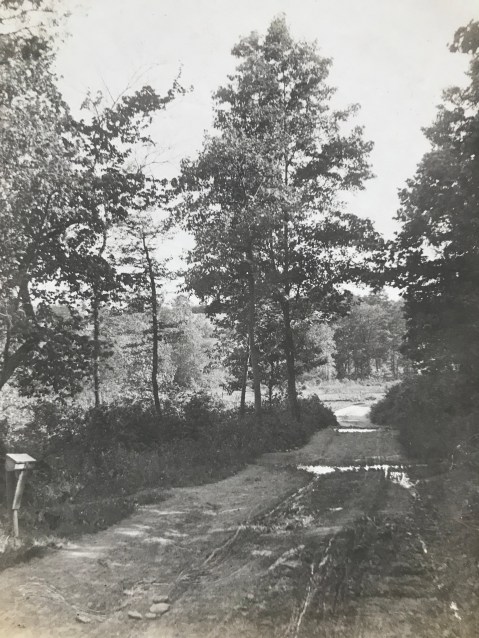
Cedar Lane Bethesda. Photo by Lewis Reed
Roads to the Future
Rockville Pike’s reputation as “one of the worst pieces of main highway in the state” eventually helped initiate Maryland’s Good Roads Movement, alongside a nationwide initiative to improve America’s roads. Responding to citizen demands, the newly created State Roads Commission incorporated the Rockville Pike into the state highway system.
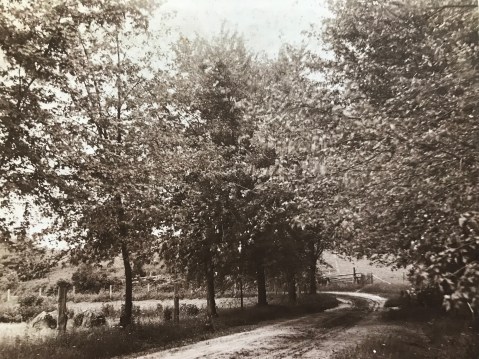
Ironically, Montgomery County would eventually enact legislation to protect some of its rural roads from the type of traffic-conscious expansion that could spoil the natural beauty of the landscape on either side of the drive, as shown in this early 20th century photograph. Photo by Lewis Reed
Then & Now: Point of Rocks Station
Looking at old photographs is like peering through an open window back into history. Not only do they give you a sense of wonder from traveling back in time, but also a staggering feeling of awe from seeing just how much things have changed. For this post, I have used one of Lewis Reed’s original photographs for “then” and a Google stock image for “now”.

Point of Rocks Station. Photo by Lewis Reed, ca. 1911.
Point of Rocks Station (THEN): Point of Rocks is the location of an important railroad junction and the site of one of the most picturesque and best known of the historic stations of the former Baltimore and Ohio Railroad. At this junction, the ex-B&O Old Main Line from Baltimore, one of the oldest lines in the country, and the ex-B&O Metropolitan Branch from Washington, D.C., opened in 1873, come together and continue west as one line to Cumberland, Pittsburgh, and Ohio. A little known fact is that the station was struck by lightning in the late afternoon of June 27, 1931 and gutted. We can be thankful that the B&O ordered its full restoration.
Point of Rocks Station (NOW):

Point of Rocks Station today.
Books

Related Resources


Copyright Notice

Reed Brothers Dodge History (1915-2012) by Jeanne Gartner is licensed under a Creative Commons Attribution-NonCommercial 3.0 Unported License.
 Reed Brothers Dodge History 1915 – 2012
Recent Comments