
Driving Into the 20th Century
Before 1900, there weren’t any traffic laws in regular use pertaining to automobiles other than certain regulations for the use of horse-drawn wagons and locomotives. The rise of the automobile changed all that. Local governments attempted to develop signage and laws to deal with this massive increase in the use of mechanized vehicles.

In the early 20th century, traveling cross-country by automobile was intimidating, if not a little bit dangerous. Cars were unreliable and roads were rough. The child in the photo is Lewis Reed’s daughter, Mary Jane. Photo by Lewis Reed
There were no paved highways for automobiles to shoot along at 60 and 70 miles an hour; just country roads, filled with ruts, sand, and mud, over which no one wanted to drive at the maximum speed of passenger cars, which was about 25 miles an hour.
You didn’t always need a license to drive. In fact, in the beginning of the 20th century, driver’s licenses didn’t even exist. Anyone could operate a vehicle, even if they had no idea what they were doing. As the number of automobiles increased, states slowly began to require people to be licensed in order to drive, with Maryland beginning in 1910.
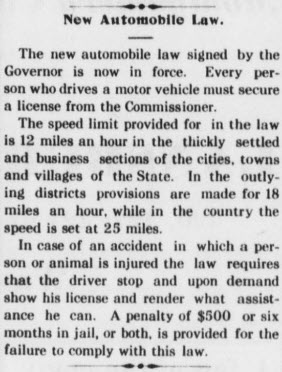
New license and speed limit laws in effect regarding automobile use for the state of Maryland. Montgomery County Sentinel, May 6, 1910.
Horses were skittish of the loud motors, and those who drove cars often had little training on how to operate them safely–both situations caused unprecedented accidents. Reed Brothers Dodge salesmen at the time often had to teach their customers how to drive the automobiles they had just purchased. “Speed limits” were a new concept, as individually-controlled vehicles capable of speeds much faster than a horse were previously non-existent.
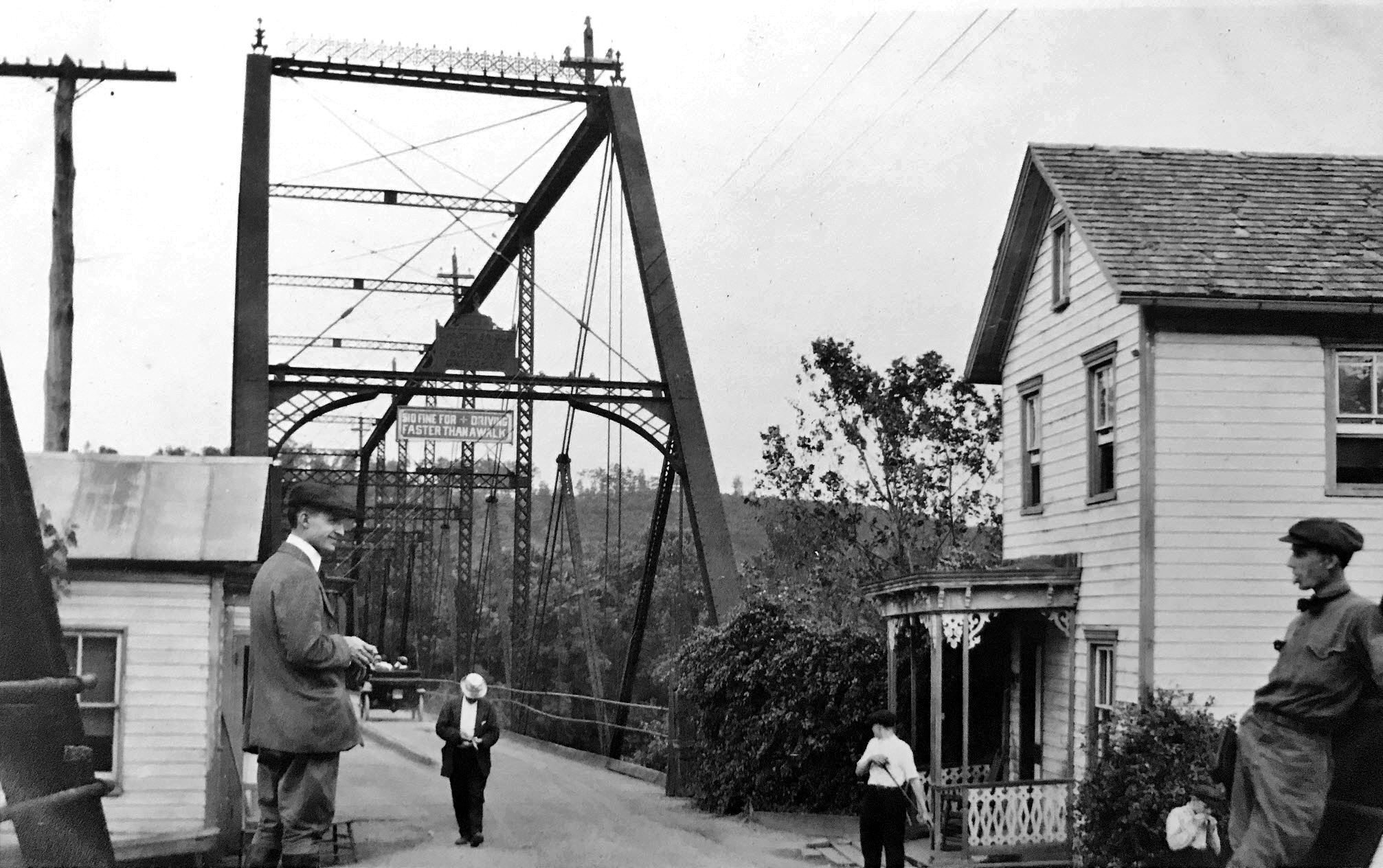
Sign on this bridge reads “$10 fine for driving faster than a walk.” Photo by Lewis Reed, c. 1910
The photograph above evokes a sense of nostalgia for slower-paced times. Literally slower: the sign over the bridge entrance reads “$10 fine for driving faster than a walk.” That’s equivalent to about $300 in today’s money.
From “Rules of the Road,” written by William P. Eno in 1903:
The mandatory registration of automobiles was one of the first traffic regulations in the United States. New York became the role model in 1901 by being the first state to require that automobile owners register their vehicles. By 1920, license plates were mandatory in all states. It took longer for the states to require a driver’s license. In 1935, there were just 39 states that issued the licenses and only a few tested applicants. Before the 1930s, most drivers received their training from automobile salesmen, nonprofit organizations such as the YMCA, family members and friends.
There was a good reason to discourage speeding in the first decades of the 1900s, as there were no stop signs, traffic lights, lane lines, brake lights, driver’s licenses, or posted speed limits, to name only a few modern safety measures. Drinking and driving? Not that big a deal. Poorly maintained roads, untrained and inexperienced drivers, and potential speeds approaching 40 mph created the perfect catalyst for horrific accidents. The photograph below illustrates how fragile those early cars were.
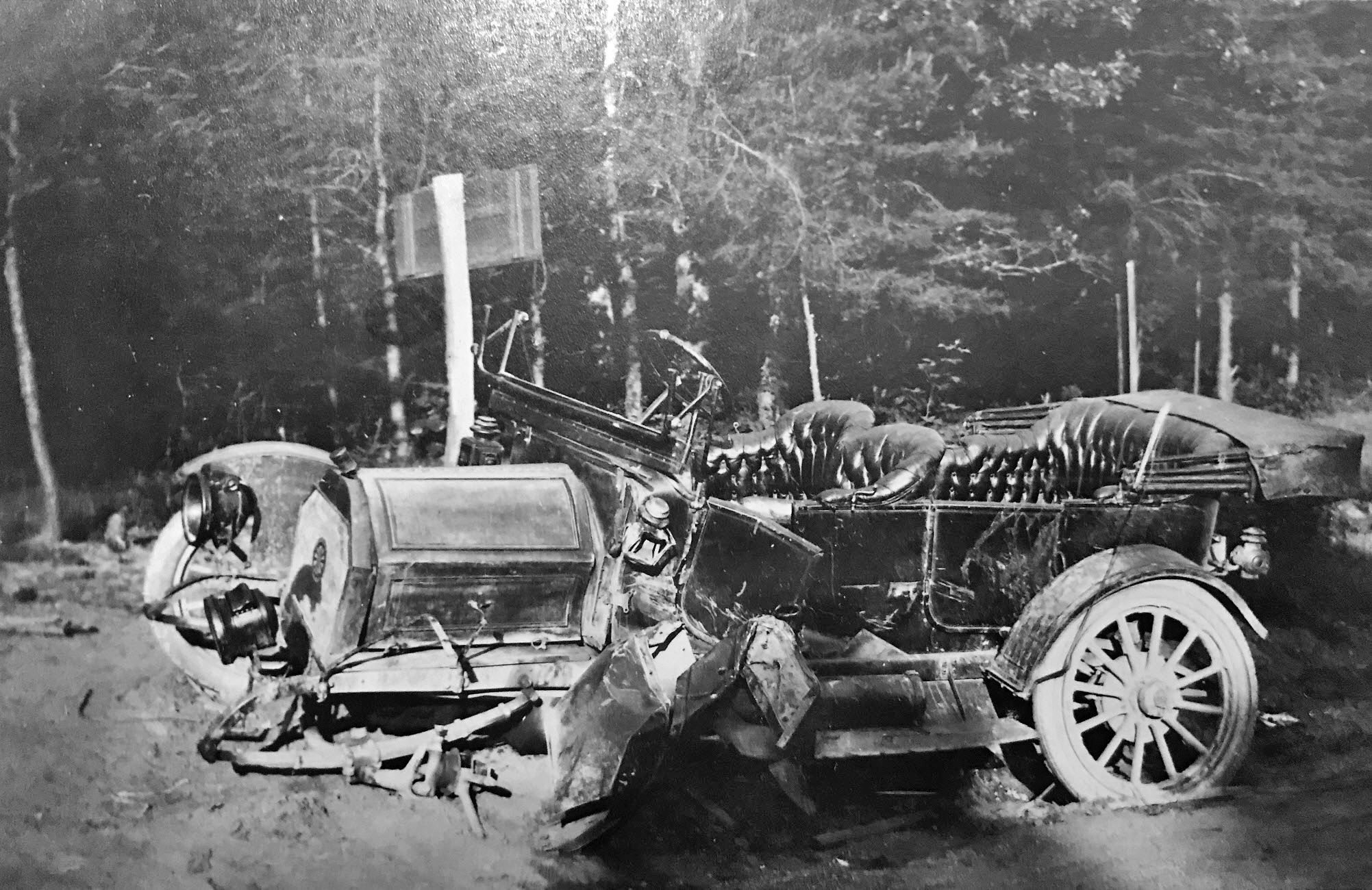
Early 20th century automobile accident. Photo by Lewis Reed
Trained as a chauffeur early in his life, Lewis Reed later leveraged his knowledge of automobiles into founding one of the longest-lived and most successful car dealerships in the state of Maryland.

Books

Related Resources


Copyright Notice

Reed Brothers Dodge History (1915-2012) by Jeanne Gartner is licensed under a Creative Commons Attribution-NonCommercial 3.0 Unported License.
 Reed Brothers Dodge History 1915 – 2012
Recent Comments