
Happy Birthday Edgar Reed!
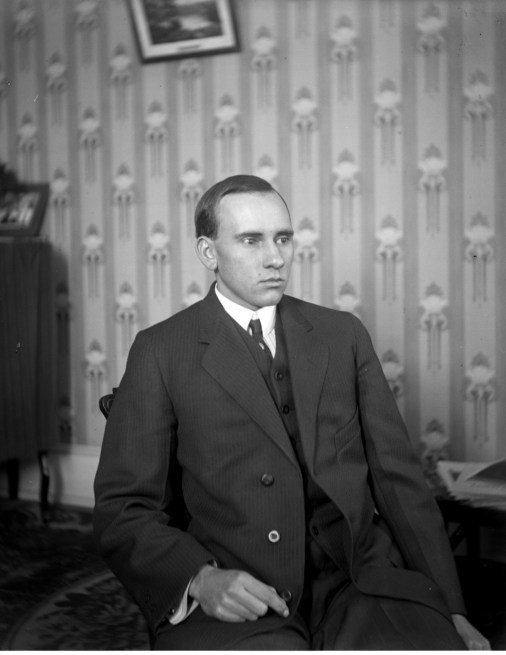
Edgar Reed as a young man.
Edgar was born in Darnestown, Maryland on October 17, 1890. If he were still around he would be 129 years old today. Edgar was a veteran of World War I and an active citizen of Rockville. He served as a Sergeant in the Army Medical Corps and had been posted to General Hospital No. 11 in Cape May, New Jersey. Previous to his enlistment he had been employed by R.W. Vinson, Rockville druggist for eight years. In 1919, Edgar joined his brother Lewis Reed in the business and the name changed to Reed Brothers Dodge. Edgar was in the automobile business with his brother for 35 years.
As a prominent businessman active in local commercial, civic, and religious institutions, Edgar was a respected community leader. For many years, he served on the Town Council and was Chairman of Stewards at the Rockville Methodist Church. Edgar was an original incorporator and charter member of the Rockville Volunteer Fire Department when the fire company was organized in 1921. He was a charter member and Past President of the Rockville Rotary Club and was a director of the Farmers Banking & Trust Company in Rockville until the time of his death. He was the first President and one of 30 original members of the Dealers Automotive Association of Montgomery County.
Edgar was the executive of Reed Brothers and handled all of the technicalities of the business. He was generally in charge of new car and truck sales. Edgar Reed passed away on October 24, 1951 after a prolonged illness.
Montgomery History’s Tuesday Talks Lecture Series
Mark your calendars for my upcoming Tuesday Talk on September 10!! My PowerPoint presentation is approx 40 minutes in length and will follow the dealership’s 97-year historic timeline. More than 100 photographs are featured, 70 of them rare, historic images taken by the dealership’s founder, Lewis Reed.

The First Plymouth was Introduced by Chrysler on This Date in 1928
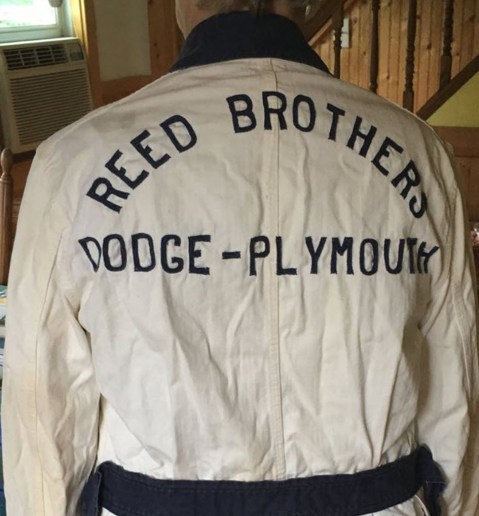
Plymouths were sold at Reed Brothers from 1930-1969.
The first Plymouth automobile was introduced on July 7, 1928. Plymouth was Chrysler Corporation’s first entry in the low-priced field, which at the time was already dominated by Chevrolet and Ford. Plymouths were actually priced slightly higher than their competition, but offered all standard features such as internal expanding hydraulic brakes that the competition did not provide. While the original purpose of the Plymouth was to serve a lower-end marketing niche, during the Great Depression of the 1930s, the marque helped significantly in ensuring the survival of the Chrysler Corporation in a decade when many other car companies failed. Beginning in 1930, Plymouths were sold by all three Chrysler divisions (Chrysler, DeSoto, and Dodge).
Plymouth sales were a bright spot during this dismal automotive period, and by 1931 Plymouth rose to the number three spot among all cars. Plymouth almost surpassed Ford in 1940 and 1941 as the second most popular make of automobiles in the U.S.
In 1957, Virgil Exner’s new Forward Look design theme, produced cars with much more advanced styling than Chevrolet or Ford. 1957 total production soared to 726,009, about 200,000 more than 1956, and the largest output yet for Plymouth. However, the 1957–1958 Forward Look models suffered from poor materials, spotty build quality and inadequate corrosion protection; they were rust-prone and greatly damaged Chrysler’s reputation.
Most Plymouth models offered from the late 1970s onward, such as the Volaré, Acclaim, Laser, Neon, and Breeze, were badge-engineered versions of Chrysler, Dodge, or Mitsubishi models. By the 1990s, Plymouth had lost much of its identity, as its models continued to overlap in features and prices with Dodges. Plymouth’s product offerings and buyer appeal, and sales continued to fall.
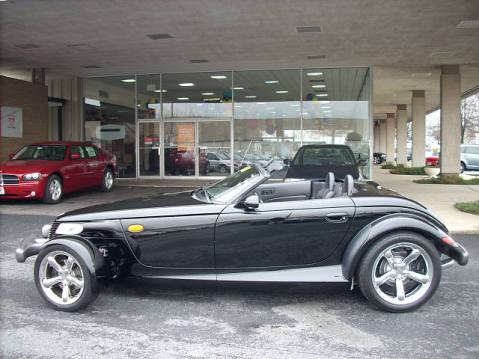
1999 Plymouth Prowler
By the late 1990s, only four vehicles were sold under the Plymouth name: the Voyager/Grand Voyager minivans, the Breeze mid-size sedan, the Neon compact car, and the Prowler sports car, which was to be the last model unique to Plymouth. The Prowler came about as part of Chrysler’s efforts (the last as it turned out) to differentiate Plymouth from the rest of its lineup in hopes of keeping the brand alive. It was hoped that it would be received well enough to garner some attention, some of which might spill over into some of their other models.
Plymouth rarely exceeded 200,000 cars per year after 1990. Consequently, DaimlerChrysler decided to drop the make after a limited run of 2001 models. This was announced on November 3, 1999.
Reed Brothers Auto Glass & Body Shop
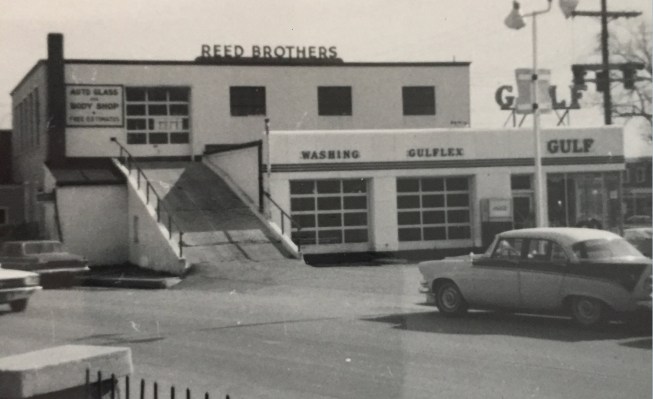
Circa 1968, the concrete ramp on the left leads up to the Auto Glass and Body Repair Shop
With a surge in automobile purchases in the early 1900’s, and an equal amount of car accidents and breakdowns, Reed Brothers began offering collision repair services. Just as the automobile has gone through numerous transformations over the last century, so has the auto body repair industry. When Henry Ford first mass produced the car in 1908, it was so new and unlike any other means of transportation at the time, that no one, outside of the few people who designed and built the old Model T Fords, was really qualified to do repairs. In the early years, many people turned to a machinist or even a bicycle repair shop for car repairs. As the popularity of the automobile grew, so did the demand for experienced and reliable mechanics and auto body specialists.
By the 1920s, there were a great deal of cars on the roads, which meant that manufacturers and dealerships needed to provide drivers with the means of repairing their vehicles in the event of a collision or breakdown. To meet this demand, manufacturers started making standardized parts that could easily replace damaged components of a vehicle. Dealerships were now able to employ mechanics that were able to easily repair vehicles using the prefabricated parts provided by the manufacturers. This method of auto repair lasted into the 1930s and 40s, though production and demand for repairs did hit a major decline at this time due to the Great Depression and World War II.
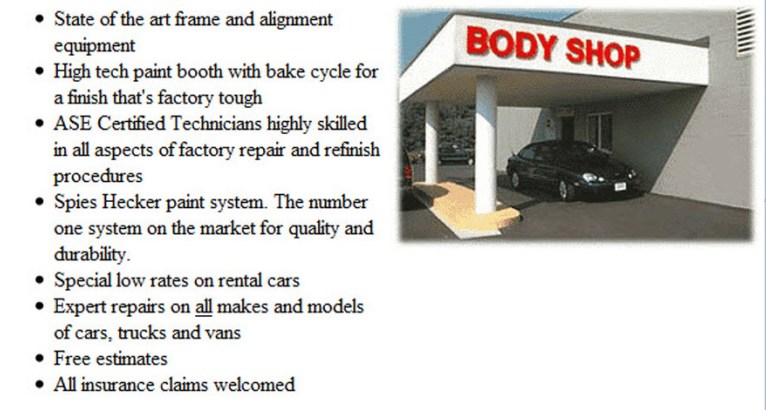
As business expanded, Reed Brothers began to explore additional opportunities within the automobile repair industry. In 1947, Reed Brothers added a separately maintained glass shop in their service department which was equipped to replace all types of automobile glass. The glass installations were done by an experienced glazier who had enough work to keep him busy full-time. It eliminated a good deal of the confusion and overlapping which sometimes occurred when glass orders were mixed in with the usual repair work. A separate work area was set up for the glazier and he always had an adequate supply of glass in boxes to be cut down to the needs of any job, ground and polished.
In addition to auto replacements, glass was also cut for mirrors and table tops. Another innovation of the repair department was a separate paint and body shop which was located next to the glass shop. Reed Brothers was capable of repairing all makes and models from all manufacturers with factory-prepared paints available to match any color of car. They had the ability to give all around service except upholstery work and tire recapping.
In 1930, Reed Brothers added the Plymouth line and soon after Dodge trucks. Hand in hand with straight sales was the growth of the service department which at that time had six factory trained mechanics who had full knowledge of automobile needs and how to take care of them. Reed Brothers also owned and operated their Gulf gasoline and service station which was adjacent to their salesroom and repair shop.
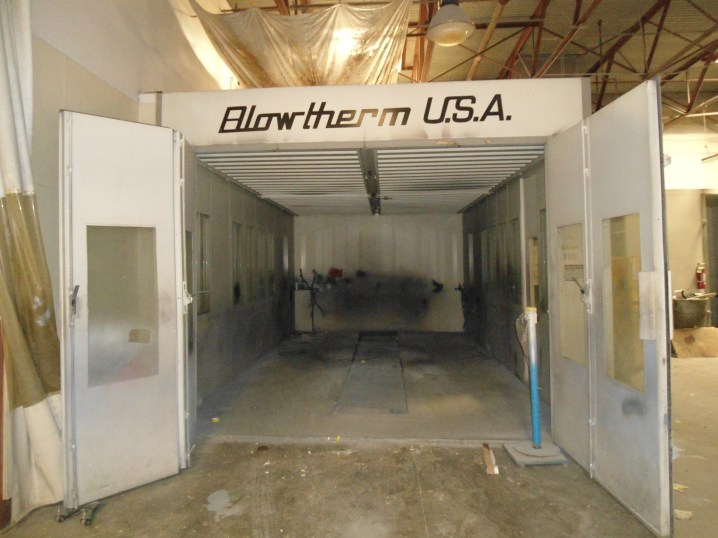
By the 1970s, Reed Brothers Dodge Body Shop used state of the art equipment in the repair and refinishing process on all vehicles. Their Chief frame machine utilized a laser measuring system to ensure precision alignment of all body and frame components. The Blowtherm downdraft booth with bake cycle produced a “factory cured” finish that lesser equipment simply cannot match.
Reed Brothers Dodge had computer downloaded specifications for practically every vehicle made and they color match all paints in-house, with world renowned Spies Hecker paint and mixing system. The skilled “plastic surgeons” of the automobile world, their technicians were all formally trained professional with ASE and I-CAR, which kept them up to the minute with the latest technology.
The First Shenandoah Apple Blossom Festival May 3, 1924

Here the parade participants circle the racetrack as spectators view the parade from a grandstand. There was no caption on this photo, but I’m guessing it might possibly be the VMI Regimental Band. Photo by Lewis Reed, 1924
The first Apple Blossom Festival in Winchester was held 95 years ago on May 3, 1924. It was a one-day event featuring a parade, the crowning of Queen Shenandoah, and a program of interpretative dance. To kick off the celebration, the parade assembled at the old fairgrounds just off Fairmont Avenue and marched through the streets of Winchester to the Royal Pavilion on the grounds of Handley High School.
Beginning in 1925, the first of three pageants was professionally produced by the John B. Rogers Production Company and staged on a dais at the fairgrounds. In 1928 the outdoor pageants were moved to the steps and esplanade of Handley High School. The pageant earned a reputation as being one of the most beautiful outdoor extravaganzas in the nation. The festival was suspended during World War II, and resumed in 1946 with its first celebrity grand marshals, Bing Crosby in 1948 and Bob Hope in 1949.
Since its beginnings in 1924, the festival has grown over the years to a ten-day celebration with over 30 events, including two huge parades, a carnival, dances, concerts, a 10K race, wine festival, golf tournament, and much more.
These photos from Lewis Reed’s album are what appears to be some of the very first photos of the Shenandoah Apple Blossom Festival held at the old fairgrounds in Winchester, Virginia. As always, click on an image to enlarge.

The B&O Railroad had a float in the Apple Blossom Parade. Photo by Lewis Reed, 1924
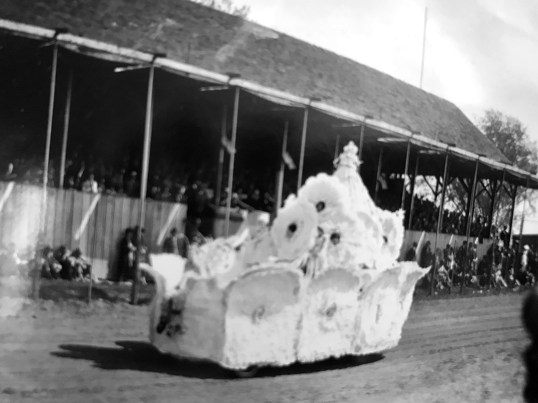
Photo by Lewis Reed, 1924
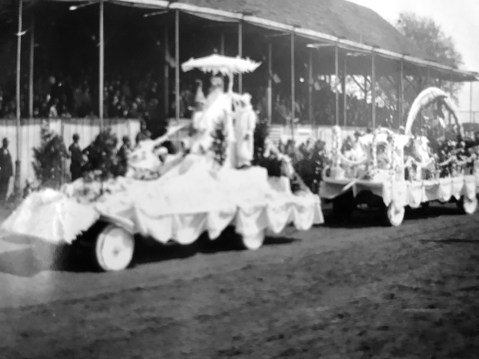
Photo by Lewis Reed, 1924

Photo by Lewis Reed, 1924
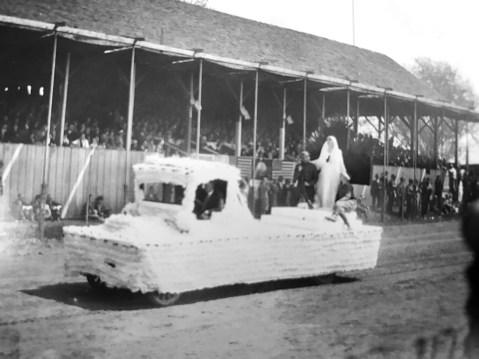
Photo by Lewis Reed, 1924
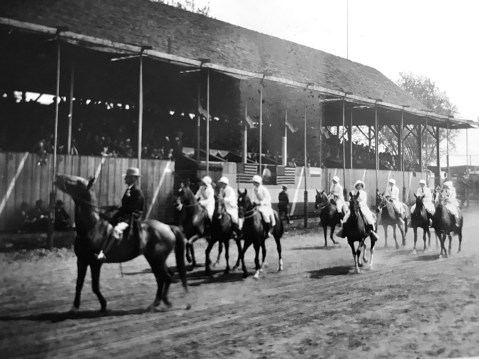
Photo by Lewis Reed, 1924

Photo by Lewis Reed, 1924
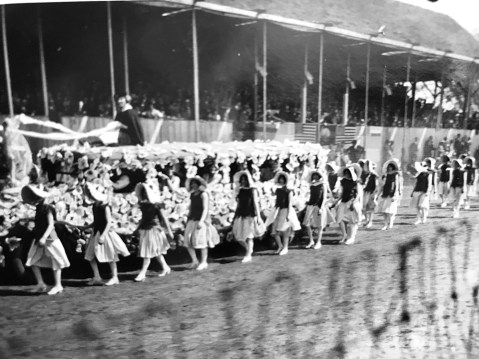
Photo by Lewis Reed, 1924
Source: thebloom.com
Books

Related Resources


Copyright Notice

Reed Brothers Dodge History (1915-2012) by Jeanne Gartner is licensed under a Creative Commons Attribution-NonCommercial 3.0 Unported License.


Recent Comments