
The Montgomery County Poor Farm: A Glimpse Through Lewis Reed’s Lens
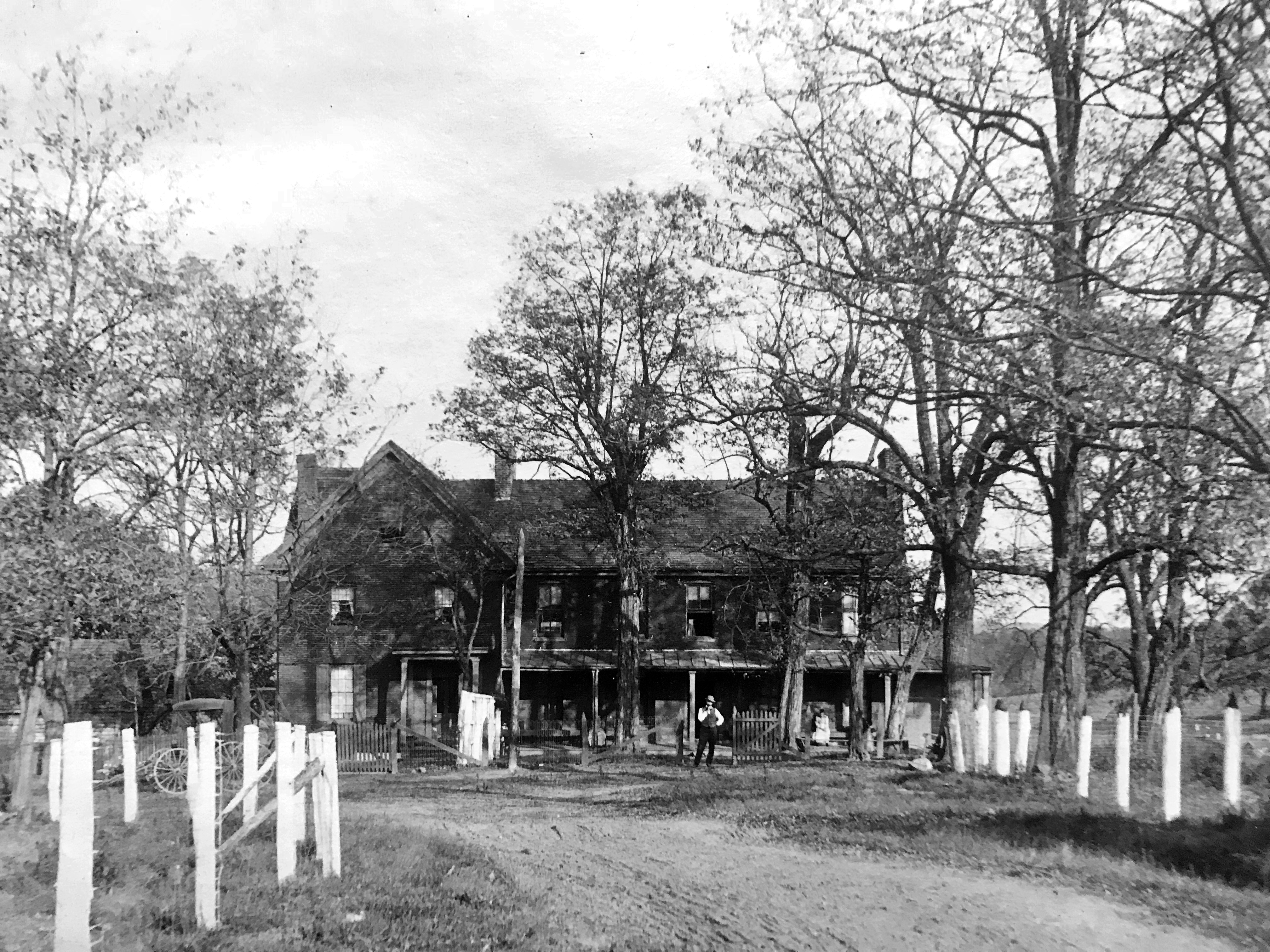
The Montgomery County Maryland Almshouse aka Poor Farm was established in 1789 and torn down in 1959. A modern jail is on its site on Seven Locks Road near Falls Road. Photo taken by Lewis Reed, ca. 1912.
When Lewis Reed raised his camera to capture the Montgomery County Poor Farm around 1912, he was doing more than photographing a building. He was making a choice about what deserved to be remembered.
Reed, known today as the founder of Reed Brothers Dodge, was also an avid photographer with a keen instinct for documenting the everyday life of his community. He photographed barns and bridges, parades and trains, town squares and quiet dirt roads. His lens turned toward the ordinary, and in doing so, he created an extraordinary record of Montgomery County as it was in the early 20th century.
The Poor Farm was not a picturesque subject. It carried with it a history of hardship; established in 1789 as a county-run farm for the poor, the elderly, and the sick, it was a place many preferred not to think about. By Reed’s time, reports described overcrowding, segregation, and unsanitary conditions. Countless residents who died there were buried in unmarked graves nearby. For most, the Almshouse stood as an uncomfortable reminder of poverty in a community that otherwise celebrated progress.
And yet, Lewis Reed photographed it.
Why? Perhaps because he understood, instinctively, that history is not just made up of celebrations and landmarks. It is also written in the places that society tried to hide. His photograph of the Poor Farm framed by leafless trees, a dirt road, and the faint figures of people at its entrance, reminds us that even the least visible institutions were part of the fabric of Montgomery County.
Lewis Reed’s eye was not sentimental, but it was honest. He recorded what was there, not just what was pleasant to see. By turning his lens on the Poor Farm, he acknowledged its existence and its place in the community’s story. Without that decision, we might have no image at all of this building that stood for more than a century and was torn down in 1959.
Today, this photograph is one of the few surviving visual records of the Montgomery County Poor Farm. It endures because Reed believed it mattered. As he might have said himself:
I photographed barns and houses, streets and machines, but also this place because it, too, was part of us. The Poor House was not grand, but it stood for something true about our county. Buildings vanish, memories fade, but a photograph holds them steady. Someday, when the Poor Farm is gone, this image may be all that remains. That is why I pressed the shutter.
Find more photos like this and much more on Montgomery History’s online exhibit, “Montgomery County 1900-1930: Through the Lens of Lewis Reed“.
Montgomery County Maryland Almshouse aka Poor Farm

The Montgomery County Maryland Almshouse aka Poor Farm was established in 1789 and torn down in 1959. A modern jail is on its site on Seven Locks Road near Falls Road. Photo taken by Lewis Reed.
A Poor Farm in Montgomery County? Yep. Although a lot of people have never heard of “poor farms,” they were once common across the nation. Various terms have been used to describe the “house for the poor,” and often the titles were unique to the part of the country where the house was located.
This is the Almshouse (aka Poor Farm). The 50-acre tract which includes the pauper’s graveyard was once part of the Montgomery County Poor Farm, established in 1789 as a place where the poor and homeless went to live, work, and, if they died, to be buried.
At the time, the farm was located well beyond the bounds of what was then the town of Rockville. But growth eventually caught up with the property. The farm house was razed in 1959 to make way for a county jail, and another chunk of property was dedicated for I-270. At least 75 graves were identified during a 1983 survey of the property by state archeologists, but according to George R. Snowden, funeral director, there may be as many as 500 people buried in the potter’s field.
Although the county’s poor farm existed for almost 170 years, virtually nothing has been documented about it, said Jane Sween, a librarian with the Montgomery County Historical Society. The property was deeded to the county in 1789 and expanded in 1825. After the Civil War, the farm’s almshouse was rebuilt, and until it was razed a century later it was home to an average of 40 indigent people, she said. The state paid for burial but did not pay for grave markers or upkeep on the property.
The Montgomery County Poor Farm Cemetery is no longer in existence. The National Park Service conducted an archaeological dig in 1987, which resulted in the removal of 38 bodies to Parklawn Cemetery in Rockville, Maryland. Montgomery County sold the land to a private developer.
Books

Related Resources


Copyright Notice

Reed Brothers Dodge History (1915-2012) by Jeanne Gartner is licensed under a Creative Commons Attribution-NonCommercial 3.0 Unported License.
 Reed Brothers Dodge History 1915 – 2012
Recent Comments