
Manipulated Photography: The Artful Illusions of Lewis Reed
Long before modern editing tools existed, Lewis Reed was already experimenting with ways to reshape a photograph. He layered exposures to place the same person in two places at once, coaxed ghostly figures to appear in broad daylight, sketched new landscapes directly onto his negatives, and teamed up with his daughter Mary Jane to bring soft color to black-and-white scenes.
His collection of manipulated photographs showcases his extraordinary creativity and versatility, employing methods such as hand-tinting, double exposure, applied handwork, and surreal ghost-like effects.
This special spotlight explores the imaginative world of Lewis Reed’s manipulated photography, a body of work that reveals his curiosity, sense of humor, and remarkable skill with the photographic tools of the early 1900s.
The Art of Double Exposure: Two Worlds on One Plate
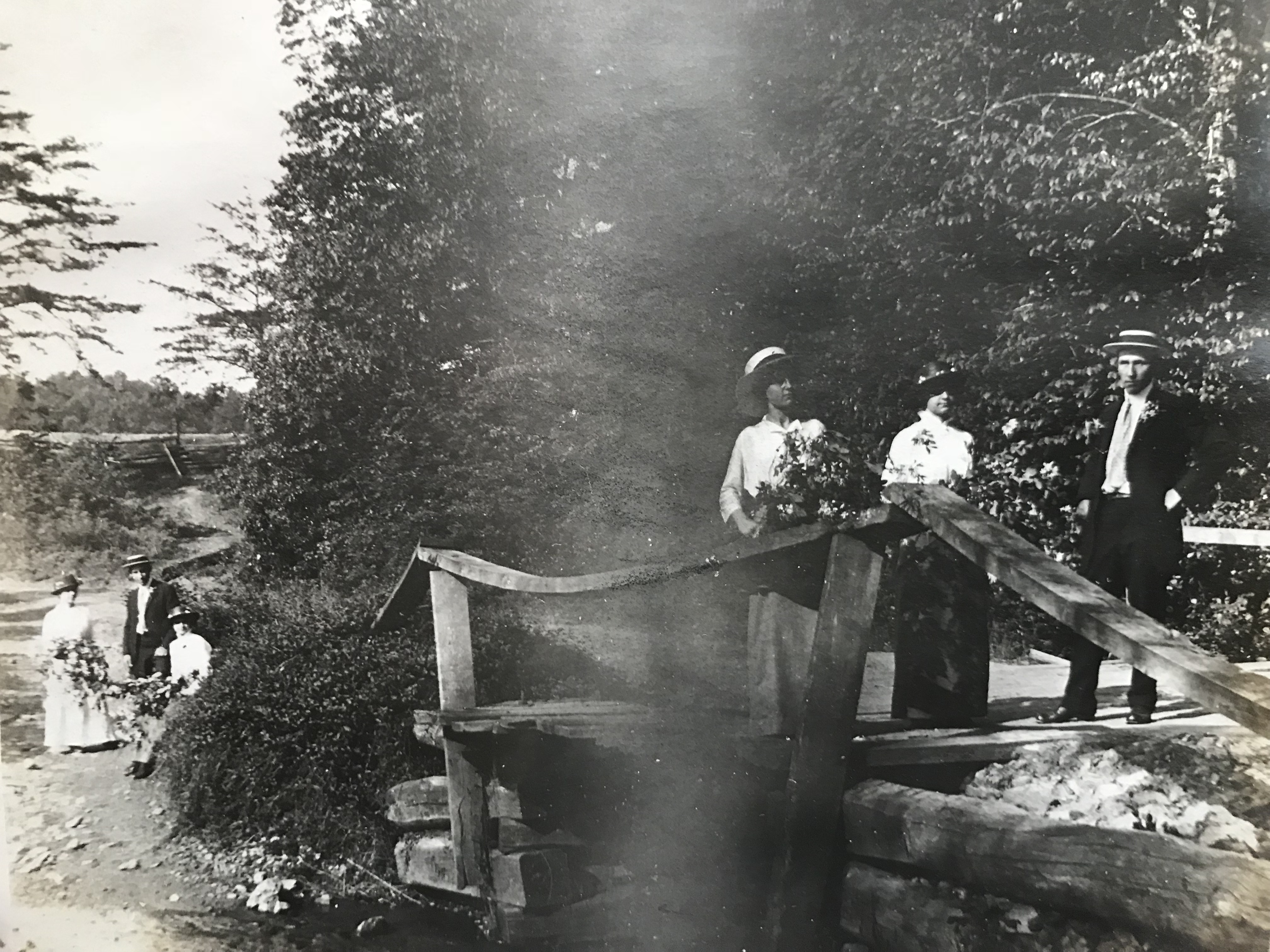
Lewis Reed and the same two ladies with bundles of flowers appear in this photo twice: standing on a bridge over Seneca Creek at Black Rock Mill, and again on the left at the foot of the bridge. The photo was taken in 1905.
Among his most striking techniques was double exposure. With precision and careful planning, Reed could layer two images onto a single glass plate.
A favorite example is a photograph where the same person appears twice in the same scene–once on a bridge, and again at the foot of it. The slight vertical seam where the exposures meet is still visible today, a reminder of the handmade magic behind the picture.
Without the benefit of modern editing tools, Reed achieved what we would now call a “clone effect”–over a century before Photoshop.
Ghosts in the Frame: Early Special Effects
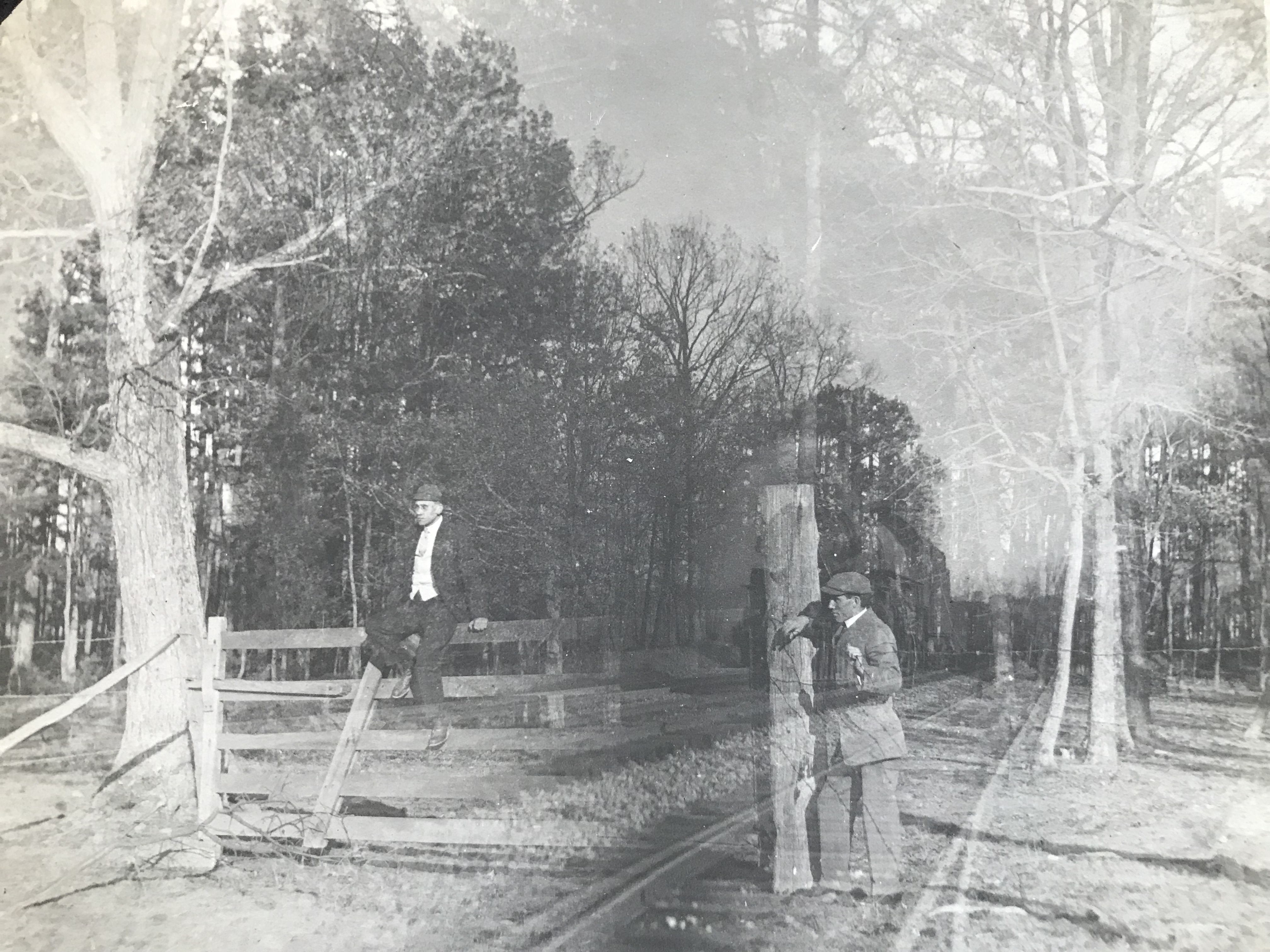
Surrealistic, ghost-like effect of Lewis Reed (right) standing next to a tree in the middle of train track.
Reed also created what he called “ghost photographs.” To produce them, he pre-exposed a faint figure onto a glass plate and then photographed a second subject over it. The result: an incompletely exposed ghostly image as well as a ‘sitter’ looking perfectly unaware.
Hand-Drawn Fantasies: Adding Scenery by Pencil
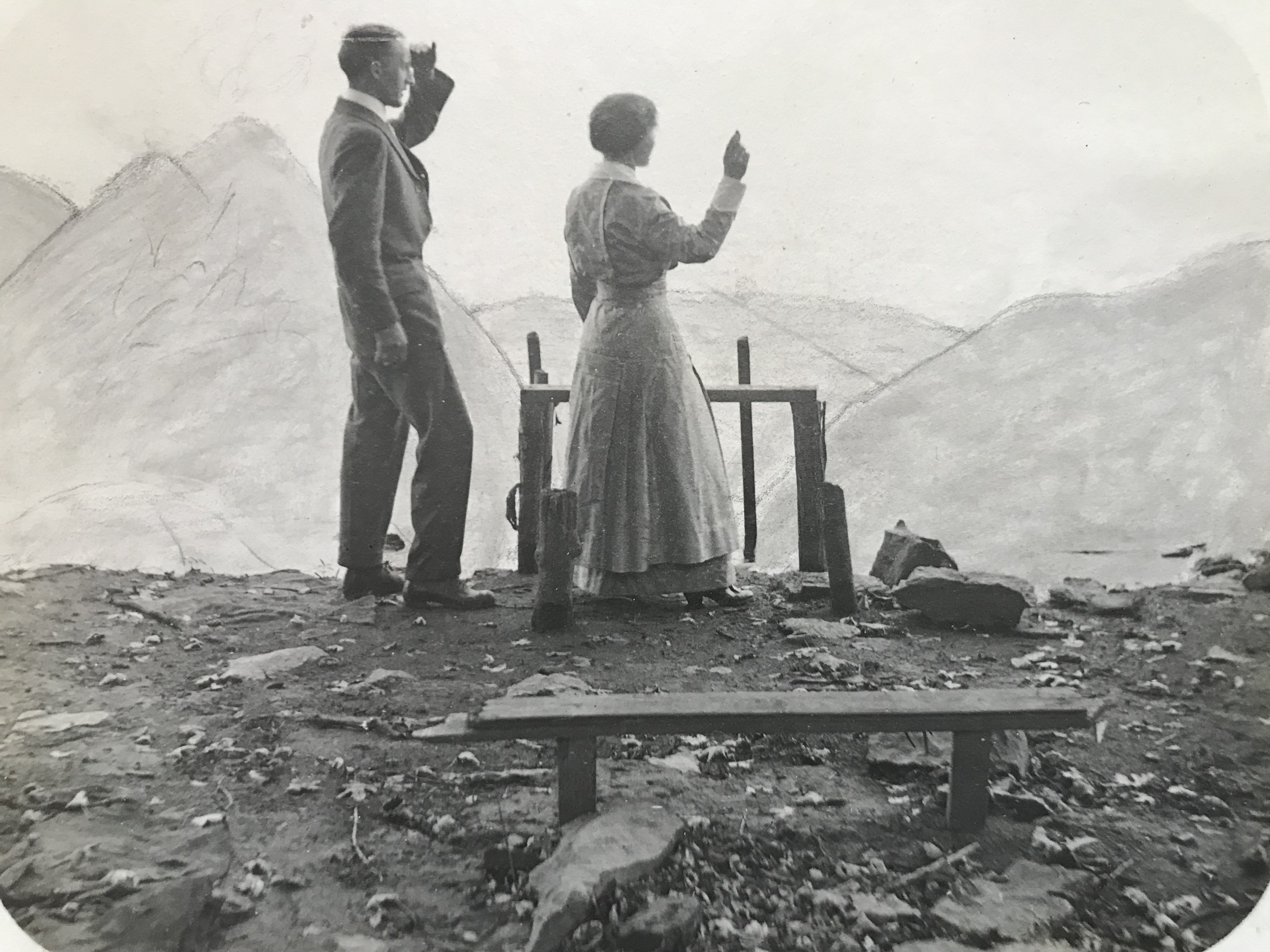
Lewis Reed himself drew on the glass negative, using a hard graphite pencil, to create the illusion of a couple gazing out on a mountain range, which was not part of the original photograph.
One of Lewis Reed’s most artistic manipulations involved hand-drawn backgrounds. He sometimes sketched new landscapes directly onto the negative–mountains, cliffs, or textured skies–before printing the final photograph. The finished piece blends photography and illustration in a way that feels surprisingly modern, reminiscent of today’s mixed-media art.
A Collaboration in Color: Hand-Tinting by Mary Jane Reed
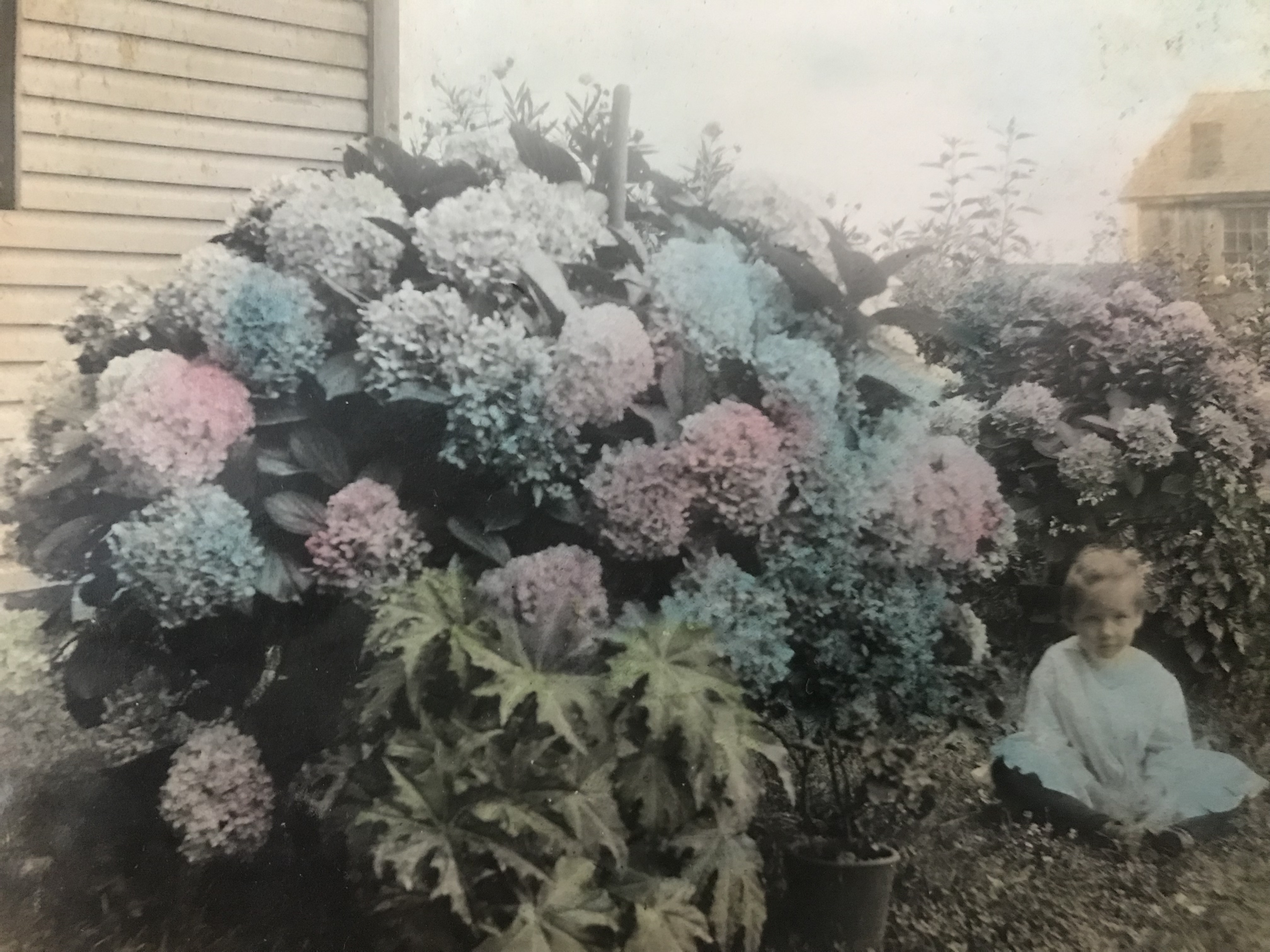
Amanda Reed after hand-tinting by Mary Jane (Reed) Gartner. Pastel was apparently a good choice for coloration.
Color film did not exist in the early 1900s, but Reed’s daughter, Mary Jane Reed, added life to his images with delicate watercolor hand-tinting. She brushed pale blues into skies, warm tones into skin, and soft greens into landscapes, giving Reed’s photographs an entirely new dimension. This father-daughter collaboration bridges technical skill and artistic intuition, two generations creating together.
Lewis Reed’s masterful use of hand-tinting, double exposure, and detailed handwork reveals not only his artistic creativity but also his technical skill in an era long before digital editing tools. These techniques allowed him to transform ordinary photographs into captivating visual stories full of playfulness and surreal charm. His work stands as a testament to the time, patience, and imagination required to manipulate photos by hand. For those intrigued by Lewis Reed’s fascinating photo manipulations and the art of early 20th-century photographic editing, the full series is available for exploration on this blog under the “manipulated photography” category.
For more on manipulated photography, visit the series: https://reedbrothersdodgehistory.com/category/manipulated-photography/.
Books

Related Resources


Copyright Notice

Reed Brothers Dodge History (1915-2012) by Jeanne Gartner is licensed under a Creative Commons Attribution-NonCommercial 3.0 Unported License.


Recent Comments