
Autumn at Pleasant Hills: A Pumpkin Harvest in Early Darnestown
In the early 1900s, Darnestown was still firmly rooted in agriculture, with large family farms, open fields, and country roads defining much of the surrounding landscape. Pleasant Hills was part of that rural world, and the Kelley family was among the local families whose farm products were well known throughout the area.
Lewis Reed’s photograph of three men standing in Thomas Kelley’s pumpkin field preserves a rare glimpse of that earlier Darnestown. The men are clearly not farm workers at harvest. Dressed in jackets, hats, and polished shoes, they appear to have simply stopped among the pumpkins and posed for Reed’s camera, turning an ordinary autumn visit into a lasting record of local history.
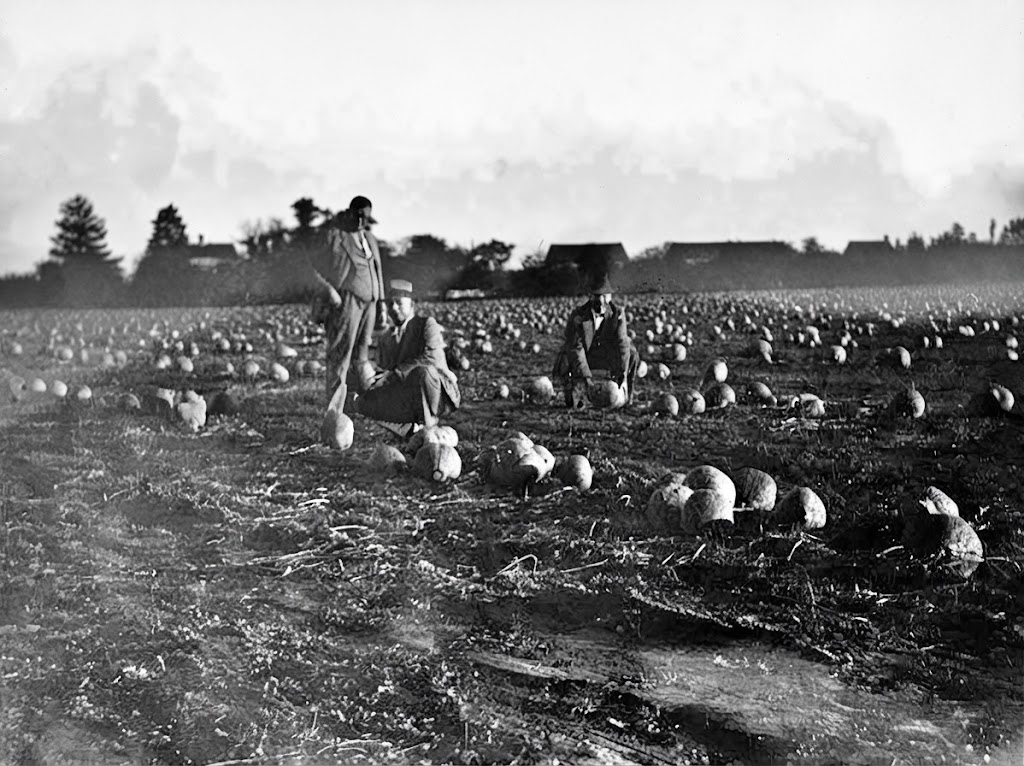
Men gathering pumpkins in Thomas Kelley’s field near Pleasant Hills in the Darnestown area, early 1900s. Lewis Reed’s photographs preserved not only community celebrations, but also the seasonal traditions of everyday life in Montgomery County. Photograph by Lewis Reed.
Pleasant Hills was a substantial working farm, and the Kelley family became especially associated with fresh produce, including the well-known “Kelley Corn” wagon that traveled through the community. Pumpkins were part of the farm’s autumn landscape at a time when seasonal produce came directly from nearby fields and local farms remained closely tied to everyday life.
Lewis Reed knew this countryside well. Raised in Darnestown, he photographed the people, farms, roads, homes, and small moments that surrounded him. At the time, such scenes would have seemed entirely ordinary, but today they preserve details that written records rarely capture: how people dressed, where they gathered, and what the rural landscape looked like before suburban growth transformed much of western Montgomery County.
That is what gives this photograph its lasting importance. It is more than a picture of three men in a pumpkin field. It is a surviving fragment of early Darnestown, preserving Pleasant Hills as part of a farming community that has largely disappeared from the modern landscape.
October 1915: The Birth of a Rockville Automobile Legacy
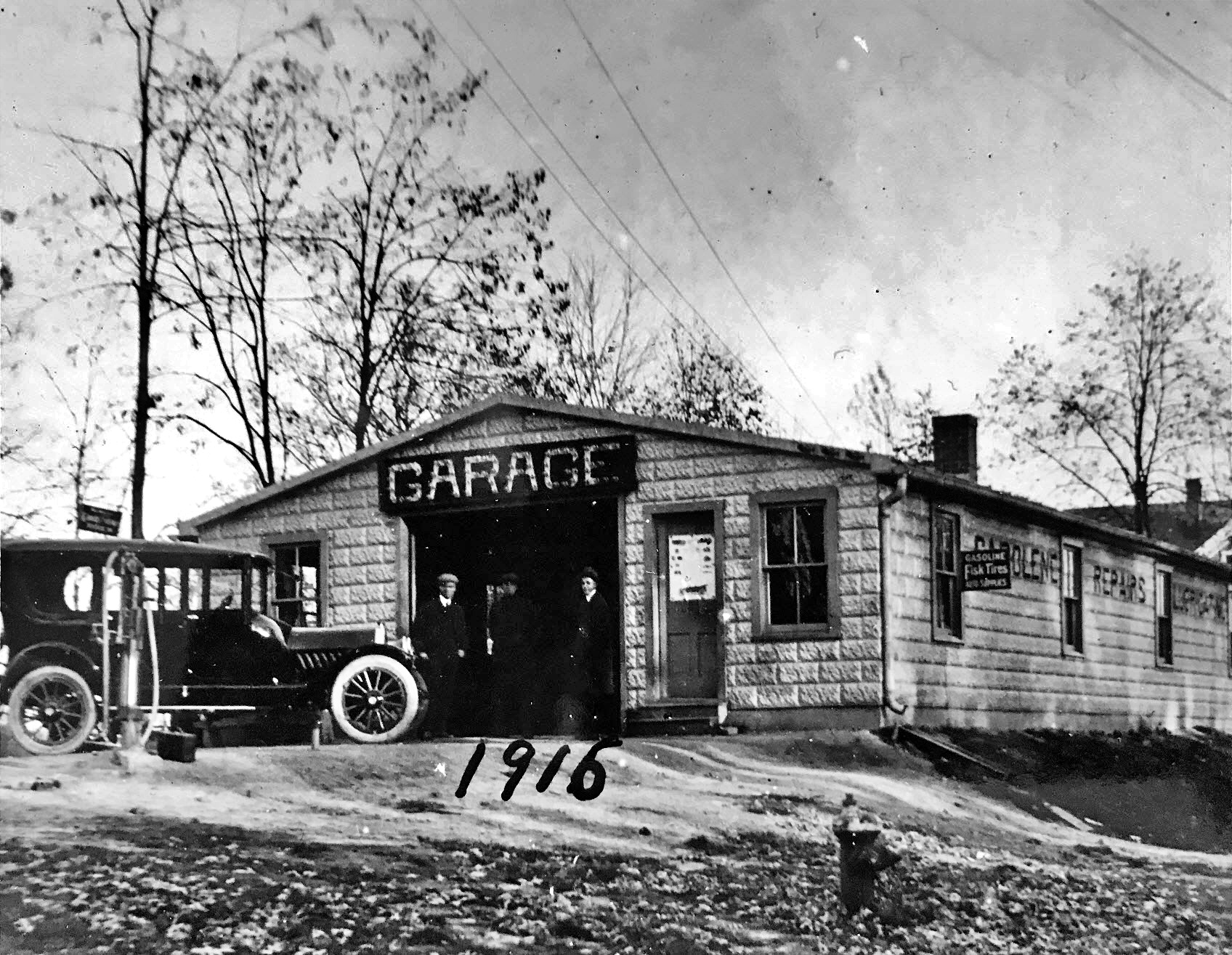
Rockville Garage, 1916. The early automobile garage at the intersection of Rockville Pike and Veirs Mill Road, where Lewis Reed and his partners were building the business that would soon become Reed Brothers Dodge.
111 Years Ago This Month, Reed Brothers Dodge Began Its Remarkable Journey
In October 1915, automobiles were still something of a novelty on the roads of Montgomery County. Horses and wagons remained common, many rural roads were unpaved, and owning a motorcar was far from an everyday experience. Yet the automobile was beginning to change how Americans traveled, worked, and connected with the world beyond their own communities.
It was against this backdrop, 111 years ago this month, that the story of Reed Brothers Dodge began.
Only a few months earlier, in July 1915, Lewis Reed had entered the automobile business with Roy and Griffith Warfield in a newly established enterprise known as Rockville Garage. The business operated at the busy intersection of Rockville Pike and Veirs Mill Road, an important crossroads at the edge of Rockville.
The location already had a brief connection to the automobile trade. In 1914, Lee Ricketts and his sons had operated an Overland automobile agency there, one of the earliest automobile sales operations in the area. Lewis Reed was not involved with the Overland agency, but the activity at the site reflected just how quickly the automobile was beginning to find a place in everyday life.
A New Automobile Company Comes to Rockville
The decisive moment came in October 1915, when Rockville Garage secured a franchise to sell Dodge Brothers Motor Cars.
The timing was remarkable.
John and Horace Dodge had introduced their first automobile only the year before, in late 1914. The brothers were already highly respected within the automobile industry, having supplied engines, transmissions, and other components to some of Detroit’s leading manufacturers before placing the Dodge name on a car of their own.
Their new automobile quickly earned a reputation for sturdy construction and reliability.
Far from Detroit, in the small county seat of Rockville, Lewis Reed and his partners recognized an opportunity.
The arrival of the Dodge Brothers franchise gave Rockville Garage an automobile line that would ultimately define the business for nearly a century.
At the time, no one could have known what that decision would become.
There was no sprawling dealership, no large showroom filled with rows of new cars, and certainly no modern service department. Early automobile dealers were often mechanics, salesmen, gasoline merchants, tire repairmen, and problem-solvers all at once. Keeping the early motorist on the road could be as important as selling the automobile itself.
Rockville Garage grew out of that pioneering era.
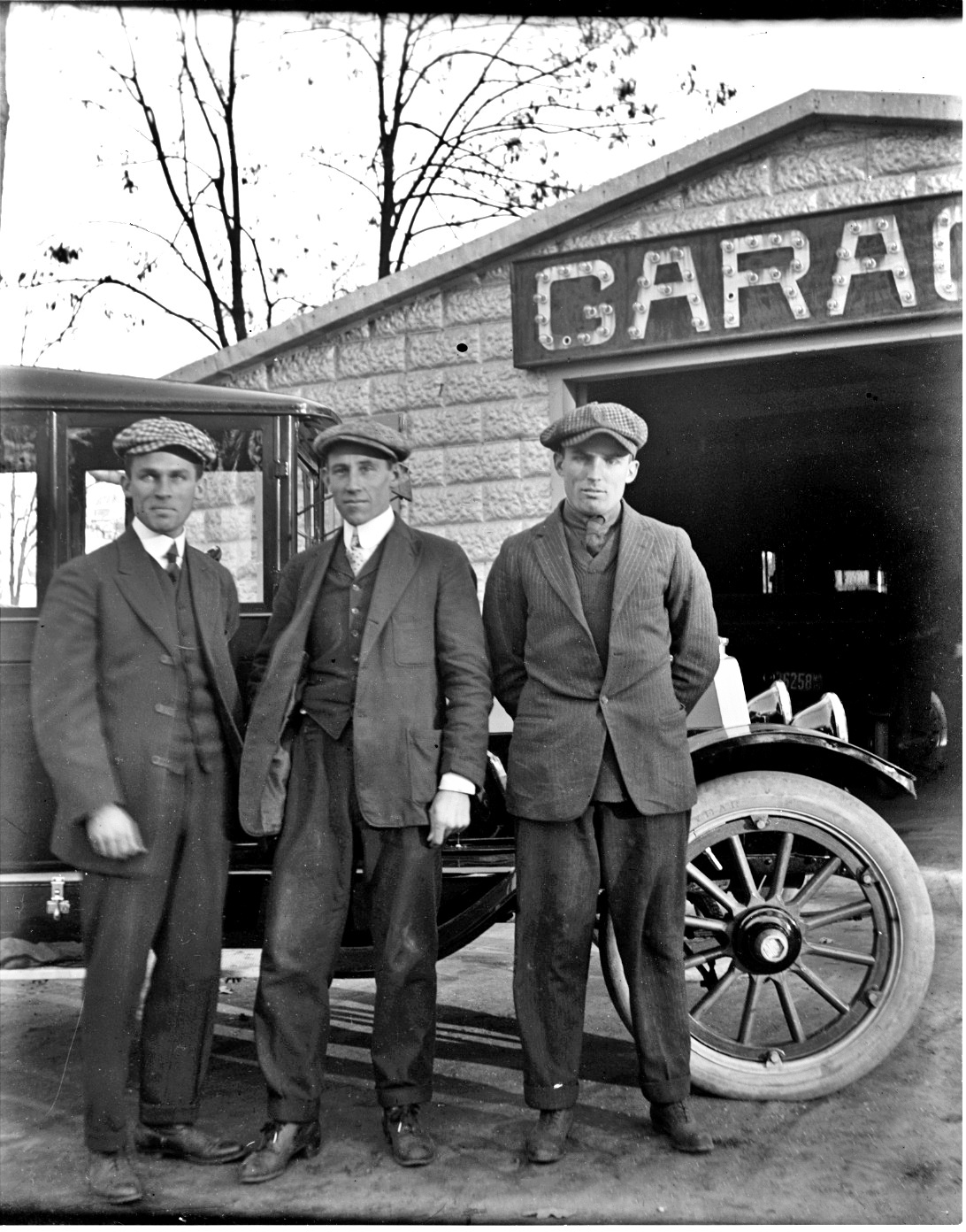
Original Owners of Rockville Garage, 1915. Lewis Reed with Roy and Griffith Warfield, the original partners in the Rockville automobile business that would become Reed Brothers Dodge.
Building a Business in the Early Automobile Age
Lewis Reed was a skilled mechanic as well as a businessman, an important combination when automobiles still required frequent adjustments and repairs. During the early years, the garage represented several makes in addition to Dodge, a common practice among automobile dealers of the period.
But Dodge gradually became the name most closely associated with the business.
The garage also sold gasoline, tires, accessories, and even farm equipment. Automobile dealerships of the 1910s were rarely limited to the sale of passenger cars. They served a community that was only beginning to discover what motorized transportation could accomplish.
The automobile was changing Montgomery County one road and one family at a time.
Farmers could travel farther to market. Doctors could reach patients more quickly. Businesses could move goods over greater distances. Families could visit relatives and neighboring towns without relying entirely on railroads or horse-drawn transportation.
Rockville Garage became part of that transformation.
From Rockville Garage to Reed Brothers Dodge
In 1916, Lewis Reed purchased a one-third interest in the business. Three years later, in 1919, he bought out the Warfield brothers.
That August, Lewis’s brother Edgar Reed joined him as a partner.
The business then took the name by which generations of Montgomery County residents would come to know it:
Reed Brothers Dodge.
Although the Reed Brothers name arrived in 1919, the foundation had already been laid four years earlier. The Dodge franchise obtained in October 1915 established the relationship with the automobile manufacturer that would endure through extraordinary changes in both the company and the community surrounding it.
The dealership survived the Great Depression, automobile shortages during World War II, changing highways, suburban growth, dealership relocations, corporate changes within Chrysler, and dramatic changes in the automobile itself.
Through it all, the Reed family remained connected to the business.
Three generations would ultimately guide the dealership.
An October Decision That Lasted Nearly a Century
What began at a modest roadside garage in 1915 eventually became one of Maryland’s oldest Dodge dealerships under continuous family ownership.
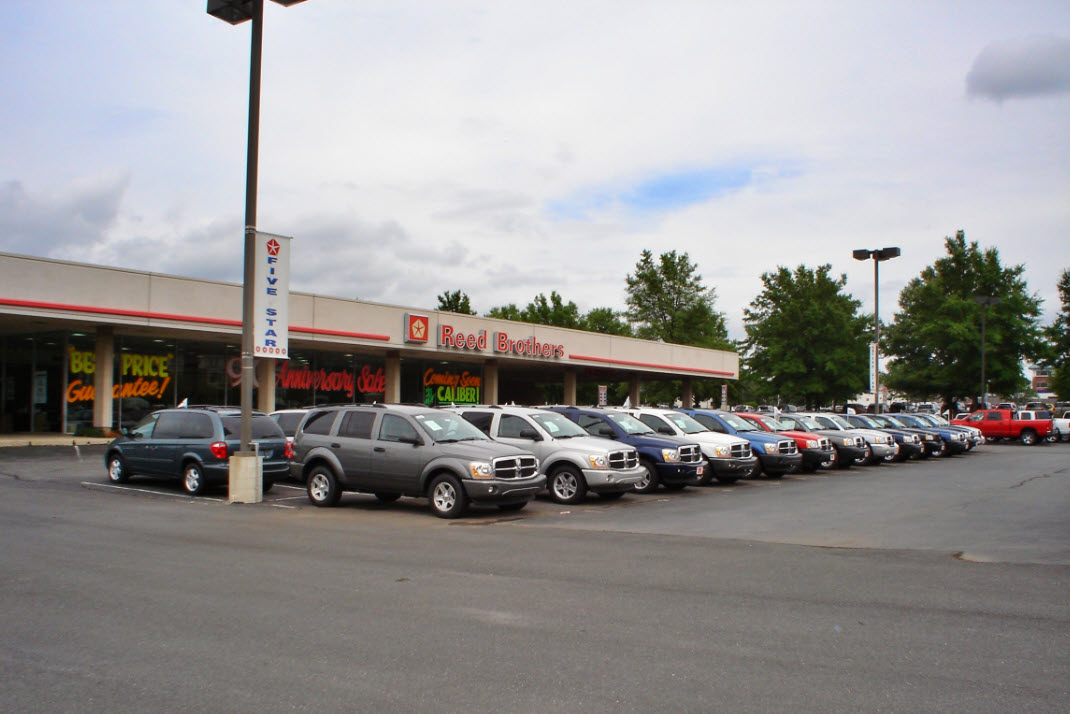
Reed Brothers Dodge in its later years on Frederick Road. From the modest Rockville Garage of 1915 to a modern automobile dealership, the family business grew and changed with Rockville while remaining under continuous Reed family ownership until its closing in 2012.
Reed Brothers Dodge remained in business until May 1, 2012, nearly ninety-seven years after Rockville Garage first began selling Dodge Brothers automobiles.
By then, the world surrounding the dealership bore little resemblance to the one Lewis Reed had known in October 1915.
The dirt and gravel roads had become highways. Rockville had grown from a small county seat into a major suburban community. The simple open touring cars of the early automobile age had evolved into vehicles filled with technology that the first motorists could scarcely have imagined.
Yet the thread connecting those two eras remained remarkably intact.
It began with a small garage, an emerging automobile company from Detroit, and a young businessman willing to place his future in a machine that was changing America.
One hundred eleven years ago this month, in October 1915, Rockville Garage became a Dodge Brothers dealer.
That moment marked the beginning of a relationship that would span nearly a century and become the foundation of Reed Brothers Dodge.
What may have seemed at the time like a promising new business opportunity became something much larger: a family legacy, a Rockville institution, and an enduring chapter in Montgomery County’s automotive history.
104 Years Ago, Six Men and Five Motorcycles Launched Montgomery County’s First Police Department

The first Montgomery County Police Department Motor Unit, photographed outside Reed Brothers Dodge in Rockville on July 4, 1922. Chief Charles Cooley (center) stands with Officers Earl Burdine, Lawrence Clagett, Guy Jones, Leroy Rodgers, and Oscar Gaither beside their Harley-Davidson motorcycles on the day the department officially began operations. Photograph by Lewis Reed.
On the morning of July 4, 1922, a small group assembled outside Reed Brothers Dodge in Rockville to mark the beginning of a new era in Montgomery County’s history. Chief Charles Cooley and five motorcycle officers had been appointed to form the county’s first organized police department. Before they departed on their inaugural patrols, local photographer Lewis Reed preserved the moment with his camera.
The photograph captures Officers Earl Burdine, Lawrence Clagett, Guy Jones, Chief Charles Cooley, Leroy Rodgers, and Oscar Gaither standing beside their Harley-Davidson motorcycles. More than a century later, it remains one of the earliest surviving images of the Montgomery County Police Department and a remarkable record of law enforcement in its infancy.
New Police Force Installed
As reported in the Montgomery County Sentinel, July 7, 1922
The officers of the Montgomery County Police Department were installed in office at the Court House on Tuesday, July 4, 1922. A goodly number of persons were present to witness the ceremony. This new force is a novelty now upon trial, introduced by an Act of the last Legislature for Maryland, and it is the general impression that it will prove to be a worthy innovation in behalf of peaceful government.
The force is composed of six members: Chief Charles T. Cooley and Privates Oscar T. Gaither, Leroy Rodgers, Earl Burdine, Guy L. Jones, and Lawrence Clagett. They filed into the courtroom wearing their new uniforms of gray whipcord cloth and their weapons, taking their seats in a line facing the Judge’s bench.
The program began with the police officers taking their oaths, administered by Mr. Ray, followed by the presentation of certificates of appointment by President Benjamin Perry of the Board of County Commissioners.
The ceremony concluded with brief speeches by Judge E. C. Peter and State’s Attorney Thomas L. Dawson.
Judge Peter addressed the new force, congratulating them on their appointment but warning them sternly against bribery, petty jealousy, and “winking at crime.” He encouraged them to uphold order, peace, and dignity in the county by strictly enforcing police laws against all offenders without fear or favor. He emphasized that the State stood behind them in their work, and that their duty was to maintain their honor and make the laws “masters of this land”.
State’s Attorney Dawson advised the officers to keep detailed records of all dates and circumstances in cases they dealt with, which he noted would lead to the “economizing of time” and the “swift and indubitable conviction of offenders”.
It was established that the new police force would work in harmony with, rather than interfere with, the work of the Sheriff’s office. Regarding compensation, the Chief of the force was to receive $1,800 a year, while each private was set to receive $1,500. Additionally, each officer was allowed $300 a year for the upkeep of his motorcycle.
The Montgomery County these officers served was a rural community of fewer than 35,000 residents. Modern police communications did not yet exist. Officers relied on telephones at the courthouse and local firehouses, while a flashing signal light atop the Red Brick Courthouse summoned them when emergencies arose. It was a simple but effective system for an era before radios and patrol cars became standard equipment.
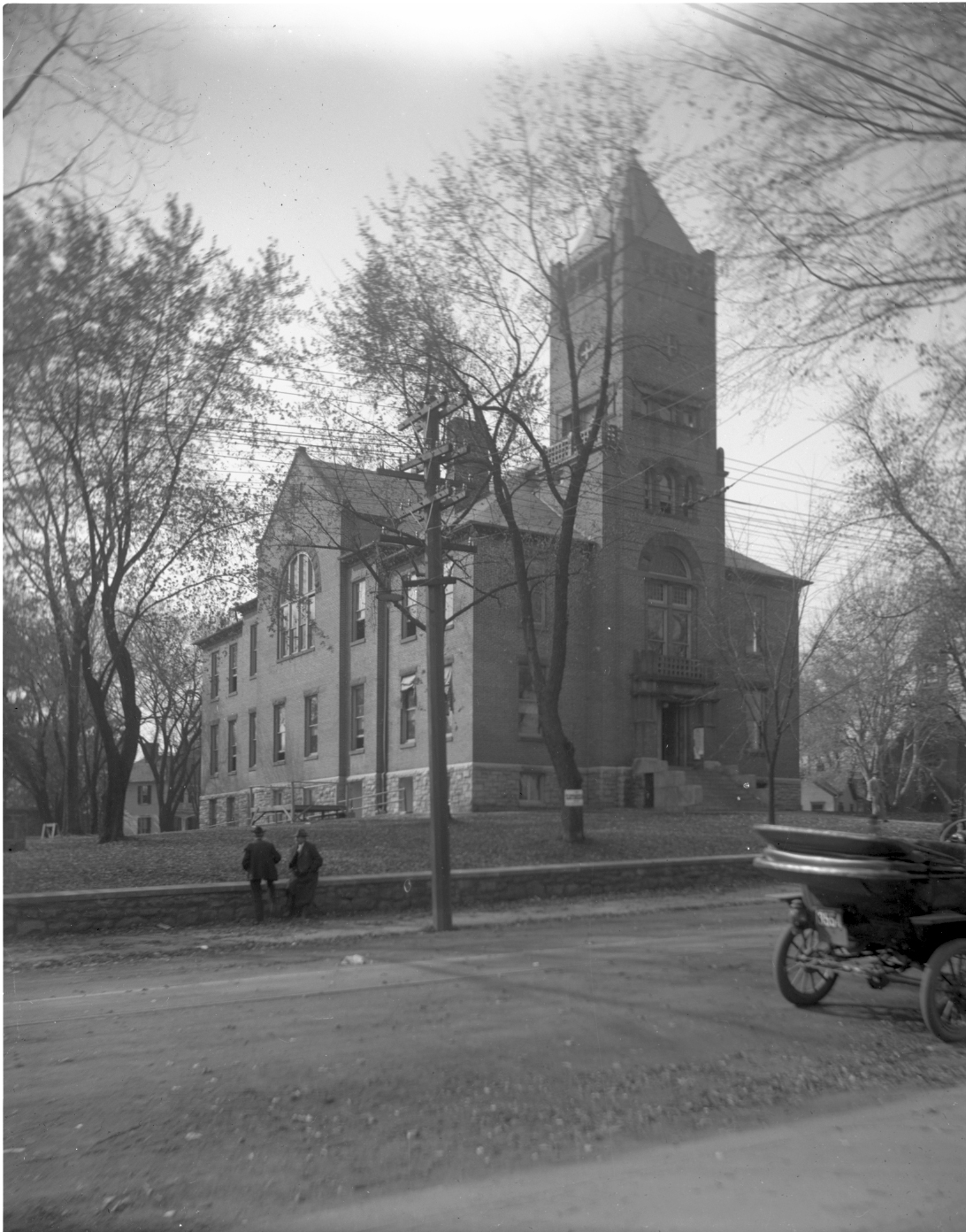
The Red Brick Courthouse in Rockville, photographed by Lewis Reed in 1914. Just eight years later, the courthouse became the headquarters of Montgomery County’s newly established Police Department, where officers reported for duty and received emergency calls before the era of police radios.
Lewis Reed’s 1922 image records the birth of Montgomery County’s Police Department at a time when motorcycles replaced horses, rural roads linked isolated communities, and professional law enforcement was becoming an essential public service.
Today, this remarkable photograph remains an enduring testament to both the officers who answered the county’s first call to duty and the photographer whose work continues to preserve Montgomery County’s rich history.
A Field, a Gun, and a Trap
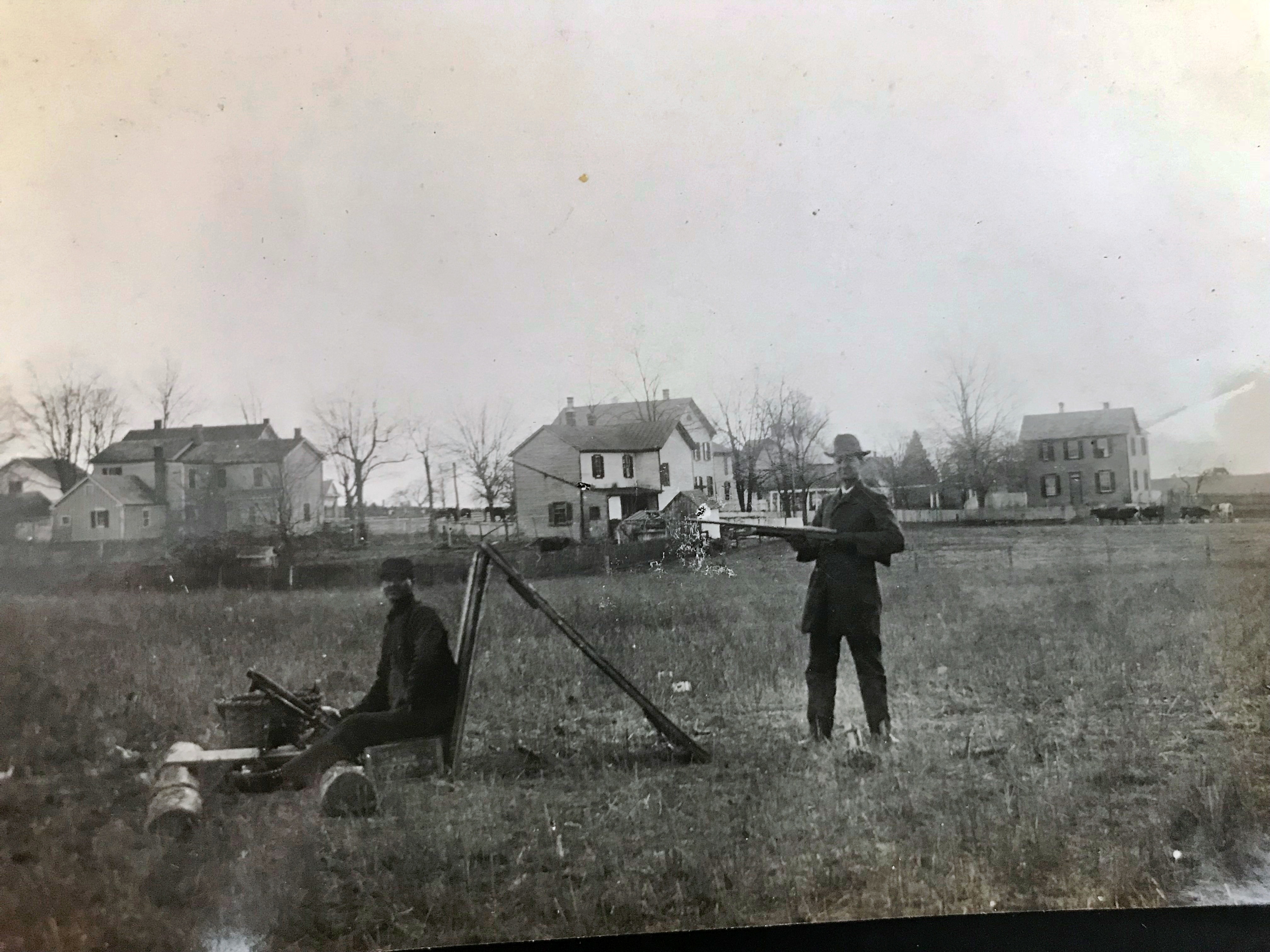
Early 1900s field trap shoot in Darnestown, Maryland, captured by Lewis Reed, showing one man poised with a shotgun while another readies the simple wooden trap amid farmhouses and open pasture.
In this photograph, two men stand in an open field bordered by modest frame houses and fenced pastures, a scene typical of small crossroads communities like Darnestown in the early 1900s. One man holds what appears to be a long gun, while the other sits beside a simple wooden rig that resembles the framework used to cock and release early manually operated target throwers or live‑bird traps
The proximity to grazing livestock suggest that this is not a formal gun club range but an improvised shooting ground on private farmland, which was common before purpose‑built trap clubs spread widely. Rural shooters often practiced in meadows or behind farmhouses, using homemade equipment and relying on a friend to work the trap while the shooter took position in front.
Darnestown in Reed’s era was a small but important crossroads in western Montgomery County with farms, mills, and the Andrew Small Academy serving the surrounding countryside. Later roadside historical markers that use Lewis Reed’s images emphasize how thoroughly he documented the community’s buildings and daily activities, making it likely that he also recorded local recreations such as shooting, fishing, or horse‑related events.
Clay target shooting gained popularity in the United States after the introduction of standardized targets and simple spring‑powered traps in the late 19th century, and Maryland farm communities were no exception. Scenes like this one, with neighbors gathering in an open field to test their marksmanship, reflect how shooting sports blended workday skills with weekend socializing in a largely agricultural landscape.
This image captures a rare glimpse of informal trap shooting at the moment when traditional rural life was beginning to intersect with modern leisure and sport. The combination of farmhouses, fence lines, cattle, and improvised equipment tells a layered story: of a county still rooted in agriculture, of residents embracing new pastimes, and of a photographer committed to preserving unscripted moments as carefully as grand events.
For historians, collectors, and local families, the photograph is more than a quaint scene; it is a visual document that anchors memories of people, place, and pastime in a specific landscape. As additional Reed negatives are identified and researched, images like this may help flesh out the early history of shooting sports in Montgomery County and deepen understanding of how communities like Darnestown spent their rare hours of leisure.
Montgomery County Maryland Almshouse aka Poor Farm

The Montgomery County Maryland Almshouse aka Poor Farm was established in 1789 and torn down in 1959. A modern jail is on its site on Seven Locks Road near Falls Road. Photo taken by Lewis Reed.
A Poor Farm in Montgomery County? Yep. Although a lot of people have never heard of “poor farms,” they were once common across the nation. Various terms have been used to describe the “house for the poor,” and often the titles were unique to the part of the country where the house was located.
This is the Almshouse (aka Poor Farm). The 50-acre tract which includes the pauper’s graveyard was once part of the Montgomery County Poor Farm, established in 1789 as a place where the poor and homeless went to live, work, and, if they died, to be buried.
At the time, the farm was located well beyond the bounds of what was then the town of Rockville. But growth eventually caught up with the property. The farm house was razed in 1959 to make way for a county jail, and another chunk of property was dedicated for I-270. At least 75 graves were identified during a 1983 survey of the property by state archeologists, but according to George R. Snowden, funeral director, there may be as many as 500 people buried in the potter’s field.
Although the county’s poor farm existed for almost 170 years, virtually nothing has been documented about it, said Jane Sween, a librarian with the Montgomery County Historical Society. The property was deeded to the county in 1789 and expanded in 1825. After the Civil War, the farm’s almshouse was rebuilt, and until it was razed a century later it was home to an average of 40 indigent people, she said. The state paid for burial but did not pay for grave markers or upkeep on the property.
The Montgomery County Poor Farm Cemetery is no longer in existence. The National Park Service conducted an archaeological dig in 1987, which resulted in the removal of 38 bodies to Parklawn Cemetery in Rockville, Maryland. Montgomery County sold the land to a private developer.
Books

Related Resources


Copyright Notice

Reed Brothers Dodge History (1915-2012) by Jeanne Gartner is licensed under a Creative Commons Attribution-NonCommercial 3.0 Unported License.


Recent Comments