
Halloween History: Montgomery County 100 Years Ago
Have you ever wondered how families in Montgomery County marked Halloween 100 years ago? Thanks to a collection of photographs from Lewis Reed, we can journey back to the year 1914 and glimpse the traditions of that era.
At the start of the 20th century, Halloween costumes were simple, women usually donned their everyday attire enhanced with homemade masks. The concept of full costumes was just emerging, inspired by the popular masquerade balls of the early 1900s. It wasn’t until the 1920s and 1930s that manufactured costumes became widely available for purchase.

Halloween, ca. 1914. These women are holding homemade Halloween masks for their upcoming celebration. Photo by Lewis Reed
In those days, a simple mask was all it took to join in the festivities. Curious about how your ancestors celebrated? Old newspapers provide wonderful insights into the customs and community spirit of the time, and Lewis Reed’s photos enrich this nostalgic look back.
Stores Well-Stocked for Festivities
Local stores prepared for the season by stocking Halloween essentials. Advertisements from the period featured costumes and masquerade suits for parties and social events, signaling that the holiday was well embraced.

The Washington Post, 30 October 1916
The photo below captures a Halloween gathering from around 1914. The image shows a group of family and friends dressed in early 20th-century attire, adorned with costumes and decorations typical of Halloween celebrations of the era. The costumes are homemade, featuring masks and hats that reflect the masquerade style popular at the time.
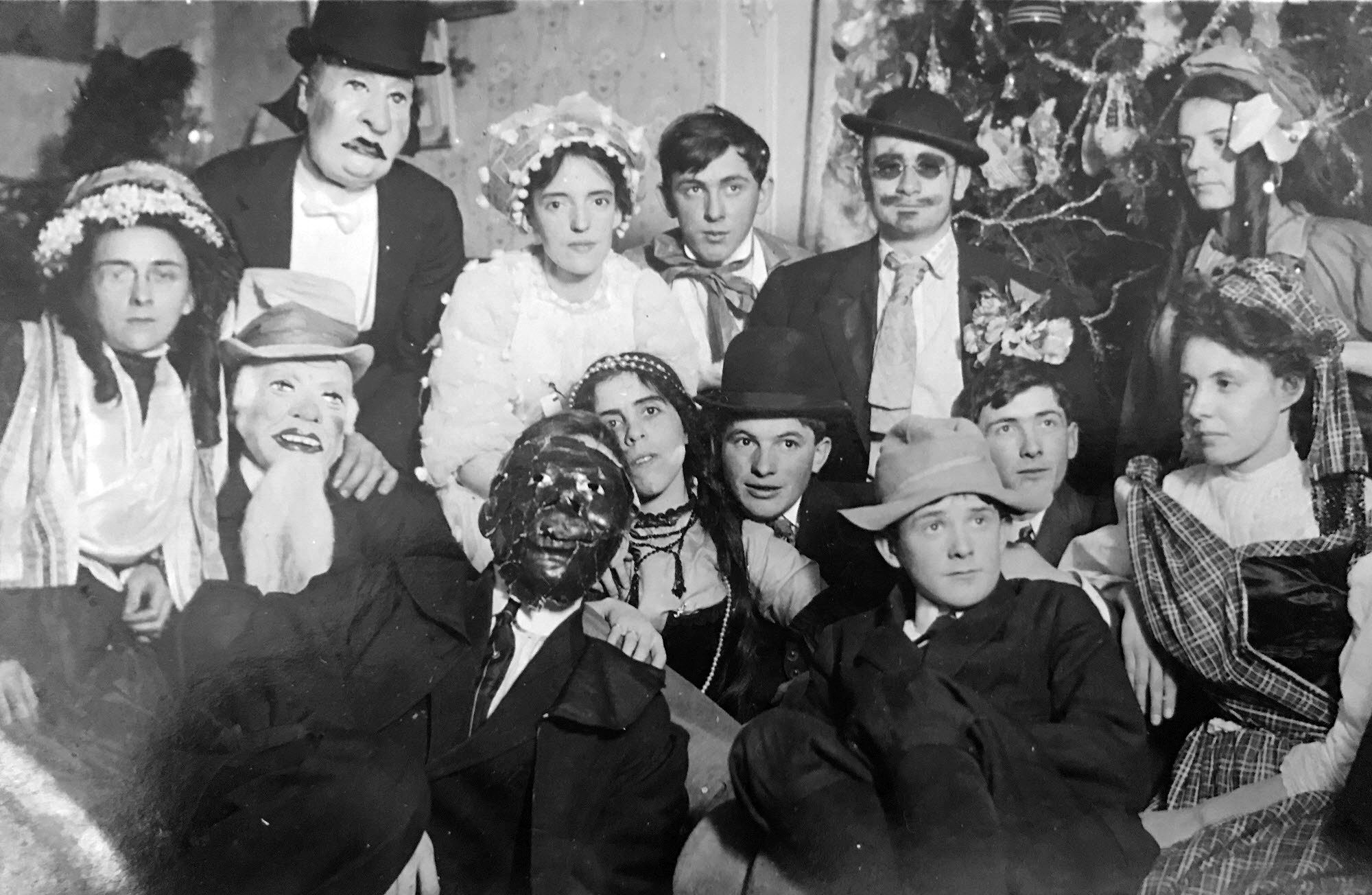
This photo captures a moment from a Halloween party over 100 years ago and is equal parts amusing and creepy. Photo by Lewis Reed
Dancing and Social Gatherings
Halloween was often celebrated with lively parties and dancing. Some society columns even listed the guests attending these events. A 1916 Halloween party described in The Evening Star painted a vibrant picture: rooms were decorated with autumn leaves, lanterns, chrysanthemums, and orange-and-black streamers. Guests played old-fashioned games, followed by gathering around a fireplace in darkness to be led through the house by a ghostly figure. The night concluded with music, dancing, and refreshments.
Refreshments included traditional pumpkin pies, molasses cookies, and even festive Halloween salads, demonstrating the importance of food to the celebrations.

The Evening Star, October 24, 1915
Mischievous Halloween Pranks
Mischief and pranks were also a notable aspect of Halloween in the early 1900s. Children, often referred to as “witches and goblins, ghosts and mischief-making youngsters,” were permitted a certain degree of revelry. However, some pranks were considered “downright bizarre” by modern standards, such as children knocking on doors and throwing flour at those who answered. This widespread mischief eventually led to a societal push by 1920 to re-frame Halloween as a holiday centered on community gatherings and festive parades, rather than unruly behavior. The shift aimed to channel the holiday’s energy into more organized and less disruptive forms of celebration.
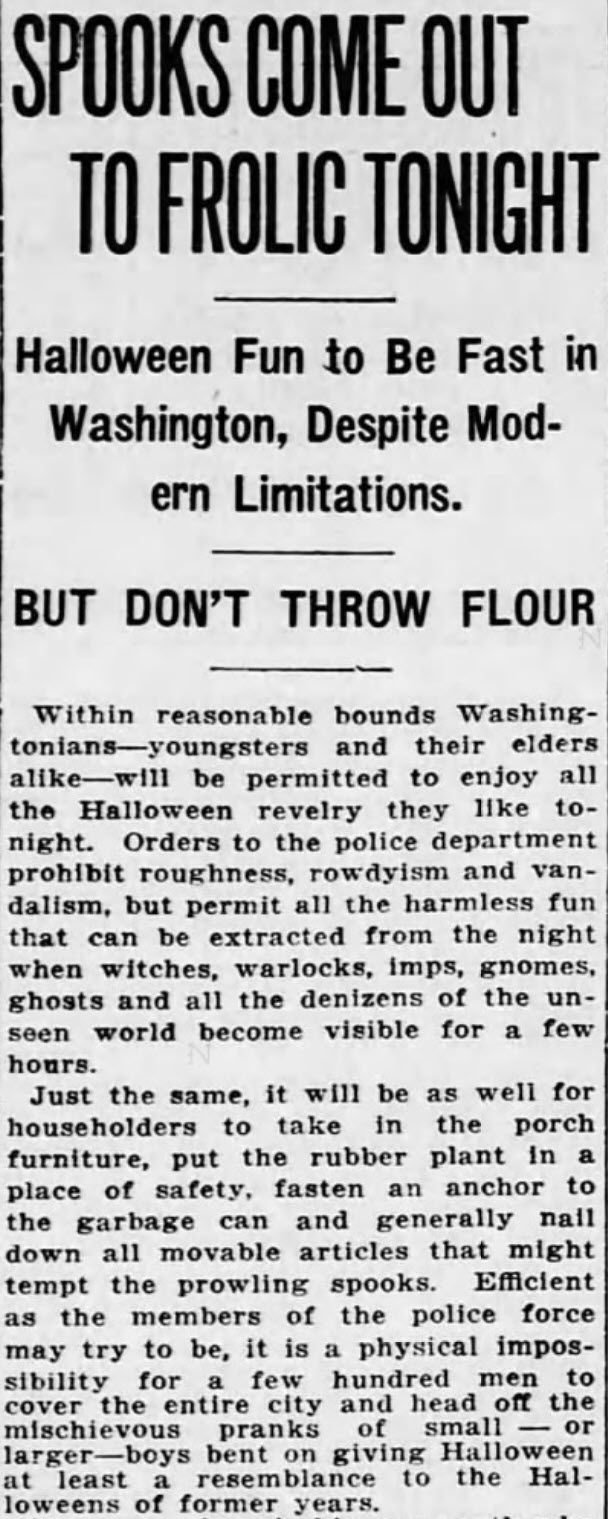
The Evening Star, October 31, 1916
The Birth of Halloween Parades
By the 1920s, pranks had become too unruly, prompting communities to steer Halloween toward organized festivities, including parades. These events fostered safer, family-friendly celebrations focused on community gathering rather than mischief.
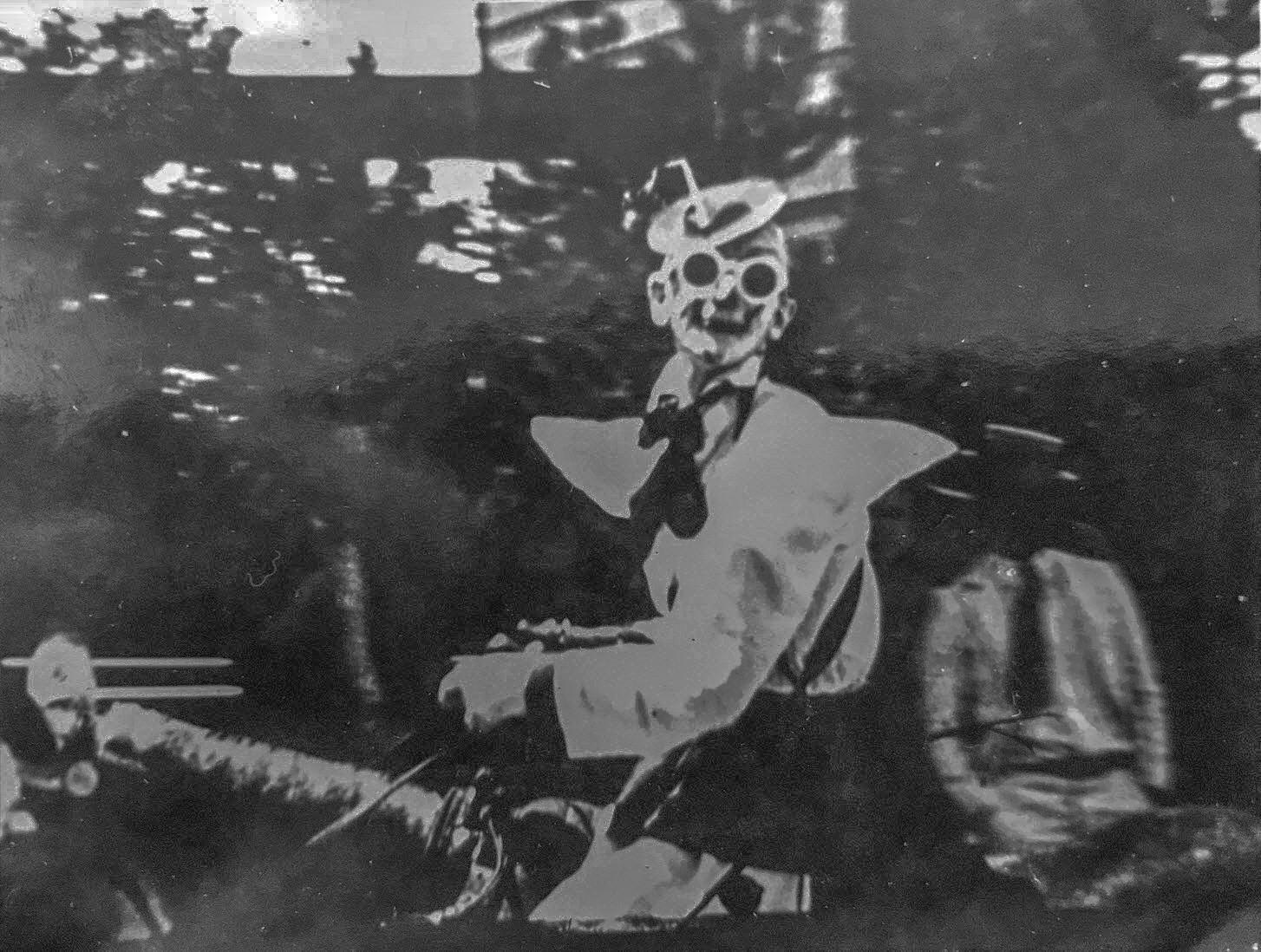
There is something undeniably creepy about this clown in sunglasses riding on a horse in a Halloween Parade. Location is unknown. Photo by Lewis Reed
The above intriguing image captures a performer dressed as a clown riding a horse during an early Halloween celebration. The costume features a striking pointed collar and a whimsical hat, but notably includes round dark sunglasses; an unusual and playful accessory for the era. This detail highlights the creativity and individuality often showcased in homemade Halloween costumes of the period, blending theatrical flair with a touch of modern whimsy.
Books

Related Resources


Copyright Notice

Reed Brothers Dodge History (1915-2012) by Jeanne Gartner is licensed under a Creative Commons Attribution-NonCommercial 3.0 Unported License.
 Reed Brothers Dodge History 1915 – 2012
Recent Comments