
The Montgomery County Poor Farm: A Glimpse Through Lewis Reed’s Lens
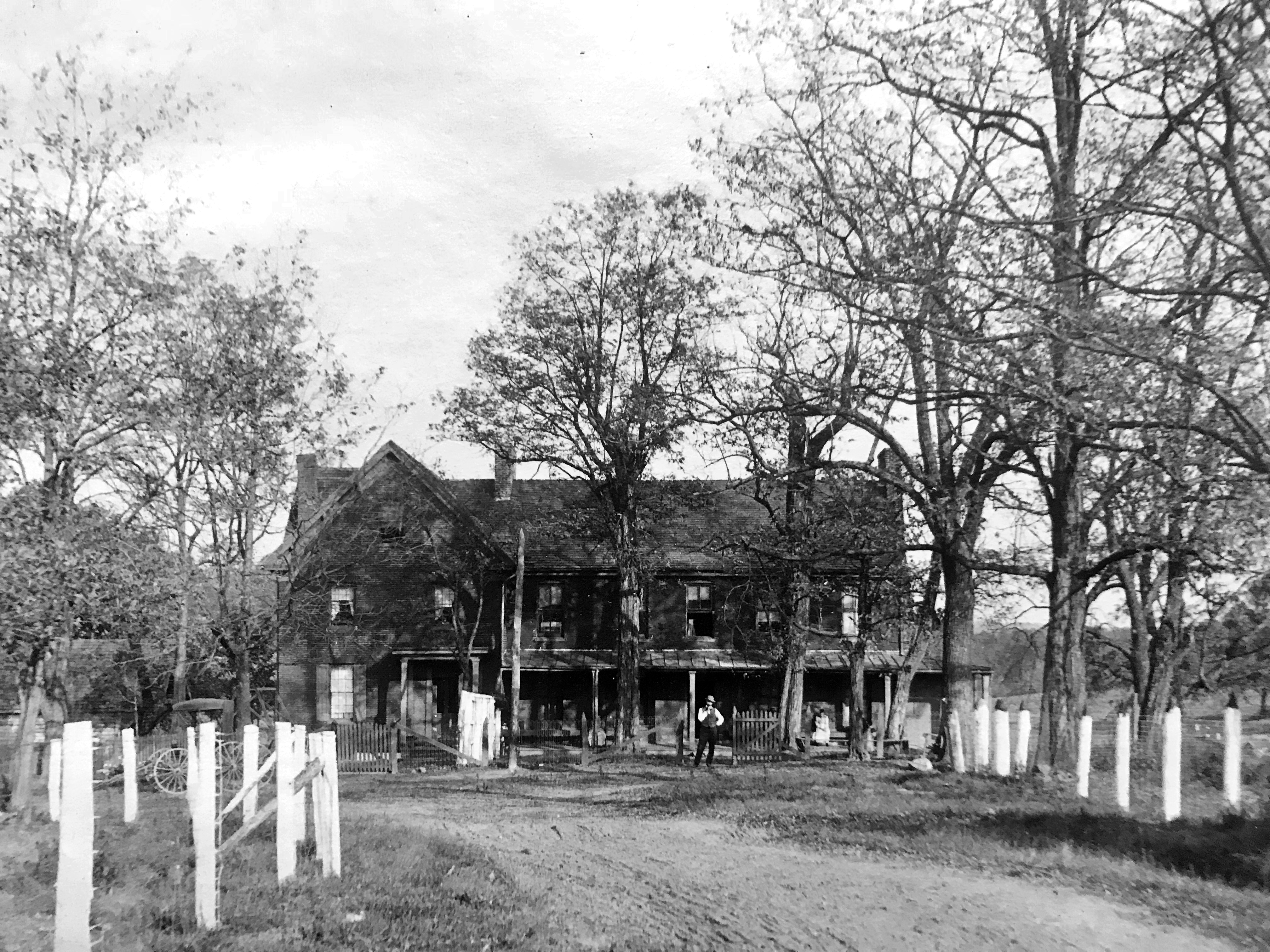
The Montgomery County Maryland Almshouse aka Poor Farm was established in 1789 and torn down in 1959. A modern jail is on its site on Seven Locks Road near Falls Road. Photo taken by Lewis Reed, ca. 1912.
When Lewis Reed raised his camera to capture the Montgomery County Poor Farm around 1912, he was doing more than photographing a building. He was making a choice about what deserved to be remembered.
Reed, known today as the founder of Reed Brothers Dodge, was also an avid photographer with a keen instinct for documenting the everyday life of his community. He photographed barns and bridges, parades and trains, town squares and quiet dirt roads. His lens turned toward the ordinary, and in doing so, he created an extraordinary record of Montgomery County as it was in the early 20th century.
The Poor Farm was not a picturesque subject. It carried with it a history of hardship; established in 1789 as a county-run farm for the poor, the elderly, and the sick, it was a place many preferred not to think about. By Reed’s time, reports described overcrowding, segregation, and unsanitary conditions. Countless residents who died there were buried in unmarked graves nearby. For most, the Almshouse stood as an uncomfortable reminder of poverty in a community that otherwise celebrated progress.
And yet, Lewis Reed photographed it.
Why? Perhaps because he understood, instinctively, that history is not just made up of celebrations and landmarks. It is also written in the places that society tried to hide. His photograph of the Poor Farm framed by leafless trees, a dirt road, and the faint figures of people at its entrance, reminds us that even the least visible institutions were part of the fabric of Montgomery County.
Lewis Reed’s eye was not sentimental, but it was honest. He recorded what was there, not just what was pleasant to see. By turning his lens on the Poor Farm, he acknowledged its existence and its place in the community’s story. Without that decision, we might have no image at all of this building that stood for more than a century and was torn down in 1959.
Today, this photograph is one of the few surviving visual records of the Montgomery County Poor Farm. It endures because Reed believed it mattered. As he might have said himself:
I photographed barns and houses, streets and machines, but also this place because it, too, was part of us. The Poor House was not grand, but it stood for something true about our county. Buildings vanish, memories fade, but a photograph holds them steady. Someday, when the Poor Farm is gone, this image may be all that remains. That is why I pressed the shutter.
Find more photos like this and much more on Montgomery History’s online exhibit, “Montgomery County 1900-1930: Through the Lens of Lewis Reed“.
Books

Related Resources


Copyright Notice

Reed Brothers Dodge History (1915-2012) by Jeanne Gartner is licensed under a Creative Commons Attribution-NonCommercial 3.0 Unported License.
 Reed Brothers Dodge History 1915 – 2012
Recent Comments