
Snow, Tinsel, and Memories: A Century of Christmas at the Reed Family Home
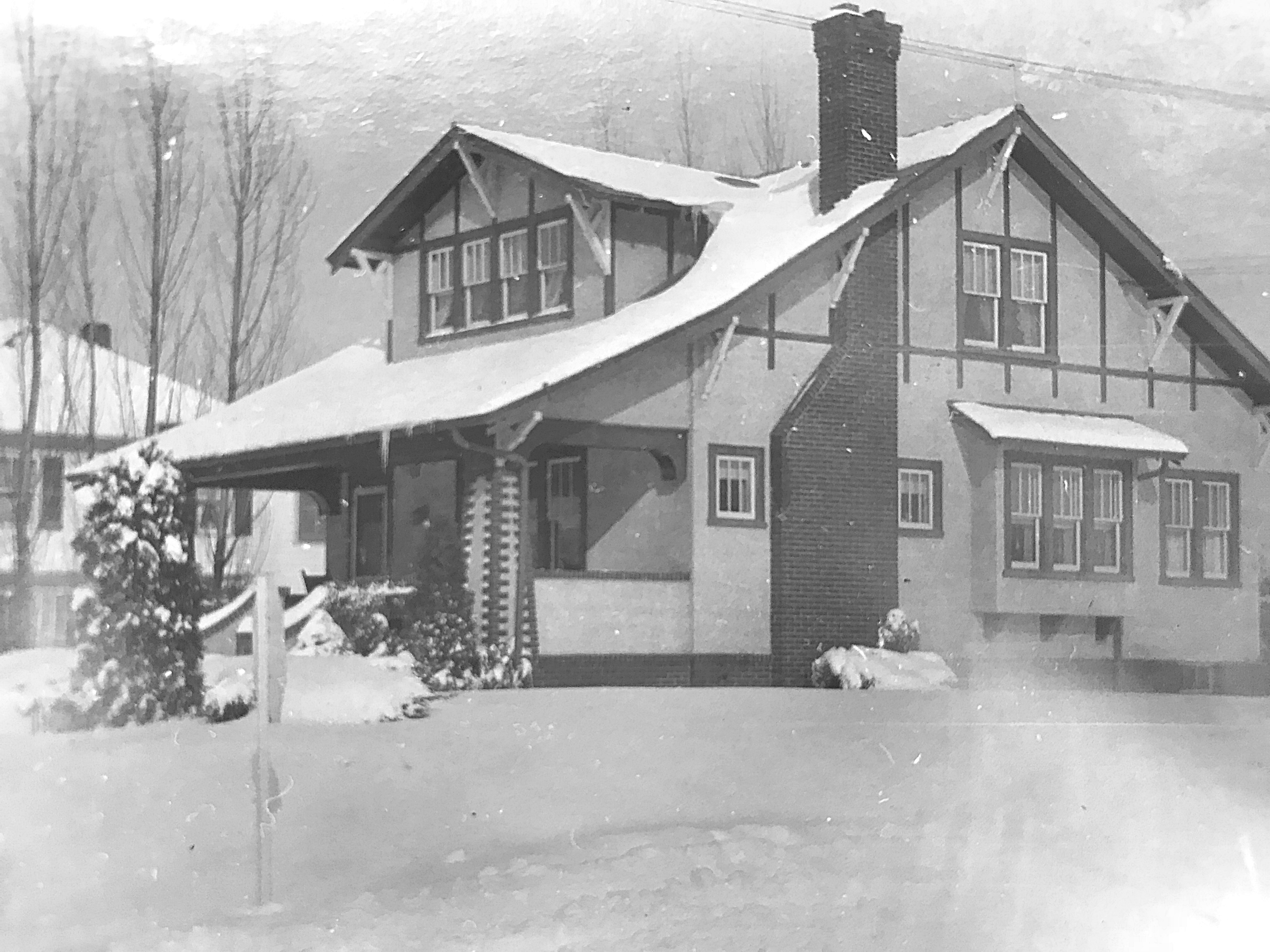
Lewis Reed’s craftsman-style home, looking rather solitary on a snowy day. Photo by Lewis Reed.
With only a few days left until Christmas, I thought it might be fun to take a look at some photos from Lewis Reed’s collection that show us what Christmas trees used to look like 100 years ago. In those days, there was not wide-spread agreement on exactly what a tree should look like, which made for a lot of creativity. Not surprisingly, they were very different than the perfectly shaped tress we have on display today.
The trees were big back then and always fresh. They went right to the ceiling and were very wide. Early Christmas trees were generally fastened onto a flat board surrounded with fence-rails, snow villages and carpeted with cotton blankets of snow. The tree in the photo below has an abundance of tinsel, which grew in popularity to the point that, by the 1920s, it was common to nearly cover the tree in the decorative material.
So, what is tinsel (aka icicles) exactly? Originally made from strands of silver alloy, tinsel was in fact first used to decorate sculptures. It was only later that it became a Christmas tree decoration, employed to enhance the flickering of the candle flames. In the 1950s, tinsel became so popular that it was often used as a substitute for Christmas lights.
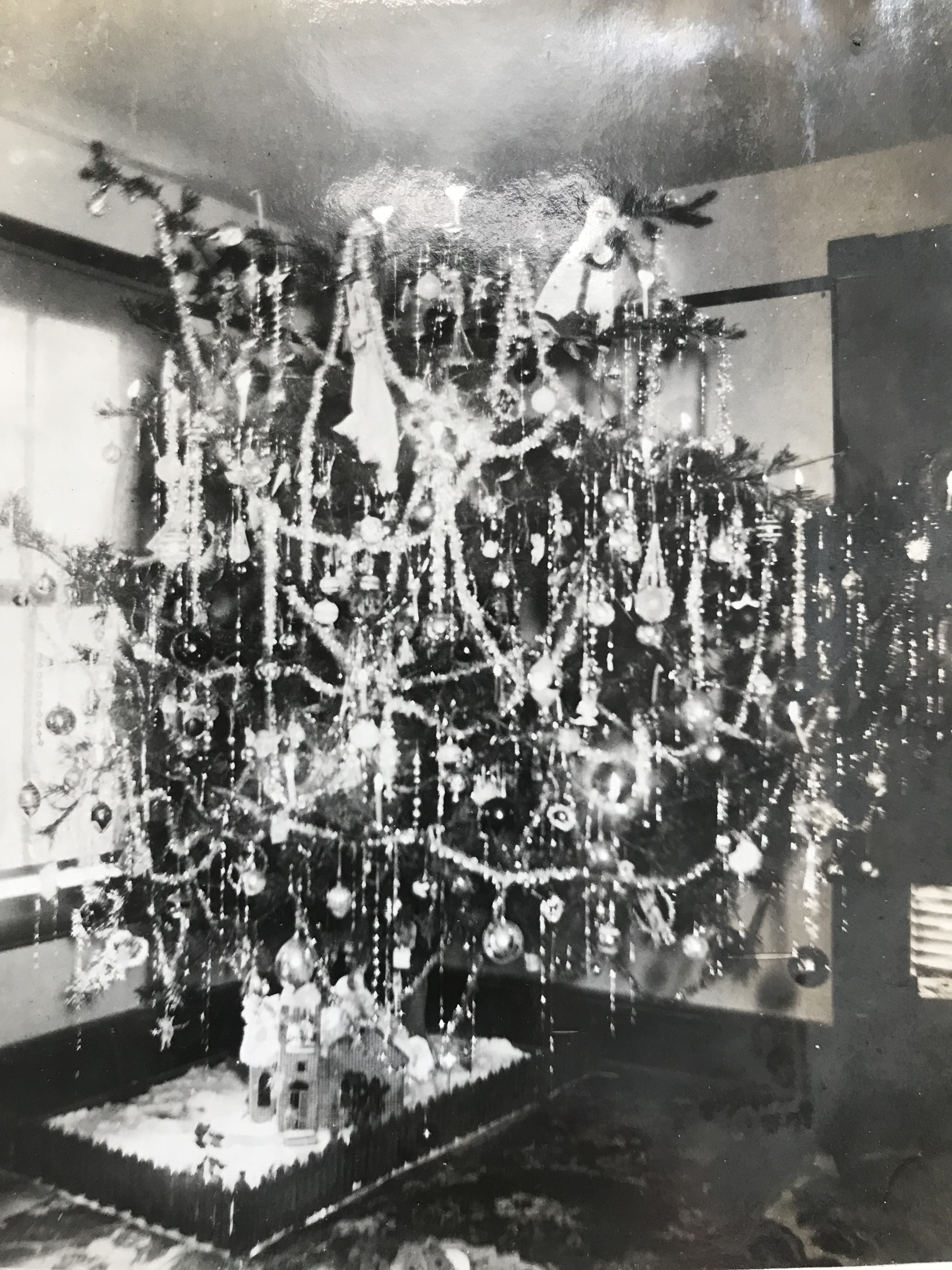
A small snow scene with what appears to be a miniature church is arranged at the foot of the Christmas tree. A popcorn garland adorns the tree. Photo by Lewis Reed
So, where did Washingtonians get their trees?
From The Evening Star, Washington, DC 23 December 1923:
Conduit Road on the long stretch between Glen Echo and Great Falls for many years has been a favorite hunting ground where hundreds and hundreds of families have customarily obtained scrub pine trees for Christmas week. Usually there is plenty of holly and some mistletoe to be found in the rugged and rolling hill lands which are the gateway to Great Falls.
In the early 1900s, Christmas trees weren’t the uniform, perfectly trimmed evergreens we see today. They were large, often reaching the ceiling, and proudly displayed their natural, sometimes misshapen forms. Families fastened them to flat boards, surrounded them with fence rails, and carpeted the ground with cotton blankets to mimic snow. Tinsel, originally made from strands of silver alloy, became a staple used to catch the flicker of candlelight and later, as a substitute for electric lights by the 1950s.
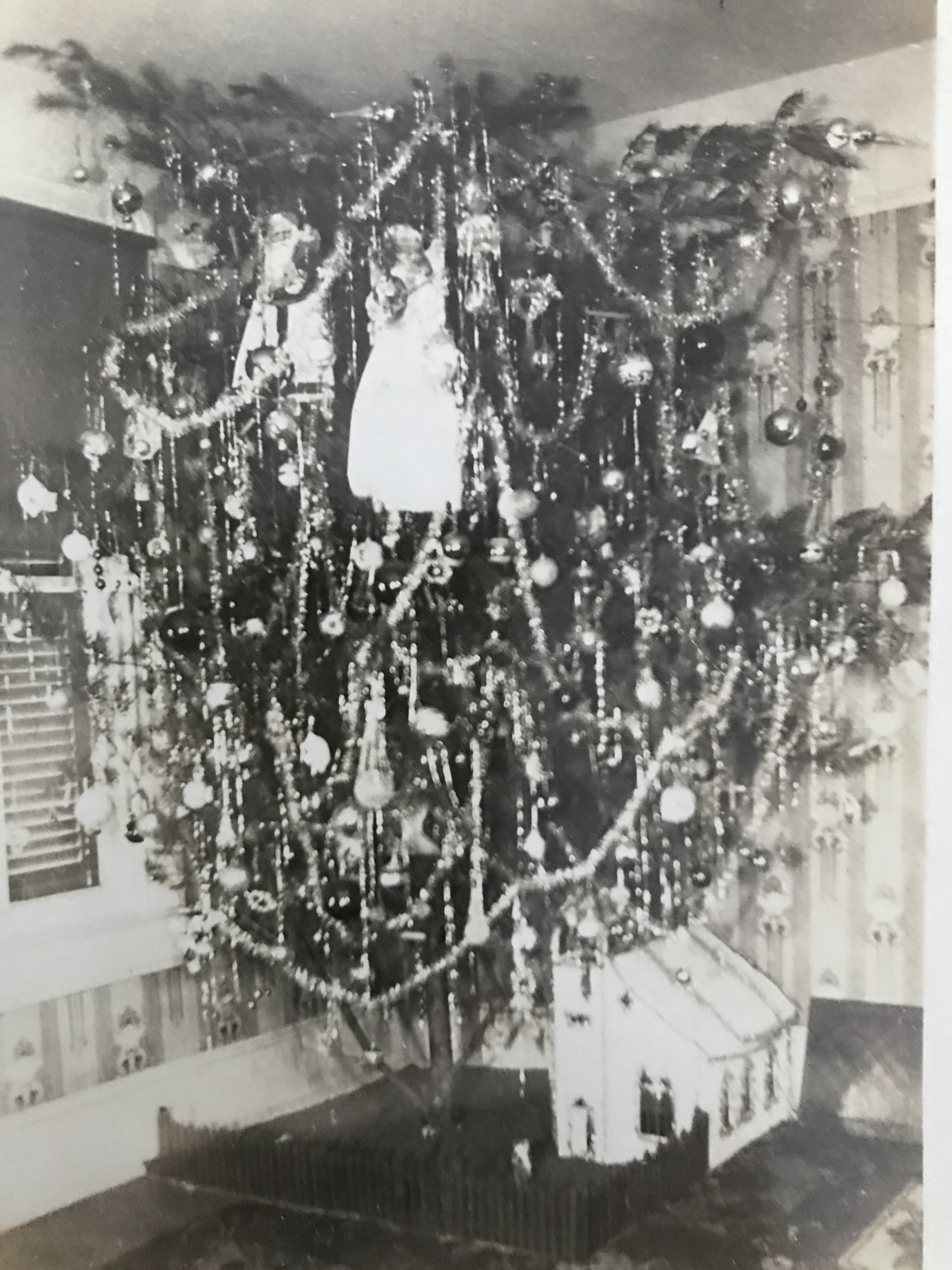
No room for a star on the top of this tree! And just look at those big Santa and Angel dolls. Other fun little details are notable, including a miniature church with picket fence is arranged at the base of the tree. Photo by Lewis Reed
There’s a fine art to decorating Christmas trees that’s been developing since over 100 years ago. People consider lights, garland, ornaments, skirt, and more. But one thing that’s hard to resist sometimes is just filling every available space with decorations. Clearly, that was the case years ago, too. What I like about these trees is that they are so randomly shaped and even misshapen. Folks back then didn’t trim them down to a more aesthetically pleasing symmetry like we do today.
The tradition of building miniature Christmas village landscapes, including houses, animals, and other hand-crafted wooden figures, began with the Pennsylvania Dutch in the late 1800s. Mass-produced cardboard houses, sold in dimestores, became popular in the mid-20th century. Today, these villages in good condition can be highly collectible.
Below are photos of Lewis Reed’s snow village set up under the Christmas tree decorated with vintage ornaments, tinsel, and lights. I don’t remember the odd-shaped Christmas trees, but I do remember having a lot of fun helping my grandfather set up the miniature landscapes with the varied figures, little houses, and trees at Christmastime each year. It seemed like a holiday village right out of a storybook.
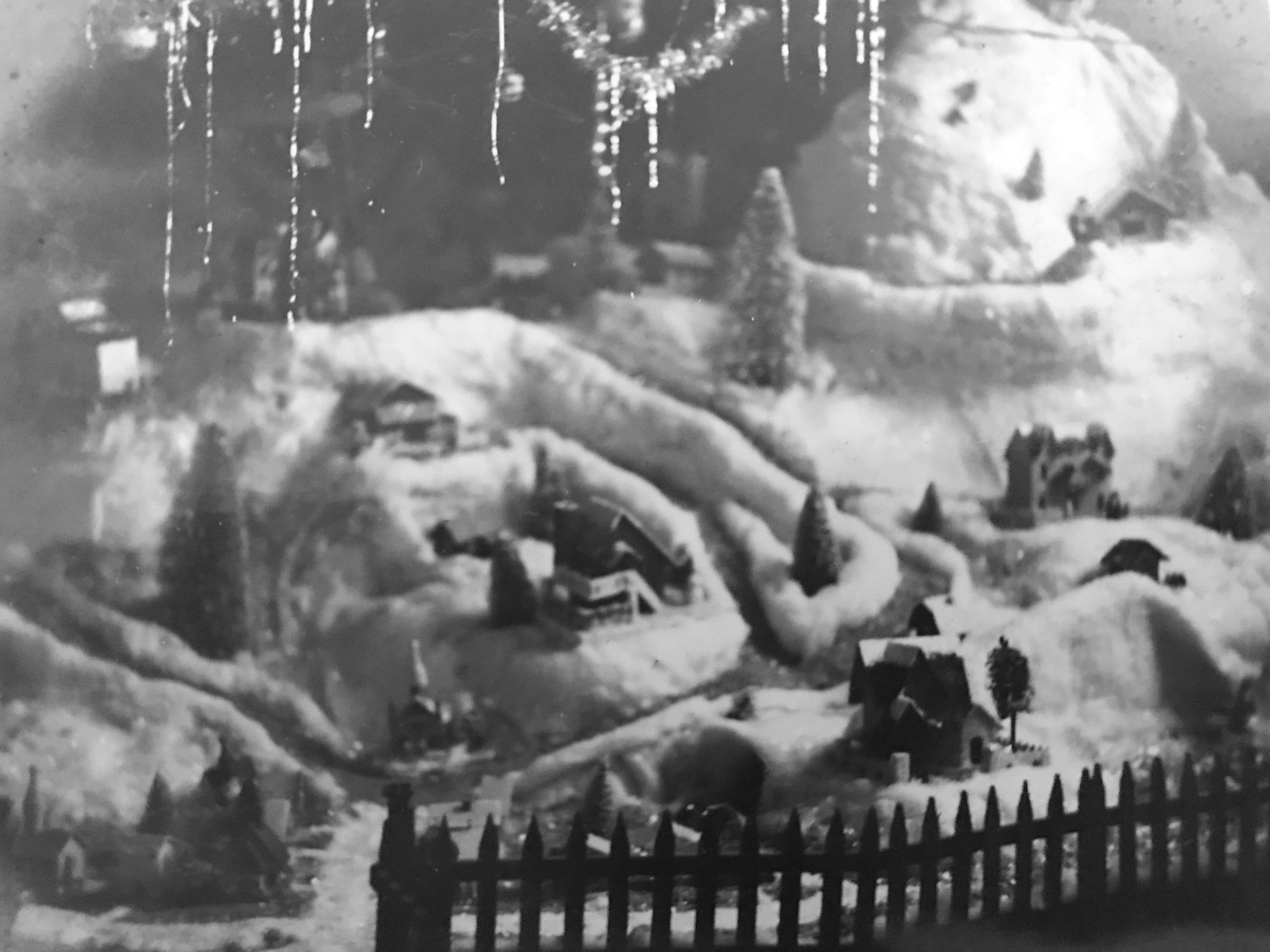
A rustic picket fence is used to set off the village display. Dangling strands of tinsel hang below the tree. Photo by Lewis Reed
The snow villages were set up in Lewis Reed’s basement on top of a big table beneath a small Christmas tree. He made the snow scenes entirely by hand using wire-covered cardboard and balled up paper to make hills and pathways. The little houses and figurines would fit into the landscape with cotton ‘snow’ all around; and lights would be wired underneath.
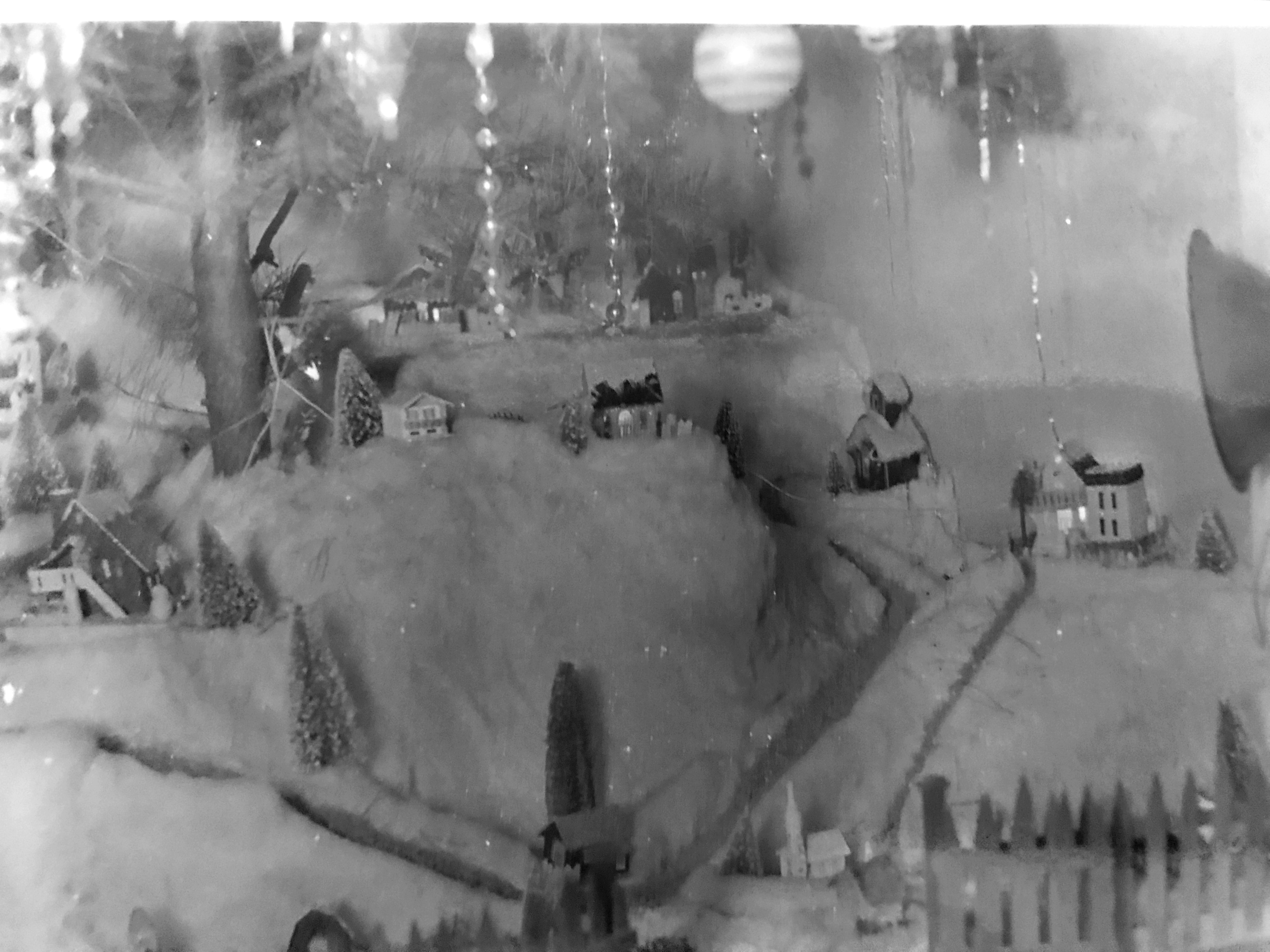
Little houses, churches, fences, trees, and pathways were added to the scene. Some of the houses have charming light effects in the windows. The roofs of the houses were decorated with fake snow. Photo by Lewis Reed
These early Christmas villages were the forerunners of today’s elaborate holiday displays, most famously popularized by Department 56. What began as simple, handmade scenes beneath family Christmas trees eventually evolved into the collectible ceramic villages that fill shelves and mantels during the holidays today.
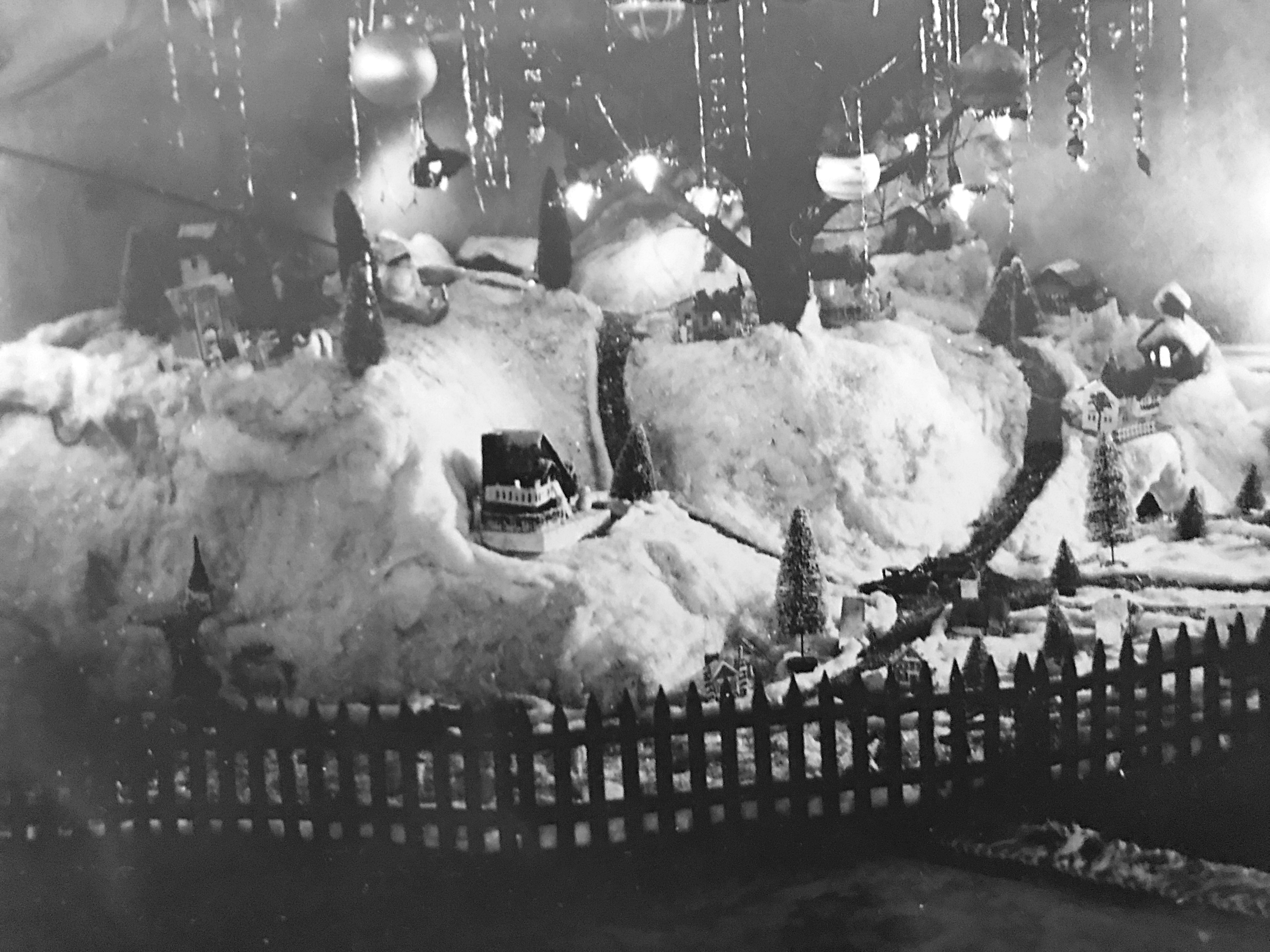
Old-fashioned lights can be seen on the tree, along with lit windows in the houses. The miniature houses usually had holes in the back or the bottom through which tiny lights were placed to provide illumination. Photo by Lewis Reed
Thanks for taking the time to visit. May your Christmas be merry, your New Year bright, and your holidays filled with everything that brings you joy. Stay safe and enjoy the season with family and friends!

Saylorsburg Lake House Hotel: From Lakeside Retreat to Haunted Legend
Discover the haunting history of the Lake House Hotel in Saylorsburg, Pennsylvania. Once captured in a 1915 photograph by Lewis Reed, this former lakeside resort is now home to the Hotel of Horror, one of the Pocono Mountains’ most legendary haunted attractions.
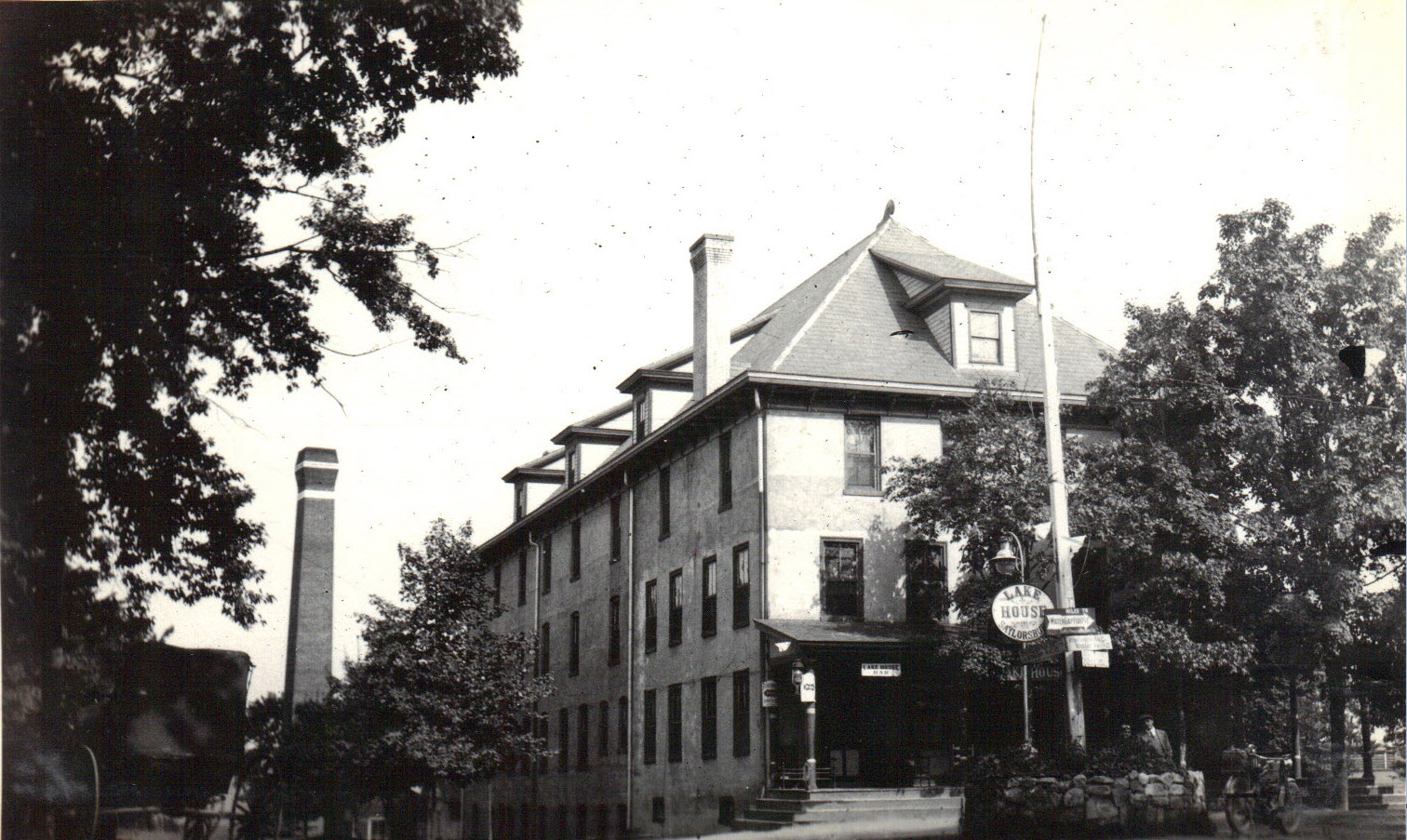
Saylorsburg Lake House Hotel. Photo taken by Lewis Reed, 1915.
More than a century ago, a quiet corner of Saylorsburg, Pennsylvania, drew vacationers seeking relaxation beside the sparkling waters of Saylors Lake. Long before it became known as the Hotel of Horror, the Lake House Hotel was one of the region’s most recognizable landmarks; a grand, three-story resort that welcomed travelers for generations.
One of the earliest known photographs of the Lake House was taken in 1915 by Lewis Reed, founder of Reed Brothers Dodge in Rockville, Maryland. Reed, an accomplished photographer with an eye for architectural detail, captured the hotel at a time when it stood as a proud symbol of the Pocono Mountains’ growing popularity as a leisure destination. His image shows a sturdy, stately building surrounded by calm and charm; a far cry from the ghostly atmosphere the site is known for today.
Built in the early 1800s, the Lake House Hotel served as a central gathering place for both locals and vacationers. It offered not only comfortable lodging but also fine dining, boating, and dancing by the lake. The hotel’s reputation grew through the 19th and early 20th centuries, and by the time Lewis Reed visited, it had already become a well-established destination for city dwellers looking to escape the summer heat.

The Lake House Hotel in Saylorsburg, site of Hotel of Horror. Google image, 2025
From Lakeside Retreat to Haunted Legend
The Lake House’s story took a darker turn as decades passed. Local legend claims that during World War II, most of the hotel’s staff enlisted in the Pennsylvania National Guard, leaving behind only a caretaker. The tale goes that nearby asylum inmates escaped and sought refuge in the hotel, leading to a series of mysterious and tragic events. Whether rooted in truth or simply folklore, the story added a haunting aura to the building’s legacy.
By the late 20th century, the once-elegant hotel had fallen into disrepair. In 1990, it reopened briefly as an antique co-op before being transformed into a haunted attraction. Since 1992, the Hotel of Horror and Altered Nightmares have operated within its historic walls, breathing new life into the old building each Halloween season. Visitors now walk through the same corridors that Lewis Reed once photographed, only today, they’re filled with eerie sounds, flickering lights, and the echoes of imagined ghosts.
More than just a haunted house, the Lake House Hotel remains a remarkable link to Pennsylvania’s past. Through Lewis Reed’s 1915 photograph, we catch a glimpse of its former grandeur; a moment frozen in time before history, legend, and imagination intertwined to make it one of the Poconos’ most enduring stories.
To all the readers of this blog: Have a spooky, enjoyable and very safe Halloween!

The Montgomery County Poor Farm: A Glimpse Through Lewis Reed’s Lens
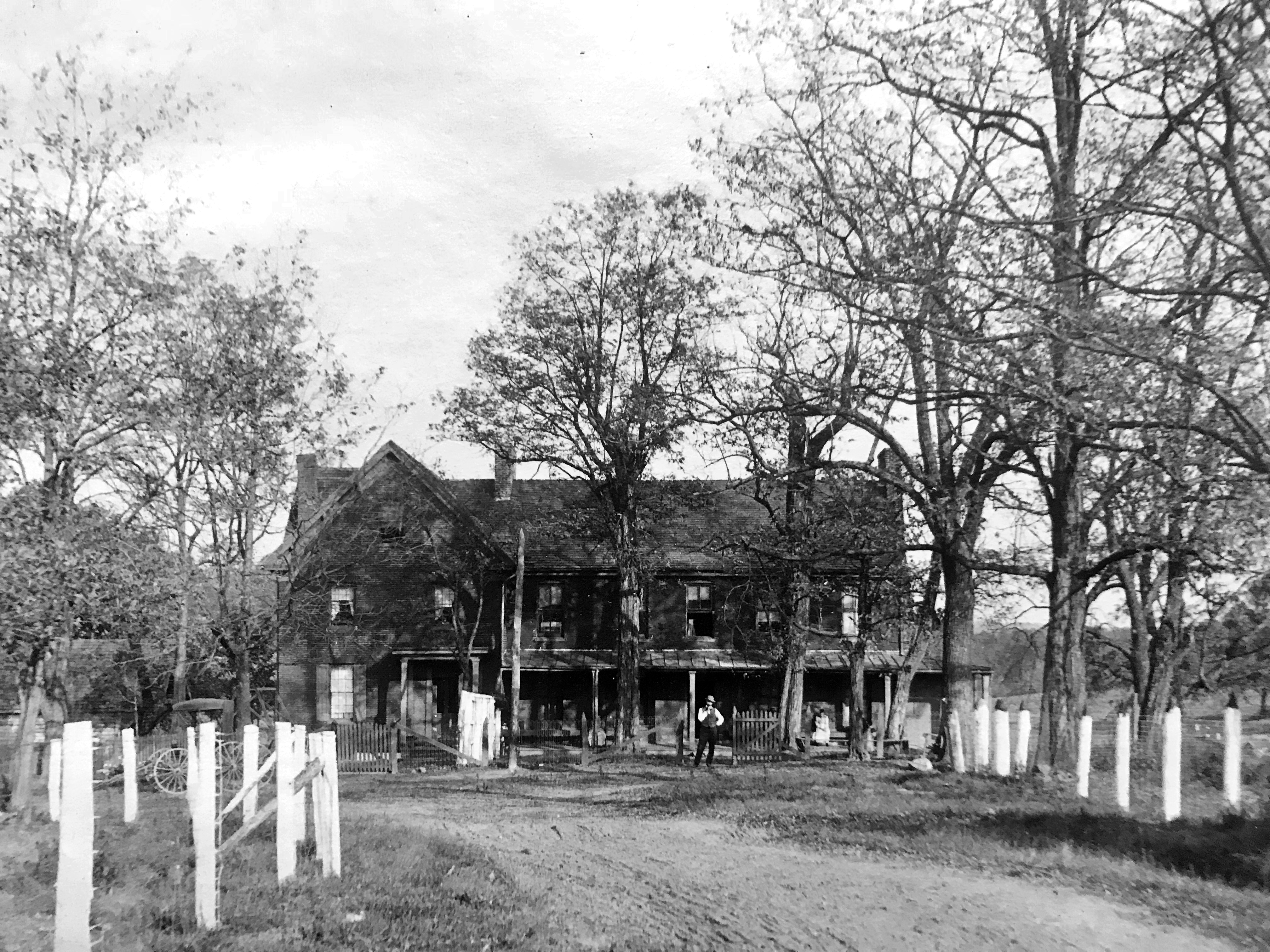
The Montgomery County Maryland Almshouse aka Poor Farm was established in 1789 and torn down in 1959. A modern jail is on its site on Seven Locks Road near Falls Road. Photo taken by Lewis Reed, ca. 1912.
When Lewis Reed raised his camera to capture the Montgomery County Poor Farm around 1912, he was doing more than photographing a building. He was making a choice about what deserved to be remembered.
Reed, known today as the founder of Reed Brothers Dodge, was also an avid photographer with a keen instinct for documenting the everyday life of his community. He photographed barns and bridges, parades and trains, town squares and quiet dirt roads. His lens turned toward the ordinary, and in doing so, he created an extraordinary record of Montgomery County as it was in the early 20th century.
The Poor Farm was not a picturesque subject. It carried with it a history of hardship; established in 1789 as a county-run farm for the poor, the elderly, and the sick, it was a place many preferred not to think about. By Reed’s time, reports described overcrowding, segregation, and unsanitary conditions. Countless residents who died there were buried in unmarked graves nearby. For most, the Almshouse stood as an uncomfortable reminder of poverty in a community that otherwise celebrated progress.
And yet, Lewis Reed photographed it.
Why? Perhaps because he understood, instinctively, that history is not just made up of celebrations and landmarks. It is also written in the places that society tried to hide. His photograph of the Poor Farm framed by leafless trees, a dirt road, and the faint figures of people at its entrance, reminds us that even the least visible institutions were part of the fabric of Montgomery County.
Lewis Reed’s eye was not sentimental, but it was honest. He recorded what was there, not just what was pleasant to see. By turning his lens on the Poor Farm, he acknowledged its existence and its place in the community’s story. Without that decision, we might have no image at all of this building that stood for more than a century and was torn down in 1959.
Today, this photograph is one of the few surviving visual records of the Montgomery County Poor Farm. It endures because Reed believed it mattered. As he might have said himself:
I photographed barns and houses, streets and machines, but also this place because it, too, was part of us. The Poor House was not grand, but it stood for something true about our county. Buildings vanish, memories fade, but a photograph holds them steady. Someday, when the Poor Farm is gone, this image may be all that remains. That is why I pressed the shutter.
Find more photos like this and much more on Montgomery History’s online exhibit, “Montgomery County 1900-1930: Through the Lens of Lewis Reed“.
Books

Related Resources


Copyright Notice

Reed Brothers Dodge History (1915-2012) by Jeanne Gartner is licensed under a Creative Commons Attribution-NonCommercial 3.0 Unported License.


Recent Comments