
Autumn at Pleasant Hills: A Pumpkin Harvest in Early Darnestown
In the early 1900s, Darnestown was still firmly rooted in agriculture, with large family farms, open fields, and country roads defining much of the surrounding landscape. Pleasant Hills was part of that rural world, and the Kelley family was among the local families whose farm products were well known throughout the area.
Lewis Reed’s photograph of three men standing in Thomas Kelley’s pumpkin field preserves a rare glimpse of that earlier Darnestown. The men are clearly not farm workers at harvest. Dressed in jackets, hats, and polished shoes, they appear to have simply stopped among the pumpkins and posed for Reed’s camera, turning an ordinary autumn visit into a lasting record of local history.
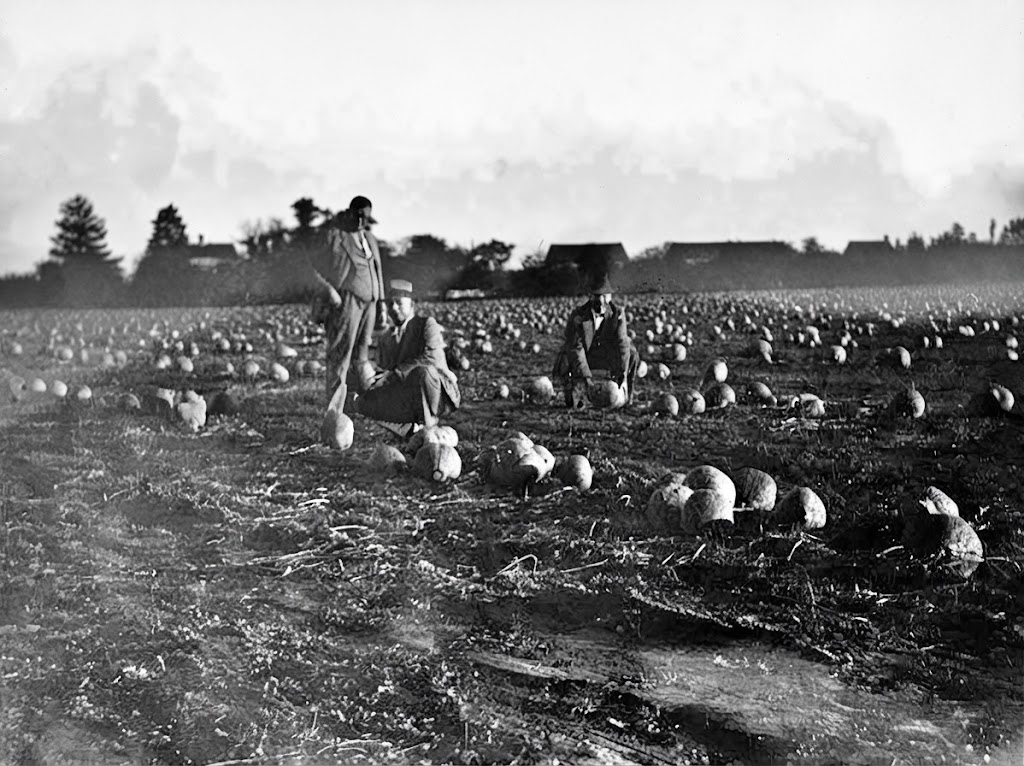
Men gathering pumpkins in Thomas Kelley’s field near Pleasant Hills in the Darnestown area, early 1900s. Lewis Reed’s photographs preserved not only community celebrations, but also the seasonal traditions of everyday life in Montgomery County. Photograph by Lewis Reed.
Pleasant Hills was a substantial working farm, and the Kelley family became especially associated with fresh produce, including the well-known “Kelley Corn” wagon that traveled through the community. Pumpkins were part of the farm’s autumn landscape at a time when seasonal produce came directly from nearby fields and local farms remained closely tied to everyday life.
Lewis Reed knew this countryside well. Raised in Darnestown, he photographed the people, farms, roads, homes, and small moments that surrounded him. At the time, such scenes would have seemed entirely ordinary, but today they preserve details that written records rarely capture: how people dressed, where they gathered, and what the rural landscape looked like before suburban growth transformed much of western Montgomery County.
That is what gives this photograph its lasting importance. It is more than a picture of three men in a pumpkin field. It is a surviving fragment of early Darnestown, preserving Pleasant Hills as part of a farming community that has largely disappeared from the modern landscape.
Two New Books Featuring Lewis Reed’s Historic Montgomery County Photographs
More than 125 years ago, a young boy named Lewis Reed picked up a camera and began photographing the world around him. What started as a youthful fascination with photography grew into one of the most important visual records of Montgomery County’s history.
From the late 1890s through the mid-twentieth century, Lewis Reed documented a county in transition. His photographs preserve everyday life during an era when dirt roads gradually gave way to paved highways, horse-drawn wagons shared the road with the first automobiles, and small rural communities evolved into the suburban landscape we know today. Today, the Lewis Reed Photograph Collection contains more than 2,500 photographs and continues to serve as an invaluable resource for historians, educators, museums, and local preservation projects.
For a little more than a decade, I have been privileged to preserve, research, and share this remarkable collection through books, online exhibits, presentations, historical markers, and hundreds of articles published here on Reed Brothers Dodge History. It has been my goal to ensure that Lewis Reed’s photographs remain accessible to everyone interested in Montgomery County’s rich heritage.
I am pleased to announce the completion of two new softcover companion books inspired by the Montgomery History online exhibits that celebrate Lewis Reed’s photographic legacy and introduce these remarkable images to an even wider audience.
Montgomery County: Through the Lens of Lewis Reed
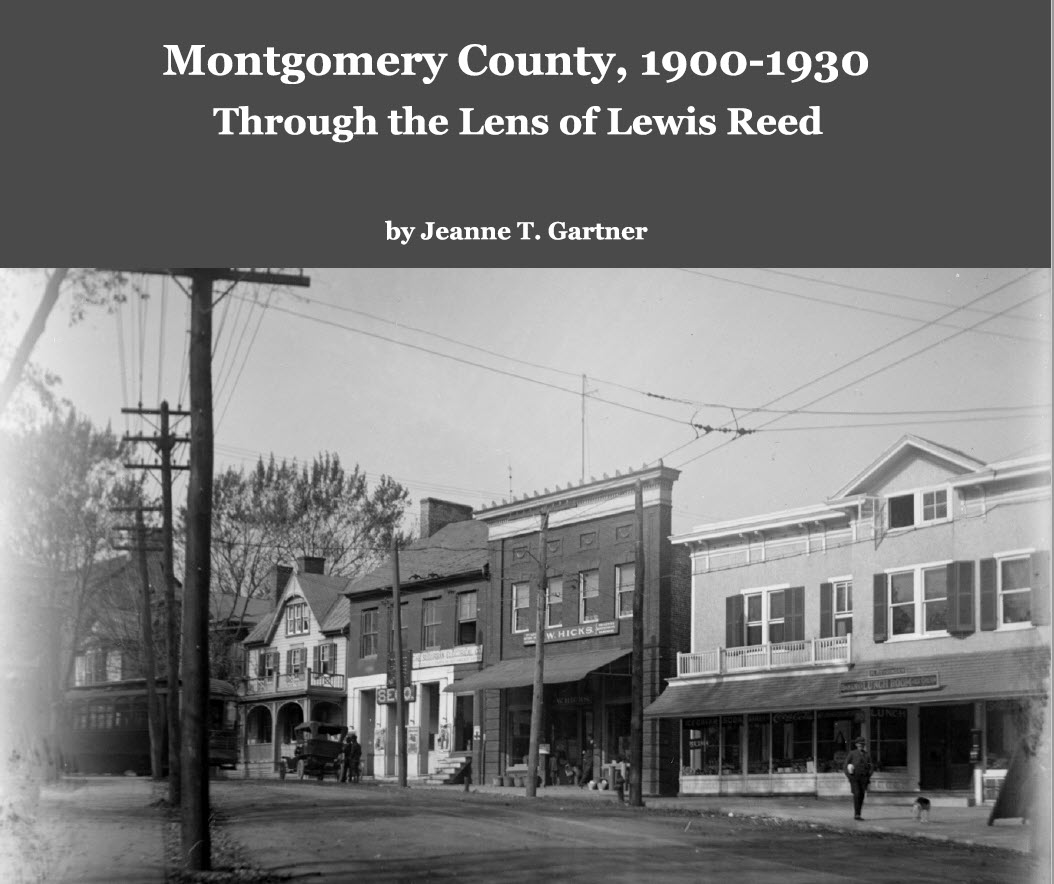
Created as a companion volume to Montgomery History’s online exhibit of the same name, this compact book presents a carefully selected collection of Lewis Reed’s finest photographs. Inspired by the online exhibit, it preserves a remarkable visual record of a Montgomery County that has largely disappeared.
Taken during the first decades of the twentieth century, these photographs capture a county undergoing profound change while demonstrating Lewis Reed’s remarkable gift for documenting history as it unfolded. Today, they stand among the most significant visual records of Montgomery County’s early history.
Montgomery County: Then and Now – Photography of Lewis Reed and Barry Gartner
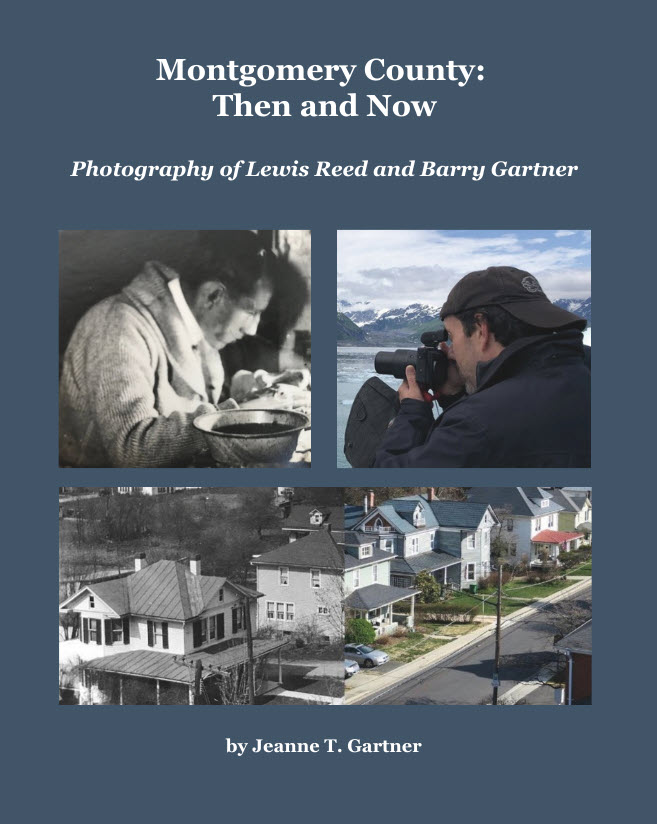
Also created as a companion volume to Montgomery History’s online exhibit of the same name, this full-color book pairs Lewis Reed’s historic photographs with modern images recreated from the same locations by his grandson, Barry Gartner. Together, the photographic pairs reveal more than a century of change while preserving a visual connection between Montgomery County’s past and present.
The result is a unique comparison of familiar landscapes, demonstrating how photography can bridge generations and deepen our understanding of the communities that continue to evolve.
Now Available
I’m excited to share that Montgomery County: Then and Now – Photography of Lewis Reed and Barry Gartner is now available to preview or purchase through Blurb’s print-on-demand bookstore.
Readers can browse the entire book online before ordering, making it easy to explore this unique photographic journey through Montgomery County’s past and present.
Preview or order your copy here:
Montgomery County: Then and Now – Photography of Lewis Reed and Barry Gartner
The companion volume, Montgomery County: Through the Lens of Lewis Reed, will also be available soon.
Continuing the Legacy
Every publication built around the Lewis Reed Photograph Collection helps preserve a remarkable visual record of Montgomery County’s history. More than historic images, these photographs connect us with the people, places, and landscapes that shaped our communities and remind us how much can be learned from a single photograph.
Thank you to everyone who has encouraged and supported this work over the years. Your interest in Lewis Reed’s photography has helped ensure that this extraordinary collection continues to educate, inspire, and preserve Montgomery County’s history for future generations.
To explore these and my other publications, please visit the Featured Publications page here on Reed Brothers Dodge History.
Books

Related Resources


Copyright Notice

Reed Brothers Dodge History (1915-2012) by Jeanne Gartner is licensed under a Creative Commons Attribution-NonCommercial 3.0 Unported License.


Recent Comments