
A Look Back at the Forgotten Art of Hand-Tinted Photography
The hand-tinted photos of Lewis Reed and his daughter, Mary Jane, are examples of the photographic process that most of the people reading this will have never experienced: hand-tinting.
The golden age of hand-colored photography occurred between 1900 and 1940. Before the days of true color photography, these views were immensely popular. While hand coloring doesn’t help you identify or date an image, it does enhance a photograph’s appearance and add to its history.
Before the advent of color photography, photographers painstakingly applied color to black and white photos in order to show a truer visual depiction of a photo image. All of the photographs featured here were taken by Lewis Reed in the early 1900s and were hand-tinted by his daughter, Mary Jane, likely in the late 1930s to 1940. She colored the photos with special photographic watercolor and a paintbrush. Rather than coloring the entire image—a time-consuming task—she carefully selected details that would make the image lively and attractive. The fact that these photos, all of which are over 100 years old, are still in relatively good condition is a strong testament to the lasting power of hand-tinted photographs.
Do you recognize the road pictured below? Few modern residents of Montgomery County would guess, but this is a shot down Veirs Mill Road in the early 1900s. Mary Jane Reed added some depth to the image with subtle earth tones, in the colorized version.

Veirs Mill Road looking east before it was paved. Original photograph by Lewis Reed, 1911.
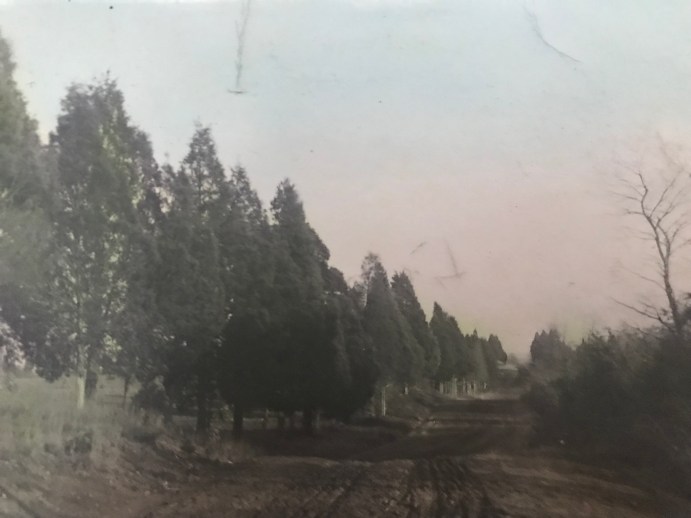
Colorized version of the photograph above by Lewis Reed. The photo was hand-tinted by Mary Jane (Reed) Gartner, making it look like a color photo.
Below, Lewis Reed’s c. 1909 photograph of his little cousin, Amanda Reed, sitting amongst the hydrangeas — the original before, and the colorized version after.

Amanda Reed before hand-tinting. Original photograph by Lewis Reed.

Amanda Reed after hand-tinting by Mary Jane (Reed) Gartner. Pastel was apparently a good choice for coloration.
To a visual artist like a dedicated photographer, the inability of the black-and-white camera to capture the richness of colorful blooms or the vibrancy of a summer scene must have been endlessly frustrating.
Lewis Reed’s daughter Mary Jane seemed particularly fond of hand-tinting photographs of flowers — it must have given her a lot of pleasure to “restore” color to her father’s beautifully composed shots. View some more of her work below.

Roses before hand-coloring. Original photograph by Lewis Reed.

Roses after hand-coloring
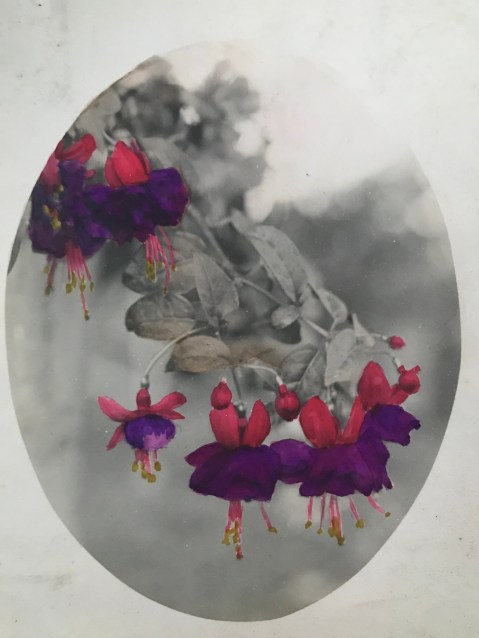
Hand-colored flowers
Below are two different versions of tinting a similar image. In Version 2, some of the flowers at the top were removed from the vase (by Lewis Reed, before taking a second shot) for a different aesthetic effect. The color artist used bolder colors to enhance that effect.

Original arrangement before hand-tinting. Original photograph by Lewis Reed.

Version 1: Arrangement after hand-tinting by Mary Jane (Reed) Gartner
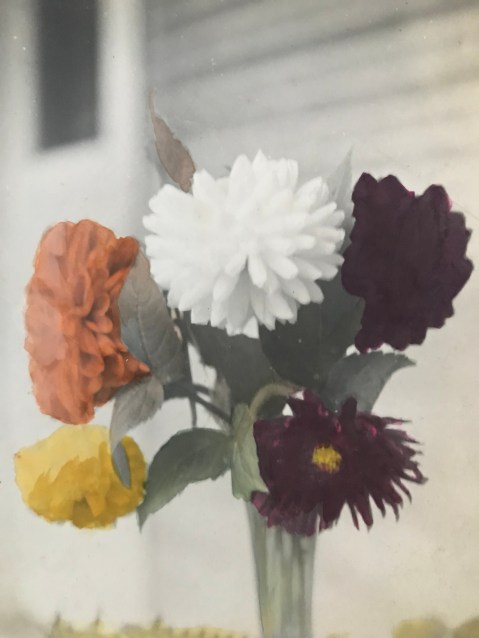
Version 2: Arrangement after hand-tinting by Mary Jane (Reed) Gartner

This is a hand-tinted version of Rock Creek taken by Lewis Reed in the early 1920s.
Other examples of hand-tinting are included in the following collection of Lewis Reed’s Black Rock Mill photographs. Black Rock Mill was built by Thomas Hillary and has stood along the banks of Great Seneca Creek as a landmark since its construction in 1815-1816. The mill was in working operation for over a hundred years until a flood in 1920 destroyed a dam on Seneca Creek and damaged the mill. Today, it a unique survivor of the many mills in Montgomery County harnessing the water-power of the creeks to grind wheat and corn into flour. It is one of only two mills standing in Montgomery County Maryland.

Black Rock Mill bridge hand-tinted by Lewis Reed’s daughter, Mary Jane.
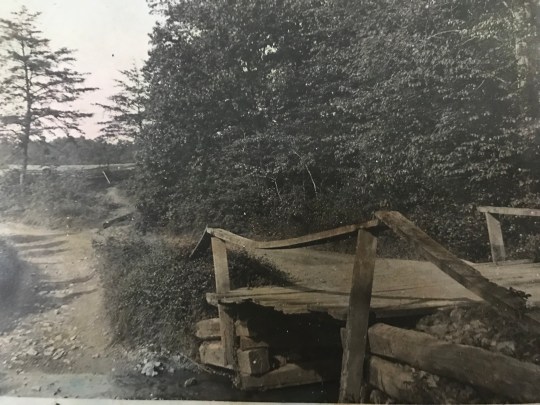
Bridge over Seneca Creek. Photo by Lewis Reed and hand-tinted by his daughter, Mary Jane

Strolling down a lane on a beautiful summer’s day. Black Rock Mill hand-tinted photo
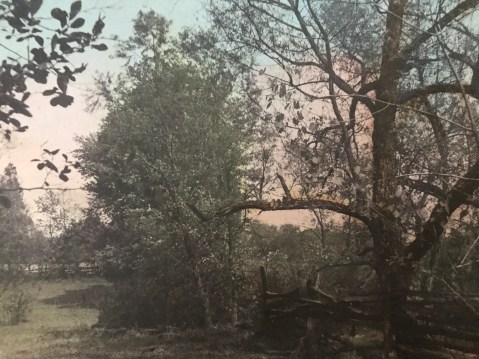
Black Rock Mill hand-tinted photo
The art of hand-tinted photos was introduced along side the daguerreotype in 1839. In the 19th century it was most common for the professional photographer to tint the photograph or tintype just after printing. Later photo artists introduced new techniques using oil, watercolor and other types of paint to achieve the desired result. With the Great Depression, the sale of professional hand-tinted photographs declined, but the home artist continued to have access to hand-tinting kits. Today, we can look back and appreciate the time and creativity it took to edit these photos without Photoshop.
Find photos like these and much more on Montgomery History’s online exhibit, “Montgomery County 1900-1930: Through the Lens of Lewis Reed“.
Lewis Reed’s Hand-tinted Photos
Before the advent of color photography, photographers painstakingly applied color to black and white photos in order to show a truer visual depiction of a photo image. The hand-tinted photos of Lewis Reed and his daughter, Mary Jane (Reed) Gartner are examples of this medium. The small collection of hand-tinted photographs were taken by Lewis Reed in the early 1900s. The photographs were hand-colored my my mother, Mary Jane (Reed) Gartner.
 Below are hand-tinted photos before and after. Pastel was a good choice for coloration.
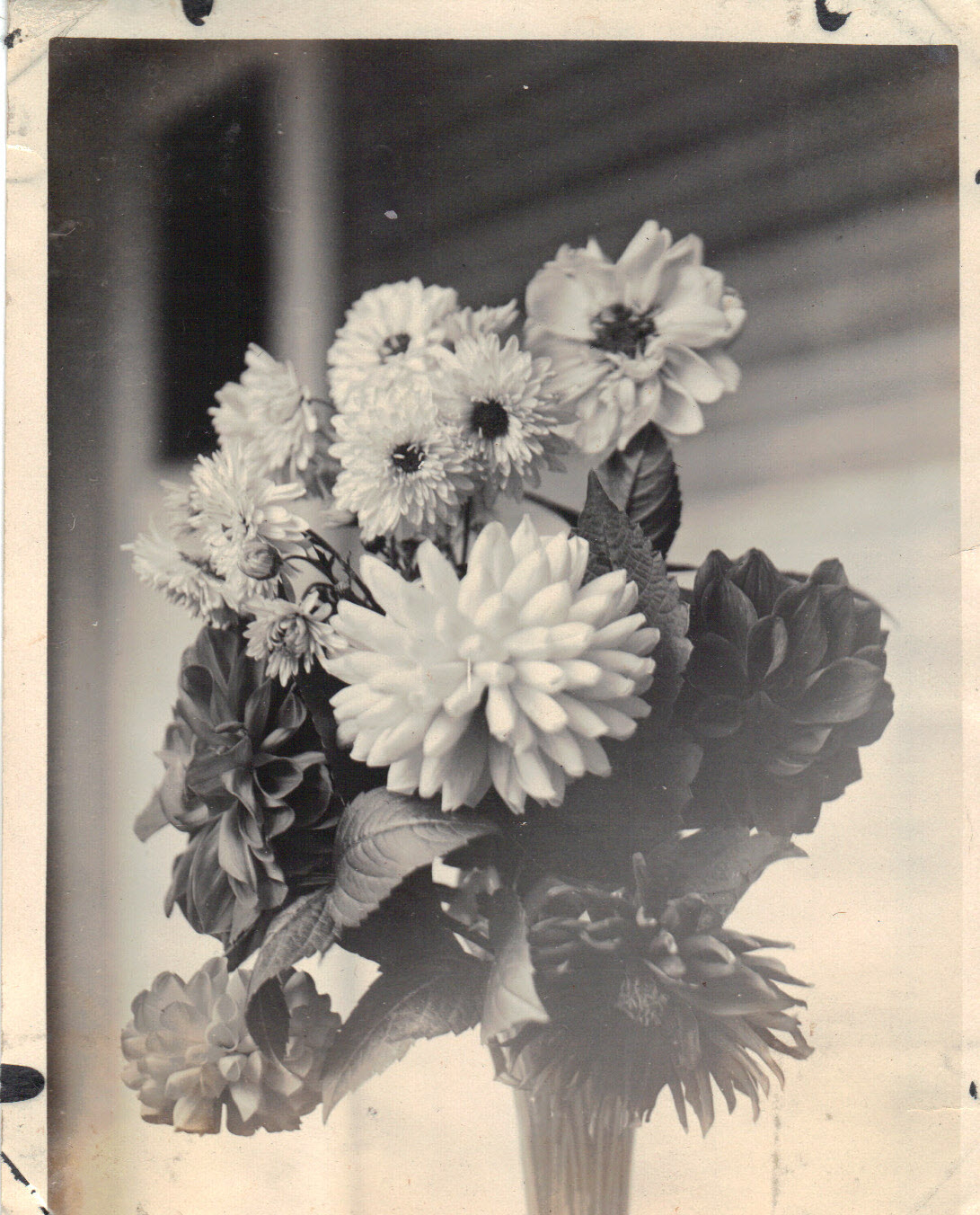
Original photograph by Lewis Reed.

Original photograph by Lewis Reed. The photograph was meticulously tinted by my mother, making it look like a color photo.
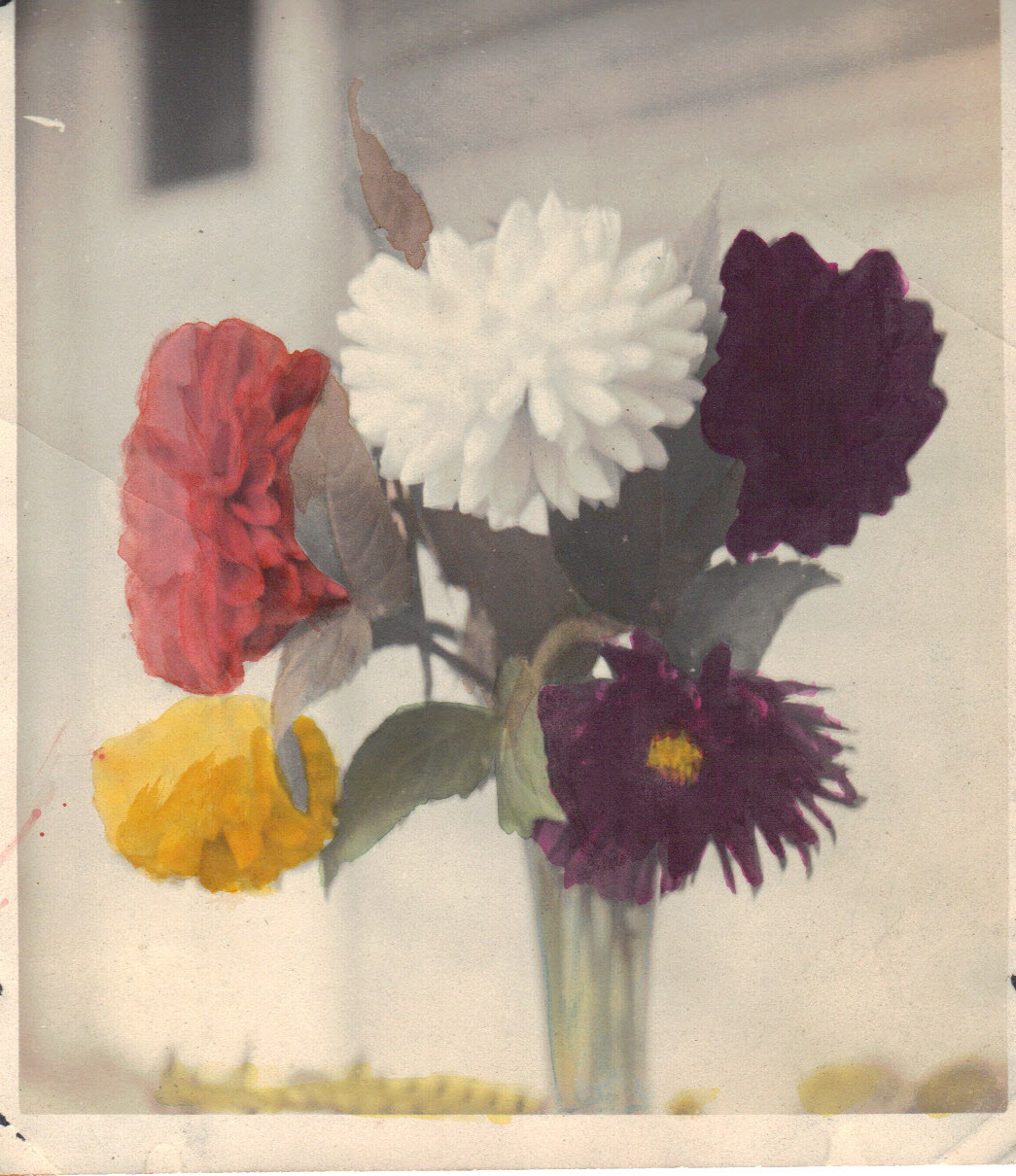
The art of hand tinted photos was introduced along side the daguerreotype in 1839. In the 19th century it was most common for the professional photographer to tint the photograph or tintype just after printing. Later photo artists introduced new techniques using oil, watercolor and other types of paint to achieve the desired result. With the Great Depression, the sale of professional hand tinted photographs declined, but the home artist continued to have access to hand tinting kits. There is a very informative wiki article here which provided me with the brief details I have shared with you.
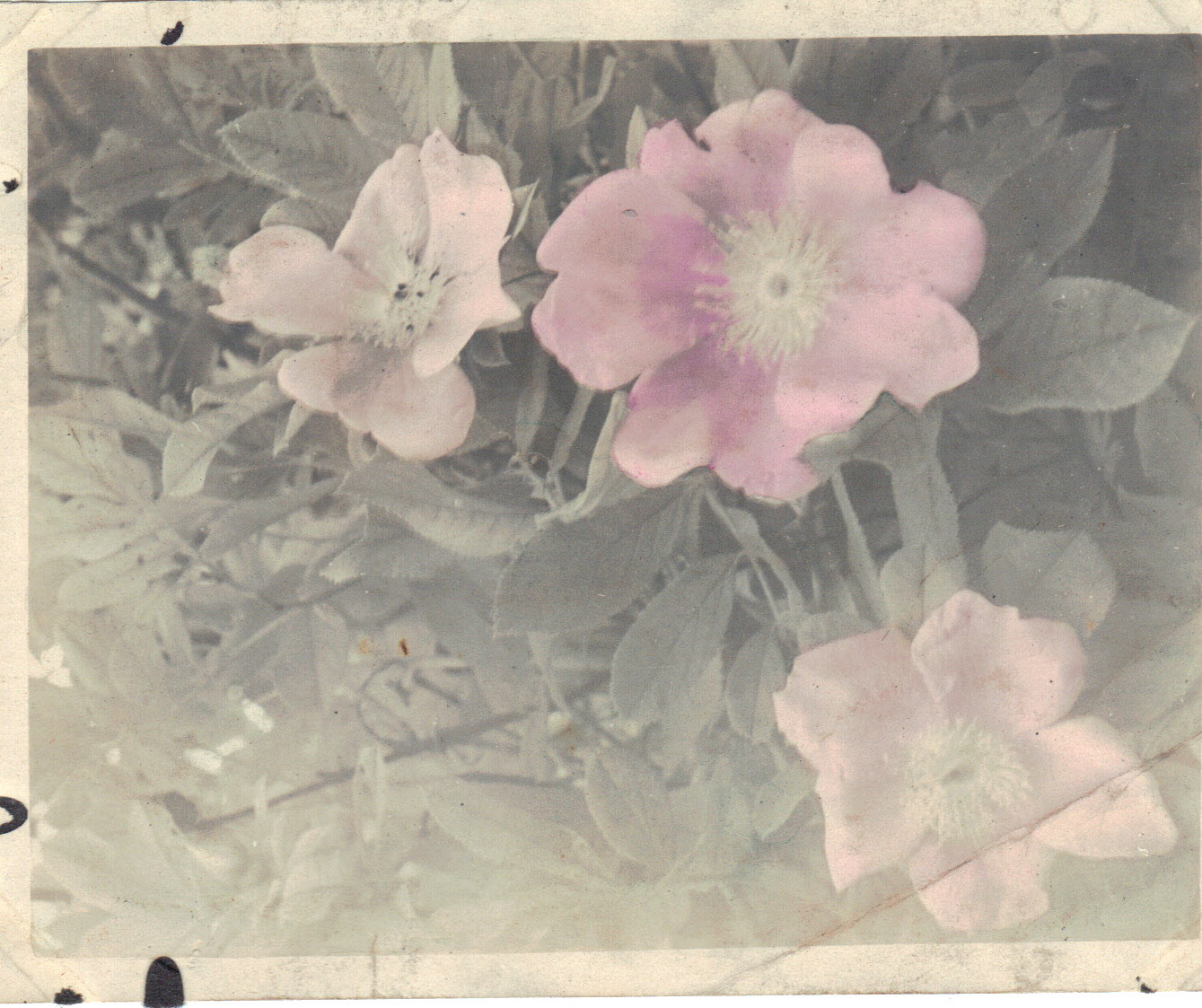 These days, most people rely on Photoshop to digitally make such enhancements. Progress, you know …
Books

Related Resources


Copyright Notice

Reed Brothers Dodge History (1915-2012) by Jeanne Gartner is licensed under a Creative Commons Attribution-NonCommercial 3.0 Unported License.
 Reed Brothers Dodge History 1915 – 2012
Recent Comments