
Winter’s Harvest: Ice-Cutting in 1910 Montgomery County
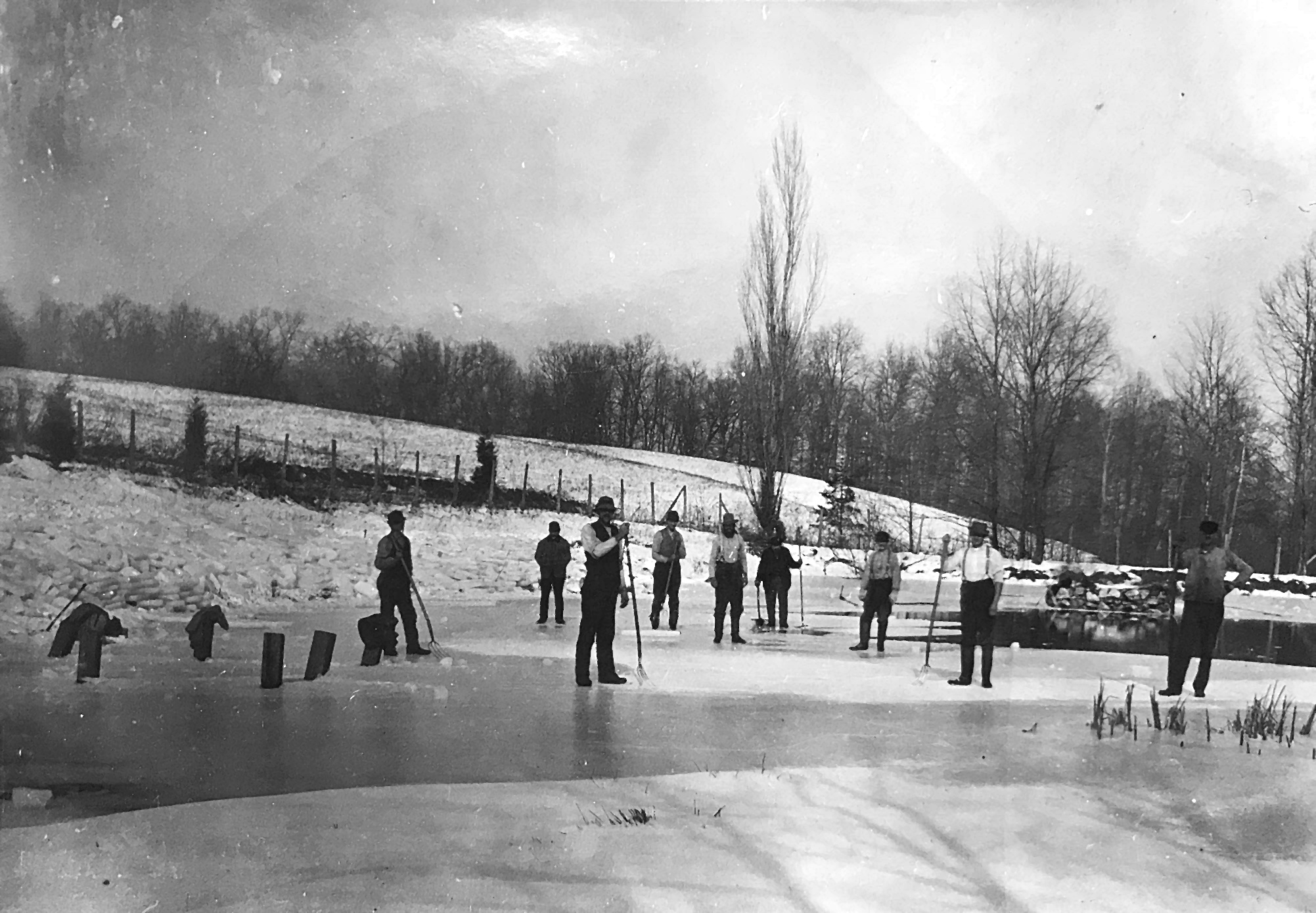
Men harvest ice with pitchforks and hand saws on a frozen pond in Darnestown, circa 1910. Stacked blocks line the shoreline, ready for storage in nearby ice houses. Photo by Lewis Reed.
Most people wouldn’t consider the winter months of December through February a season of harvest in Montgomery County. But in our not so distant past, this was harvest time for—ICE. Rivers, lakes and ponds were generally frozen and ice was harvested like a winter crop to keep food cold all summer long.
Much of what we know visually about this era survives thanks to Lewis Reed, founder of Reed Brothers Dodge, and one of the county’s most prolific early photographers. Among his many surviving images is a striking photograph of men harvesting ice on a Darnestown pond around 1910. In it, workers stand poised with their tools, the frozen surface carved into neat glistening blocks ready for transport.
Ice harvesting wasn’t merely a winter job; it was a community effort that tied households, farms, and businesses together. Timing was everything. Too early in the season, the ice was fragile and dangerous; too late, and the freezing window had passed. Because the work involved standing on frozen water with sharp tools and heavy loads, it carried genuine risk. Yet despite the hazards, these annual harvests were essential to community well-being. The ice collected in the winter months might be keeping milk or meat cold on farms well into August.
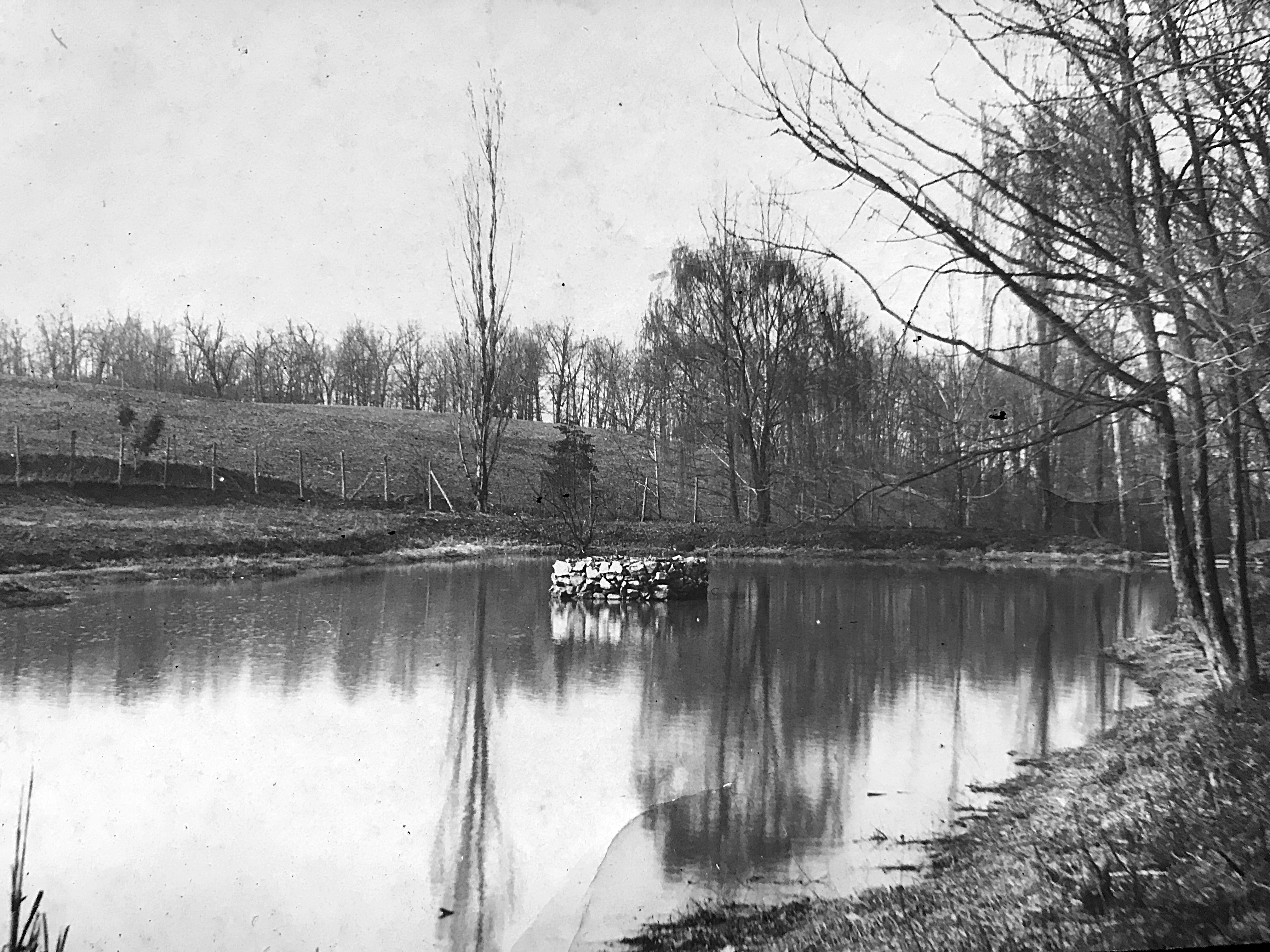
The same pond once used for ice harvesting, seen here ice-free. Photo by Lewis Reed, 1910.
From The Evening Star, Washington, D.C. December 22, 1904
ROCKVILLE AND VICINITY GENERAL NEWS
The cold weather of the past ten days has frozen the ponds and creeks throughout this county to a thickness of six or seven inches, and the ice harvesting is now the order of the day. The quality of the ice is not regarded as first-class, however, and for this reason many persons will defer filling their houses until later in the winter.
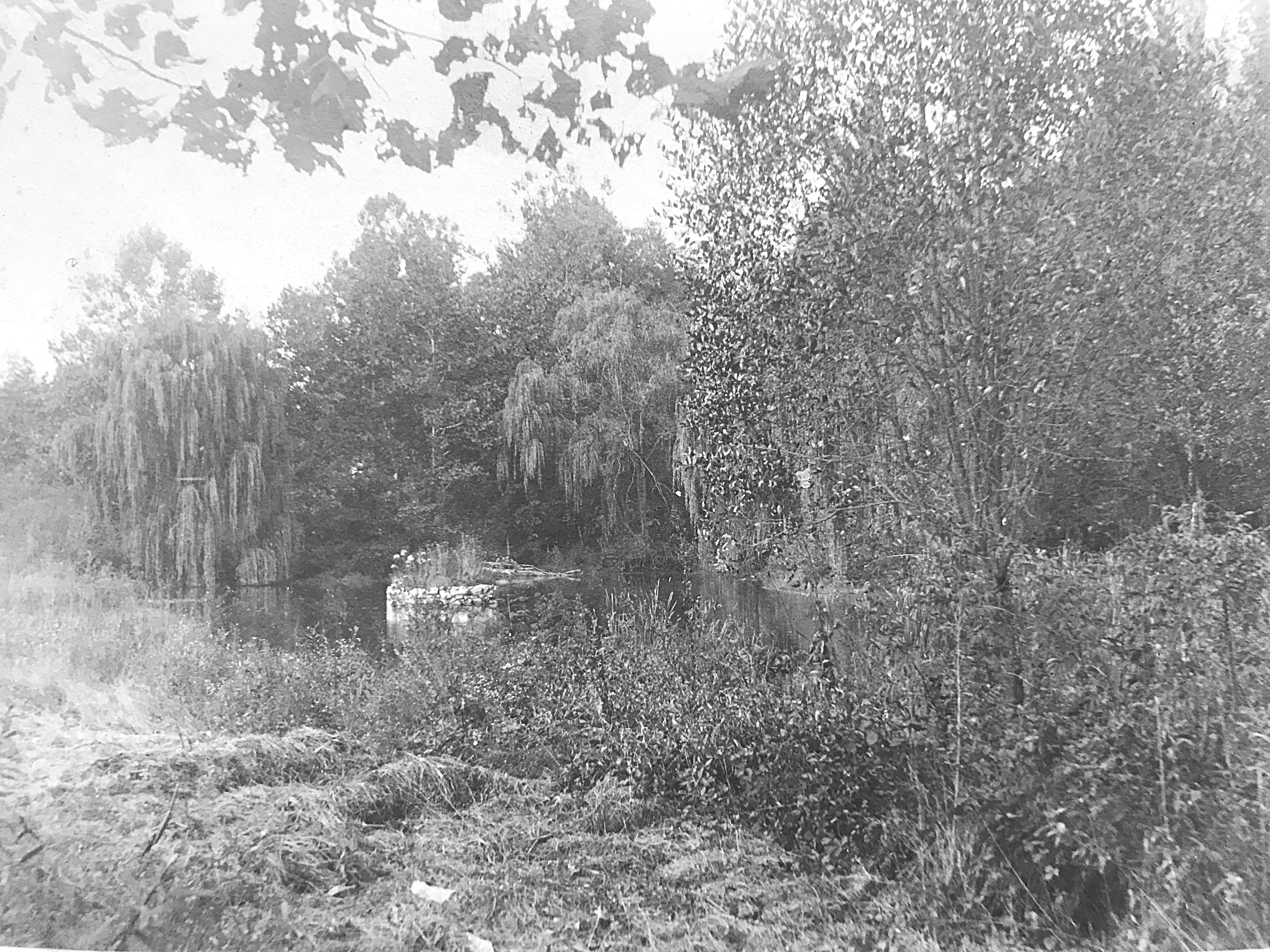
Summertime view of the same pond, seen from a different vantage point. Photo by Lewis Reed, 1910.
As we look back more than a century later, these images invite us to appreciate not only the hard labor that made year-round food storage possible, but also the photographers like Lewis Reed who understood the importance of documenting everyday life. Thanks to his lens, we can still witness this fleeting moment of Montgomery County’s past; a time when winter’s cold was not an inconvenience, but a resource to be harvested, stored, and relied upon long after the ice had melted.
Ice Cold History in Montgomery County (1910)

Men harvesting ice with pitchforks and hand saws in Darnestown, Maryland. Photo taken by Lewis Reed in 1910. Note the blocks of ice stacked up along the shoreline. The exact location of the pond is unknown.
Most people wouldn’t consider the months of January and February a season of harvest in Montgomery County. But in our not so distant past, this was harvest time for—ICE. Rivers, lakes and ponds were generally frozen and ice was harvested like a winter crop to keep food cold all summer long.
Before the first successful ice-making machines were built, ice for refrigeration was obtained through a process called “ice harvesting.” Ice cutters used to risk their lives by going out onto frozen ponds with saws, tongs, and pitchforks and methodically cut and dragged blocks of ice which would be stored in hay-packed ice houses. But people did not put ice in drinks as we do now. The possibility of debris having been in the water as it froze – even a bug now and then – discouraged the idea.
Ice houses were dug into the ground to keep the temperature low; double-thick walls were often filled with sawdust for further insulation, and the blocks themselves were packed in sawdust or straw. When you wanted some ice for drinks or to make ice cream, you wouldn’t pull out a whole block; ice picks, chisels, hatchets and shavers were used to get just what you needed.

Same pond in summertime without ice. Photo by Lewis Reed, 1910.
I’m not exactly sure what the stone structure is in the middle of the pond, but “google” said it could be an outlet structure to keep the water surface in the pond at its optimum level, which usually coincides with the maximum water level designed for the pond. It is connected to a pipe allows water to exit the water body. This pond must have been on a creek or stream and is very likely no longer in existence.

Same pond in summertime from a different perspective. Photo by Lewis Reed, 1910.
From The Evening Star, Washington, D.C. December 22, 1904
ROCKVILLE AND VICINITY GENERAL NEWS
The cold weather of the past ten days has frozen the ponds and creeks throughout this county to a thickness of six or seven inches, and the ice harvesting is now the order of the day. The quality of the ice is not regarded as first-class, however, and for this reason many persons will defer filling their houses until later in the winter.
Next time you drop a few ice cubes into a glass or take out a frozen piece of meat from the freezer, perhaps give a momentary thought to how much we take for granted the ability to have ice cold drinks, preserved foods that can be stored for months, ice cream, cold frothy beer, and so many perishable food products. Refrigeration is a modern convenience that we just can’t live without and certainly one that I took for granted until I wrote this!
Life Before Ice in Montgomery County (1910)
Men harvesting ice with pitchforks and hand saws in Darnestown, Maryland. Photo taken by Lewis Reed in 1910. Note the blocks of ice stacked up along the shoreline. The exact location of the pond is unknown.
Got ice? Usually, we don’t think about ice very often, unless there’s none in the freezer. Before the first successful ice-making machines were built, ice for refrigeration was obtained through a process called “ice harvesting.” Ice cutters used to risk their lives by going out onto frozen ponds with saws, tongs, and pitchforks and methodically cut and dragged blocks of ice which would be stored in hay-packed ice houses. But people did not put ice in drinks as we do now. The possibility of debris having been in the water as it froze – even a bug now and then – discouraged the idea.
Ice houses were dug into the ground to keep the temperature low; double-thick walls were often filled with sawdust for further insulation, and the blocks themselves were packed in sawdust or straw. When you wanted some ice for drinks or to make ice cream, you wouldn’t pull out a whole block; ice picks, chisels, hatchets and shavers were used to get just what you needed.

Same pond in summertime without ice. Photo by Lewis Reed, 1910.
I’m not exactly sure what the structure is in the middle of the pond, but “google” said it could be an outlet structure to keep the water surface in the pond at its optimum level, which usually coincides with the maximum water level designed for the pond. If anyone knows exactly what it is, please leave a comment.

Same pond in summertime from a different perspective. Photo by Lewis Reed, 1910.
From The Evening Star, Washington, D.C. December 22, 1904
ROCKVILLE AND VICINITY GENERAL NEWS
The cold weather of the past ten days has frozen the ponds and creeks throughout this county to a thickness of six or seven inches, and the ice harvesting is now the order of the day. The quality of the ice is not regarded as first-class, however, and for this reason many persons will defer filling their houses until later in the winter.
Next time you drop a few ice cubes into a glass or take out a frozen piece of meat from the freezer, perhaps give a momentary thought to how much we take for granted the ability to have ice cold drinks, preserved foods that can be stored for months, ice cream, cold frothy beer, and so many perishable food products. Refrigeration is a modern convenience that we just can’t live without and certainly one that I take for granted … or took for granted until I wrote this!
Books

Related Resources


Copyright Notice

Reed Brothers Dodge History (1915-2012) by Jeanne Gartner is licensed under a Creative Commons Attribution-NonCommercial 3.0 Unported License.
 Reed Brothers Dodge History 1915 – 2012
Recent Comments