
July 4, 1922: First MCPD Posing in Front of Reed Brothers Dodge
This blog entry is posted today to commemorate the anniversary of the Montgomery County Police Department. It was 93 years ago on July 4, 1922 that the MCPD was first established. In those days, Montgomery County was farm country, sparsely populated, automobiles sharing dirt roads with horse-drawn wagons. But it was changing into a proper suburb, and there needed to be a police department.
Posing in front of Reed Brothers Dodge on July 4, 1922 Chief Charles Cooley, center, and his men of the first mounted unit of the Montgomery County Police Force, were on their first day of duty. (click image to enlarge)
The MCPD consisted of five officers and a Chief. Each of the officers was issued a Harley-Davidson motorcycle, a .38 Smith & Wesson handgun, a black jack, law book and was allotted $300.00 a year for the upkeep of their motorcycle.

Pictured left to right: Earl Burdine, Lawrence Clagett, Guy Jones, Chief Charles Cooley, Leroy Rodgers, and Oscar Gaither. Photo by Lewis Reed
Source: Montgomery County, Two Centuries of Change by Jane Sween
Minivan – How It All Began
 Minivans… you must have heard about them. Back in 1983 — when Ronald Reagan was president — the economy was far from robust and Chrysler was on death’s doorstep (talk about déjà vu). Chrysler needed a home run, and Lee Iacocca, who was running the company at the time, gambled that the first wave of baby boomers who were starting families would likely want something roomier and far more practical than the traditional family hauler, the station wagon.
Mentioning “family car” in 1983 would have conjured up a station wagon. I remember getting carsick while sitting in the rear-facing third row torture chamber, cut off from the rest of the family and their forward-looking vantage point. The tail-gunner position, however, was a great way to test out new hand gestures and making silly faces on following motorists. Do you have any idea how impossible it is to win the alphabet license plate or billboard game when you’re the last one to see everything? I spent many a family car trips never once seeing where we were going, only where we’d been. “Oh, look, there WAS the Bay Bridge. There WAS a bear. There WAS the most incredible thing ever except … whoops, now it’s gone. Too bad.” Indeed, how soon we forget that the minivan, when it debuted 30 years ago, was such a welcome replacement for the station wagon.
Iacocca practically bet the company on the fact that a new automotive segment dubbed “the minivan” — a front wheel drive small van built on the K-car platform — would catch on with the boomers. It was a $660-million gamble, only made possible by money acquired earlier from Washington’s $1.5-billion bailout of Chrysler.
It soon turned out that Iacocca’s gambit wasn’t merely a home run — the Dodge Caravan/Plymouth Voyager turned out to be a bases-loaded grand slam.
On November 2, 1983, the first minivan rolled down the assembly line in Windsor. These 1984 model-year Dodge Caravan and Plymouth Voyager models quickly appeared in dealerships alongside the Dodge Aries and Plymouth Reliant K-cars.Along the way, Chrysler has developed countless minivan firsts and toppled countless competitors that imitated them — and it remains just about the last one standing — as Chrysler just passed its 30th anniversary in the minivan market.
Now that I think about it, maybe facing backward so much during my formative years is why I tend to look backward too much in life and get nostalgic for silly things like rear-facing station wagon seats and minivans.
Sources: Autoevolution & Allpar
Featured Photo: Hand-Cranked Car
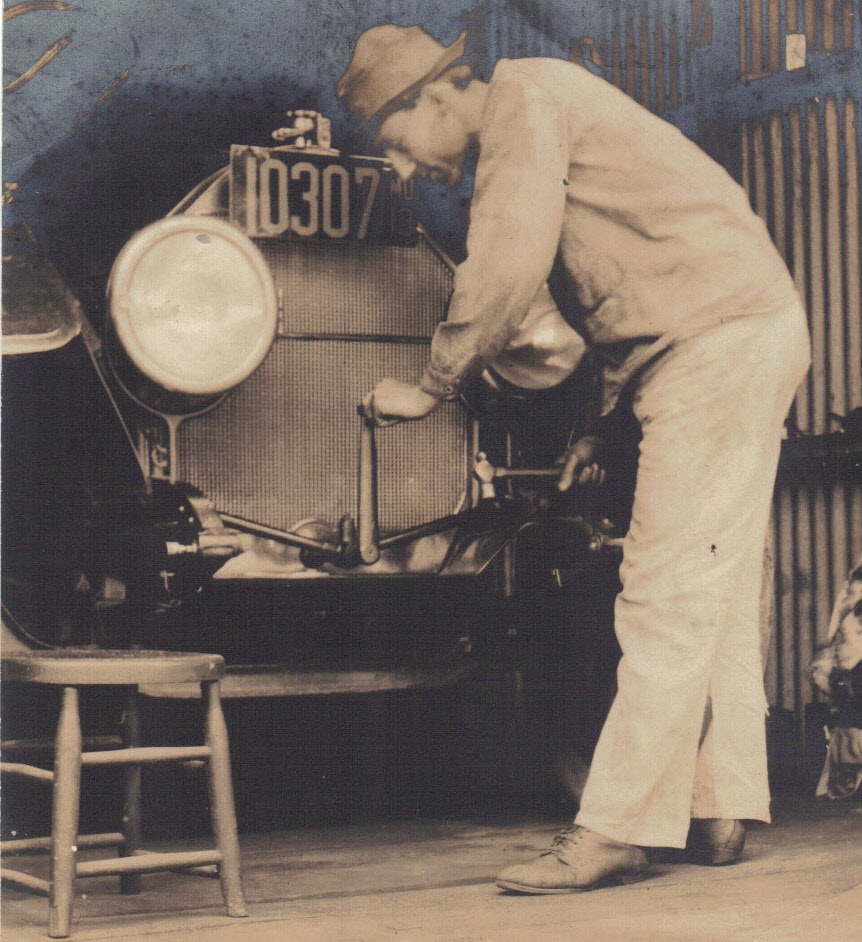
Lewis Reed hand cranking an old car. The license plate is MD 10307 dated 1913.
Today, we take the starting of automobiles for granted. Simply place the key in the ignition, turn, and VROOM, the engine starts.
However, this was not always the case. Cars in the early parts of the century had to be started by hand. This was accomplished by turning a crank, usually located in the front of the automobile. When the crank was turned, it moved the pistons in the automobile’s engine until enough momentum was built up to keep the engine going on its own. Hand cranking was also physically demanding making it very difficult for anyone with a small stature to start the engine.
By 1920, nearly all manufacturers were producing cars equipped with starters making it easy for anyone, regardless of physical abilities, to start a car by pressing a button mounted on the dash or floor. An ignition on and starter engage switch operated by a key was introduced by Chrysler in 1949.
Dodge Brothers Emblem
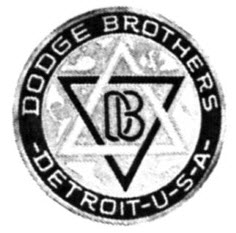
Dodge Brothers logo used from 1914 to 1927
The original Dodge was a circle, with two interlocking triangles forming a six-pointed star in the middle; an interlocked “DB” was at the center of the star, and the words “Dodge Brothers Motor Vehicles” encircled the outside edge. Although the “Brothers” was dropped from the name for trucks in 1929 and cars in 1930, the DB star remained in the cars until the 1939 models were introduced.
What’s the meaning behind the Dodge Brothers emblem?
Unfortunately, John and Horace Dodge died before they publicly told anyone how they arrived at this symbol. If any family members knew the reasons behind this, nothing was ever revealed or discovered. Apparently no one thought to ask them!
Among the possibilities:
1. These are two interlocking Greek letter “deltas” or “D s” for the two Dodge brothers
2. A medieval symbol of mysticism and the joining of mind and body, also possibly the joining of two brothers, who were known to be personally very close, in this business venture.
3. An abstraction of the square and compass of the Freemasons.
4. Nothing more or less than a badge with six pointed star similar to those used for law-enforcement officer’s badges, some outlined with triangles. Sheriff, Marshall, and police badges frequently were and are six pointed stars. The old-west Dodge City badge had six points. Horace Dodge was said to enjoy accompanying local law-enforcement officers on their runs.
5. There are other instances of a company ‘logo” selected for no particular deep meaning other than that it suited the fancy of those who selected it. The Chevrolet “bow-tie” is a classic example, as it was copied from the wall paper of a hotel room.
6. At the time the emblem was selected (most likely 1912-1914) it’s likely that the Dodge brothers were unaware of its use in Judaism. In fact, at this time, that symbol was not used universally in this context.
Rumors that are wrong include:
1. They chose the “Star of David” as a Jewish symbol to anger Henry Ford.
Fact: The brothers were actually friends with Ford at the time the emblem was selected. They were business partners with Ford and even were guests at Edsel Ford’s wedding.
2. They chose the “Star of David” as a Jewish symbol to appease Jewish bankers who financed the business.
Fact: There were no outside investors.
3. The Dodge Brothers were Jewish
Fact: They were not.
Rockville Garage

1916 Rockville Garage
Many early car dealers grew out of existing garages. Lewis Reed became a partner in Rockville Garage with Robert L. and Griffith Warfield. The Warfield Brothers had purchased this building in July 1915, from Lee Ricketts and Sons who had the Overland Agency. The business continued to operate under the old name until it was changed at the suggestion of the late Judge Edward Peter shortly after Edgar Reed joined his brother.
The first shop force of Rockville Garage consisted of Lewis Reed, Philip Reed and (first name unknown) Long. A third brother, Philip Reed, came to work for them in 1916 as a mechanic until 1944. A mechanical aptitude was necessary to be a dealer in the early 1900’s. When the cars were shipped to the dealer from the manufacturer they were only partially complete and they needed final assembly, so the new dealer quickly became skilled at repair.

Lewis Reed, Philip Reed and (first name unknown) Long.
Lewis Reed received his training at the Pierce Arrow factory at Buffalo, New York, the Dodge and Hudson factories at Detroit and the Washington Auto College. Pierce-Arrow was once one of the most recognized and respected names in the automobile industry. For 38 years, the Pierce-Arrow Motor Car Company in Buffalo, New York, produced some of the finest automobiles made.
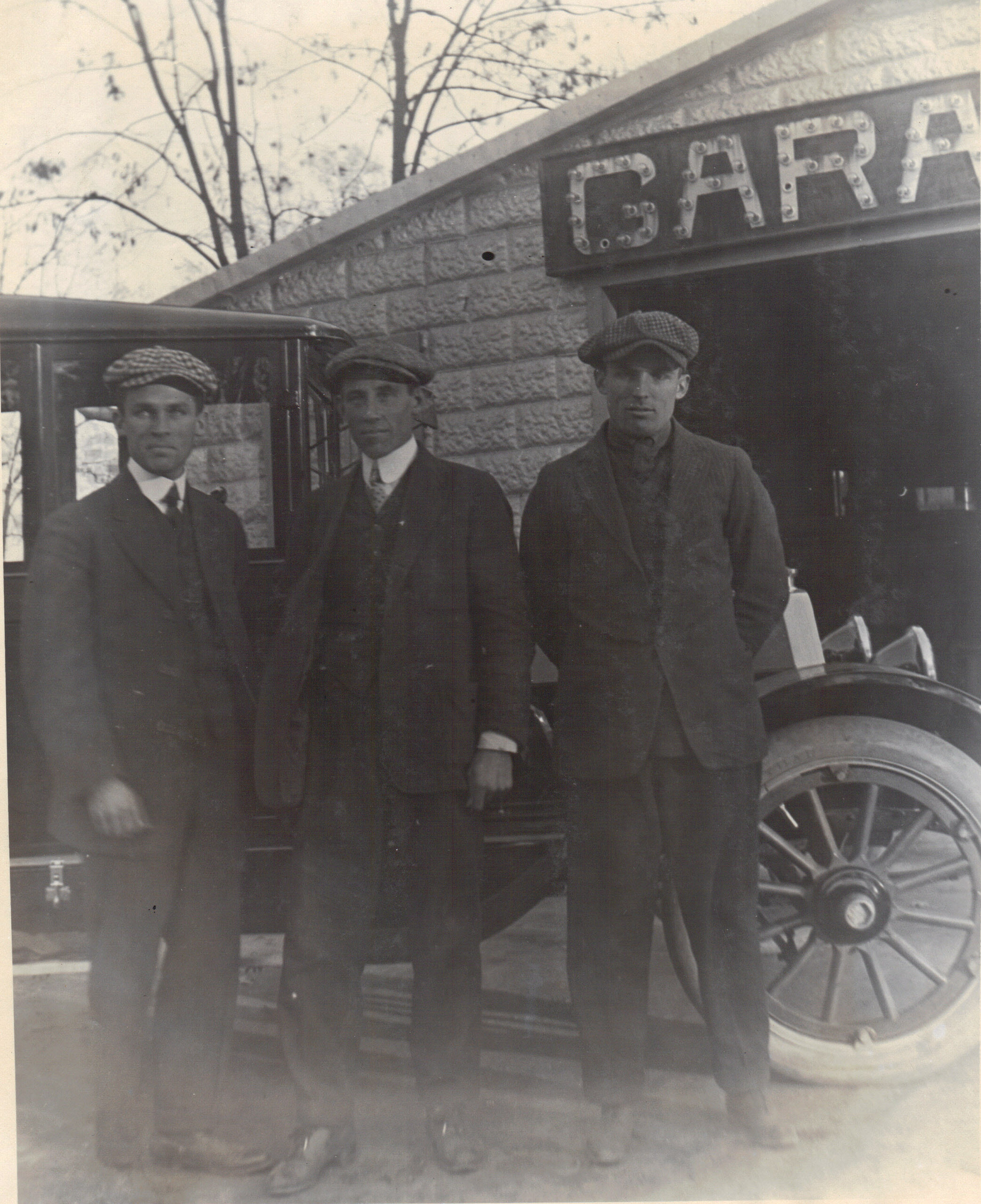
1916 – The original owners of Rockville Garage. From left: Roy Warfield – Lewis Reed – Griffith Warfield
In 1918, Lewis Reed bought out Rockville Garage from the Warfield’s and changed the name to Reed Brothers Dodge. Reed Brothers Dodge was the first to sell Dodge cars in Montgomery County, Maryland. Initially, Reed Brothers sold Oldsmobile and Hudson, along with Dodge. Later they became Dodge Plymouth dealers.
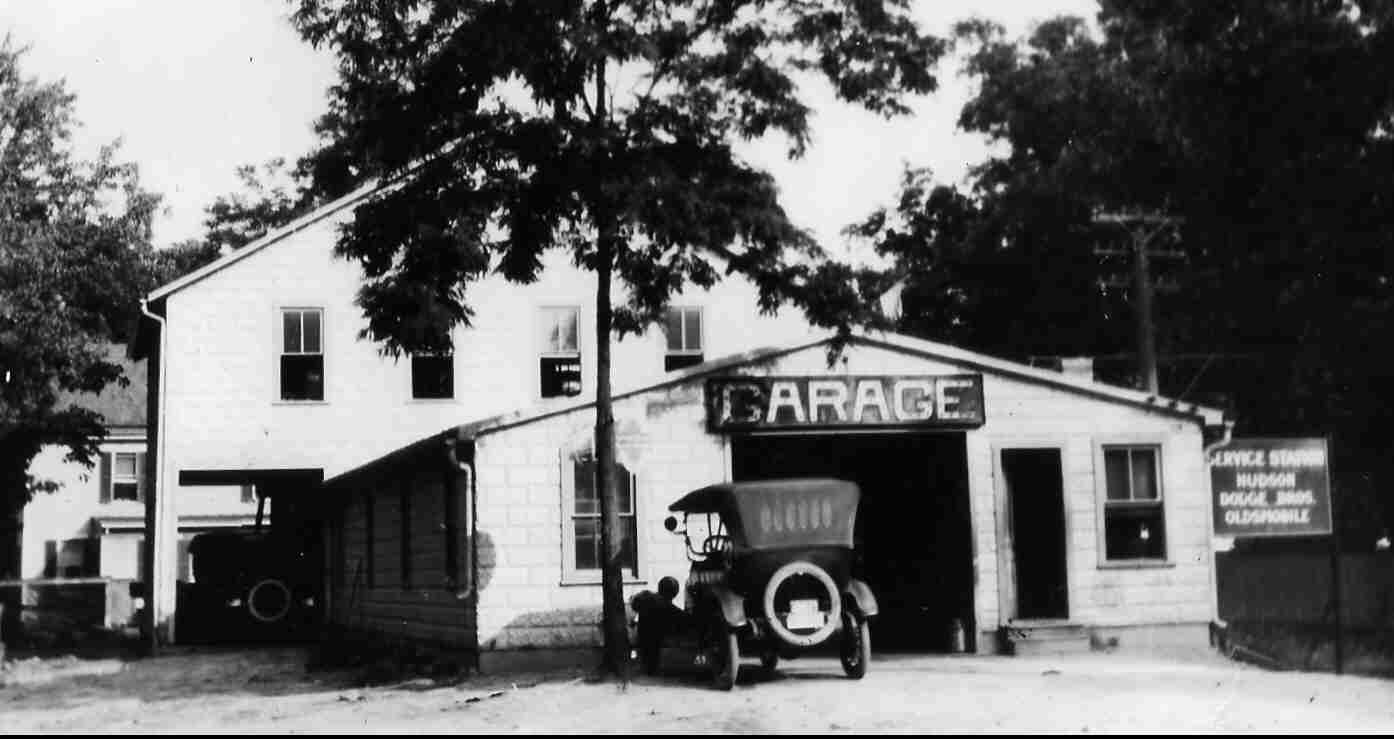
1917 Rockville Garage
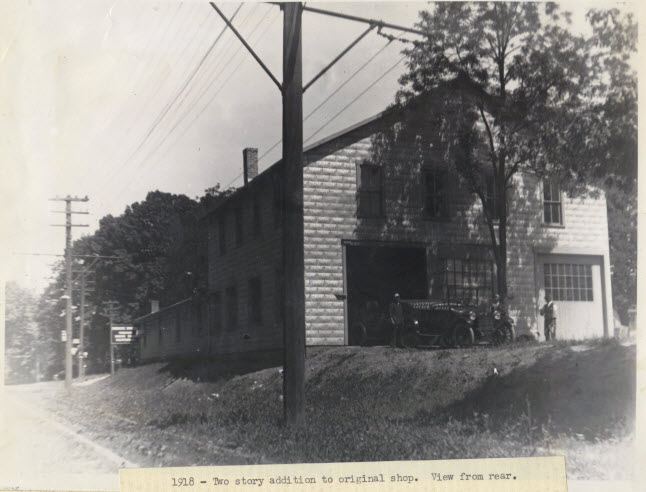
1918 Two Story Addition to Original Shop. View From Rear
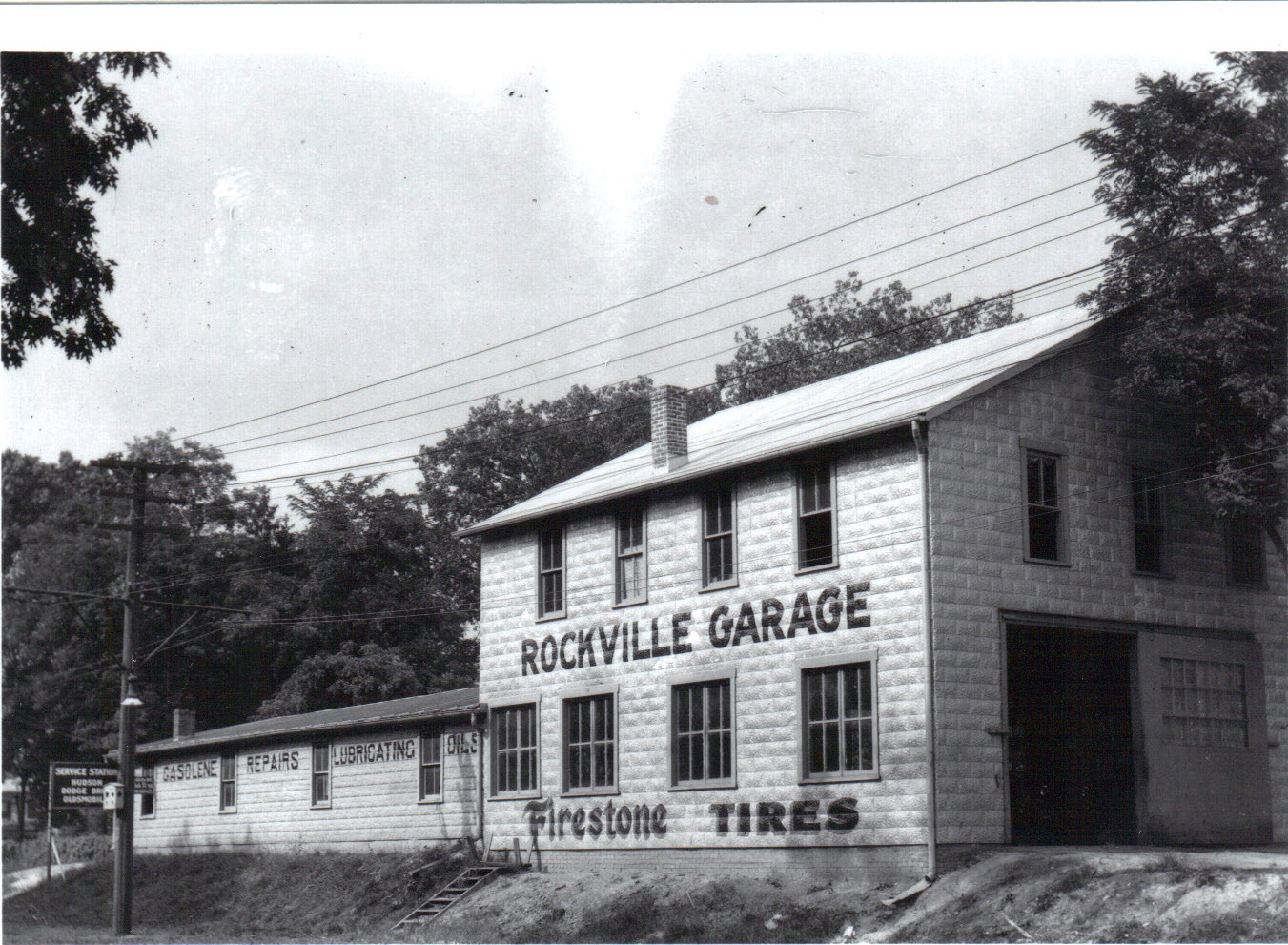
1918 Two Story Addition to Original Shop. View From Side
Books

Related Resources


Copyright Notice

Reed Brothers Dodge History (1915-2012) by Jeanne Gartner is licensed under a Creative Commons Attribution-NonCommercial 3.0 Unported License.
 Reed Brothers Dodge History 1915 – 2012
Recent Comments