
Lewis Reed Shows Off His “Photoshopping” Skills… 100 Years Ago
If you take a look at the state of photography today, such as the advances of digital cameras and the artful image manipulation by Photoshop, it is easy to forget that back in the 1900s photographers couldn’t just go into a computer program and change their images any way they wanted. They did what they could with the tools they had. Double image exposure was one tool Lewis Reed had in his photography tool belt. He was doing crazy things to images and creating humorous effects over 100 years ago. With double exposure technique, you could create certain effects like placing the same person on both sides of a picture simultaneously. Photographs were pieced together in the darkroom from separate photographs.
Below are eight (circa 1920s) photographs from Lewis Reed’s collection that will make you do a double take. No digital manipulation here. (click on photos to enlarge)

A double exposure image of Lewis Reed’s brother, Edgar, seated on both sides of a table.
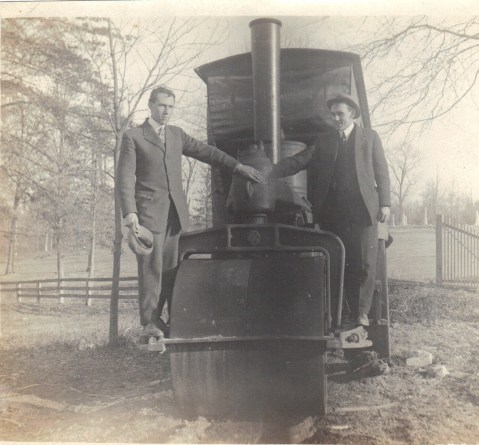
Lewis Reed standing on both sides of a steamroller

Another double exposure wonderment. Wanna Fight?

Oh No! What on earth are they doing? I don’t know, but this one is epic.
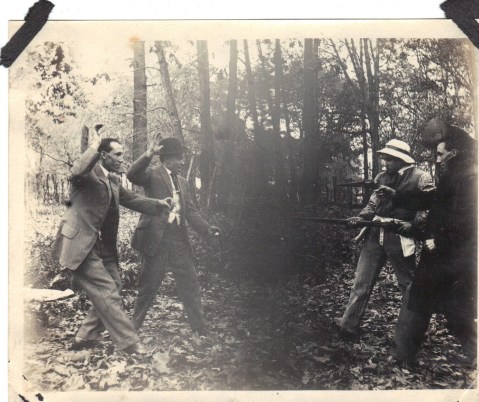
Don’t Shoot! Lewis Reed is standing both front left and front right in this photo
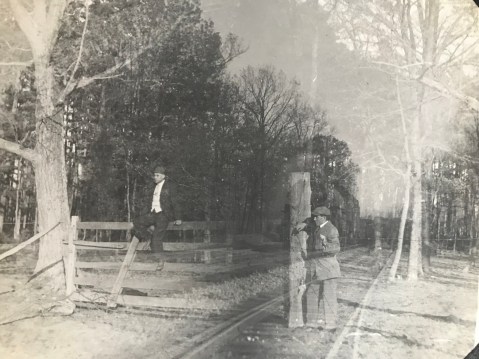
Surrealistic, ghost-like effect of Lewis Reed standing next to a tree in the middle of train track.

More “photoshop” fun. Lewis Reed pushing the same man in baby carriage on both sides of the photo.
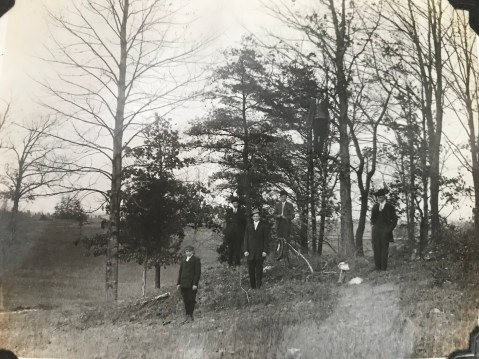
It’s a bird, it’s a plane .. no, it’s a man up in a tree!
Lewis Reed’s Hand-tinted Photos
Before the advent of color photography, photographers painstakingly applied color to black and white photos in order to show a truer visual depiction of a photo image. The hand-tinted photos of Lewis Reed and his daughter, Mary Jane (Reed) Gartner are examples of this medium. The small collection of hand-tinted photographs were taken by Lewis Reed in the early 1900s. The photographs were hand-colored my my mother, Mary Jane (Reed) Gartner.
 Below are hand-tinted photos before and after. Pastel was a good choice for coloration.
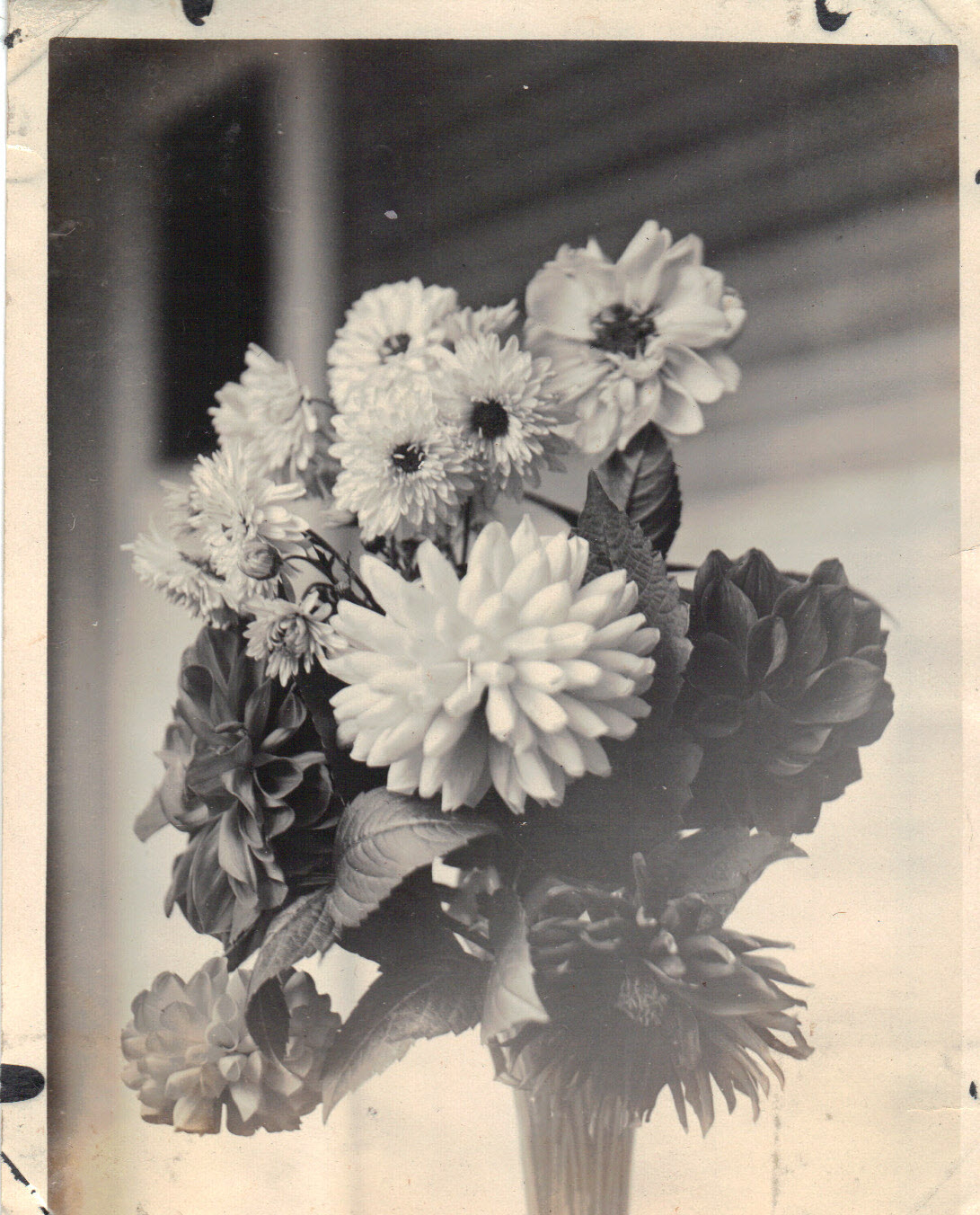
Original photograph by Lewis Reed.

Original photograph by Lewis Reed. The photograph was meticulously tinted by my mother, making it look like a color photo.
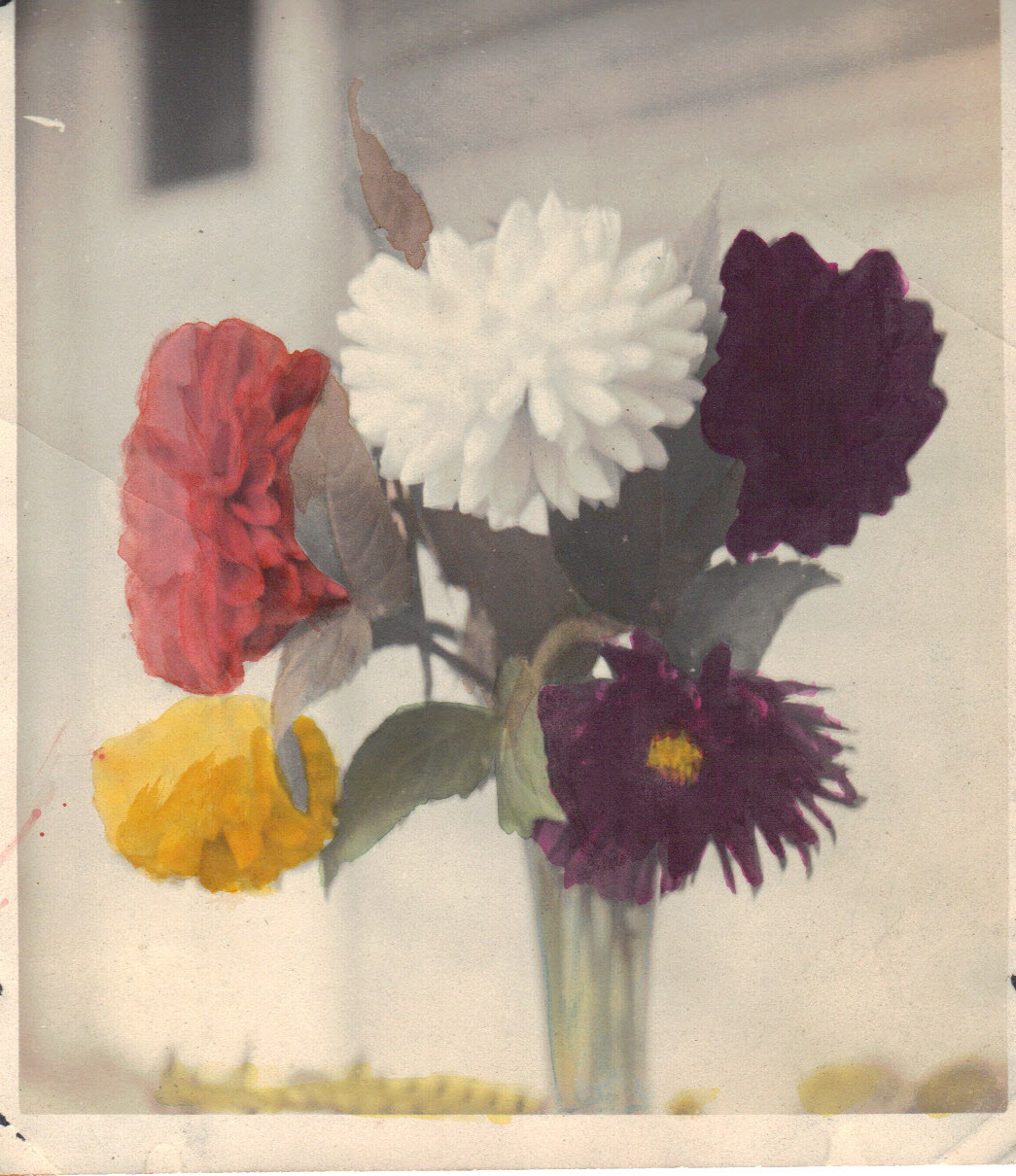
The art of hand tinted photos was introduced along side the daguerreotype in 1839. In the 19th century it was most common for the professional photographer to tint the photograph or tintype just after printing. Later photo artists introduced new techniques using oil, watercolor and other types of paint to achieve the desired result. With the Great Depression, the sale of professional hand tinted photographs declined, but the home artist continued to have access to hand tinting kits. There is a very informative wiki article here which provided me with the brief details I have shared with you.
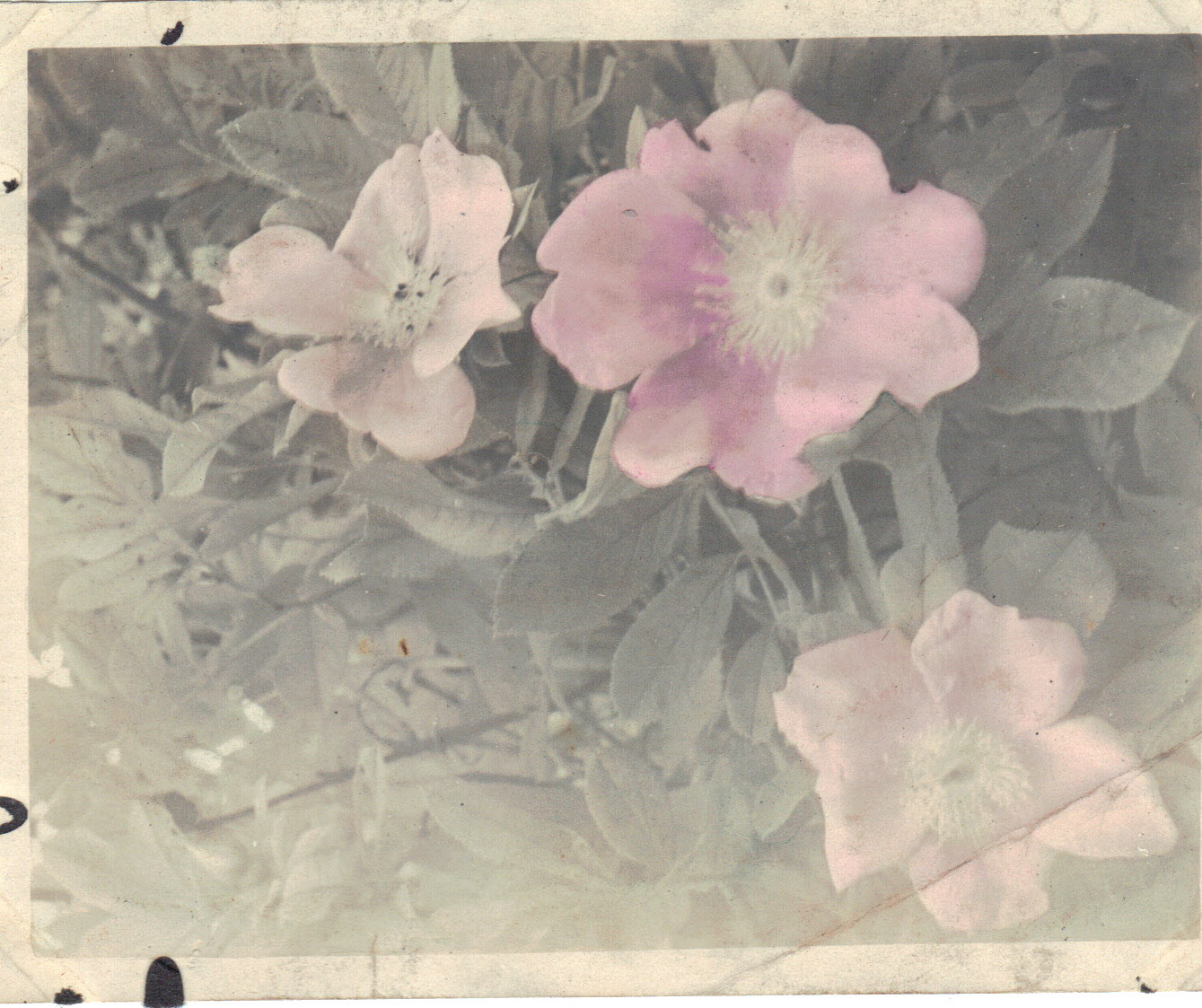 These days, most people rely on Photoshop to digitally make such enhancements. Progress, you know …
Photoshop 1900s Style

A double exposure image of Lewis Reed’s brother, Edgar, seated on both sides of a table. Think about doing this without Photoshop. Photo by Lewis Reed
If you take a look at the state of photography today, such as the advances of digital cameras and the artful image manipulation by Photoshop, it is easy to forget that back in the 1900s photographers couldn’t just go into a computer program and change their images any way they wanted. They did what they could with the tools they had. Double image exposure was one tool Lewis Reed had in his photography tool belt. He was doing crazy things to images like this one over 100 years ago.
With double exposure technique, you could create certain effects like placing the same person on both sides of a picture simultaneously. Very hard to believe this image was not created using Photoshop, it is just too cool. No digital manipulation here.
1920s Double Image Photos by Lewis Reed
If you take a look at the state of photography today, such as the advances of digital cameras and the artful image manipulation by Photoshop, it is easy to forget that back in the 1920s photographers couldn’t just go into a computer program and change their images any way they wanted. They did what they could with the tools they had. Double image exposure was one tool Lewis Reed had in his photography tool belt.
With double exposure technique, you could create certain effects like placing the same person on both sides of a picture simultaneously. Very hard to believe these images were not created using Photoshop, they are just too cool. No digital manipulation here.
Below are some vintage (circa 1920s) double image photographs from Lewis Reed’s collection (click on photos to enlarge):

Lewis Reed standing on both sides of a steamroller

Another double exposure wonderment. Wanna Fight?
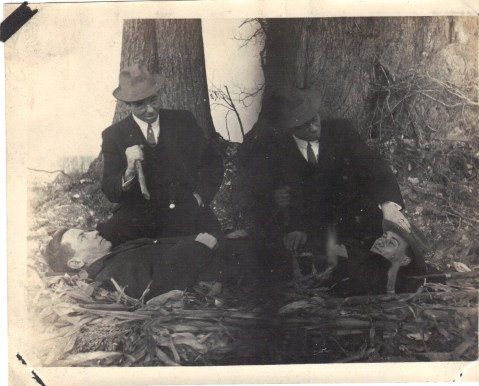
Oh No! What on earth are they doing? I don’t know, but this one is epic.

Don’t Shoot! Lewis Reed is standing both front left and front right in this photo
Books

Related Resources


Copyright Notice

Reed Brothers Dodge History (1915-2012) by Jeanne Gartner is licensed under a Creative Commons Attribution-NonCommercial 3.0 Unported License.
 Reed Brothers Dodge History 1915 – 2012
Recent Comments