
New Year Greetings from Lewis and Edgar Reed, 1950
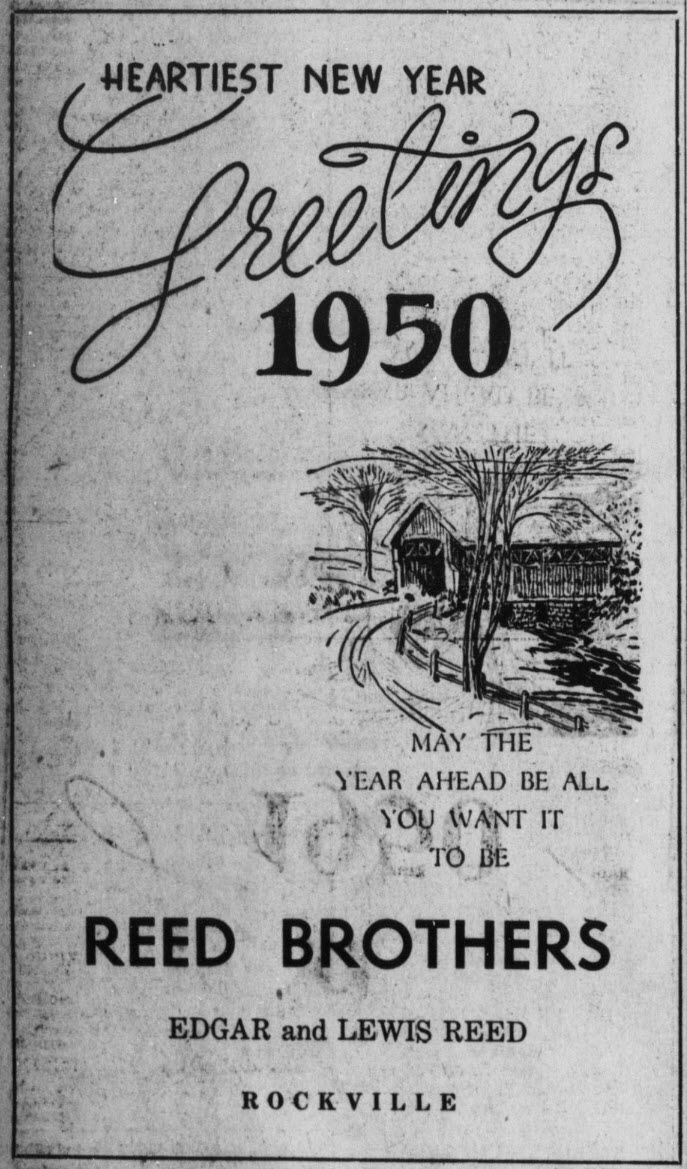
As another year begins, it feels fitting to look back at a New Year greeting shared more than seven decades ago. In the December 29, 1949 edition of the Montgomery County Sentinel, Edgar and Lewis Reed offered a warm message to the community:
“May the year ahead be all you want it to be.”
Simple and sincere, those words still resonate today. They reflect not only the spirit of the season, but also the long-standing connection the Reed family had with Montgomery County and the people they served. In that same spirit, I would like to extend my heartfelt thanks to all the visitors and followers of this blog. Your interest, comments, and support help keep this local history alive and meaningful.
Wishing you all a very Happy New Year, and every good wish for a safe, healthy, and prosperous 2026.

“Greetings at Christmastide” to Our Friends and Readers

Montgomery County Sentinel. December 20, 1945
This Christmas ad from Reed Brothers of Rockville, published in the Montgomery County Sentinel in December 1945, reflects both the relief and renewed hope felt across America after the end of World War II. The war had officially ended just months earlier, and this holiday season carried deep emotional weight; gratitude, remembrance, and optimism for the future.
One detail that stands out is the use of the word “Christmastide.” Today, the term feels old-fashioned, but in the late 19th and early-to-mid 20th centuries it was still widely used in print. Christmastide refers not just to Christmas Day, but to the entire sacred and festive season surrounding Christmas, traditionally extending from December 25 through Epiphany in early January. The word carries a deeper sense of continuity, reflection, and spiritual meaning; something especially meaningful in a postwar world seeking comfort and renewal.
The poetic message in this ad– speaking of pine, holly, friendly voices, faith, hope, and gladness– captures the emotional heartbeat of Christmas in 1945. After years of rationing, separation, and uncertainty, families across Montgomery County and the nation were finally able to celebrate the season with returning loved ones and a renewed sense of peace.
Vintage advertisements like this don’t just sell a business; they preserve the language, values, and spirit of an era. This Reed Brothers Christmastide greeting is a reminder of how deeply meaningful that first postwar Christmas truly was.
As we look back on that historic Christmas season eight decades ago, we’re reminded that the true heart of the holidays shines brightest when times are most difficult. I would like to wish everyone who finds time during the course of your day to visit this blog a very Merry Christmas and a safe and healthy Happy New Year in 2026.
Warmest holiday wishes,
Jeanne Gartner
Blog Author
Snow, Tinsel, and Memories: A Century of Christmas at the Reed Family Home
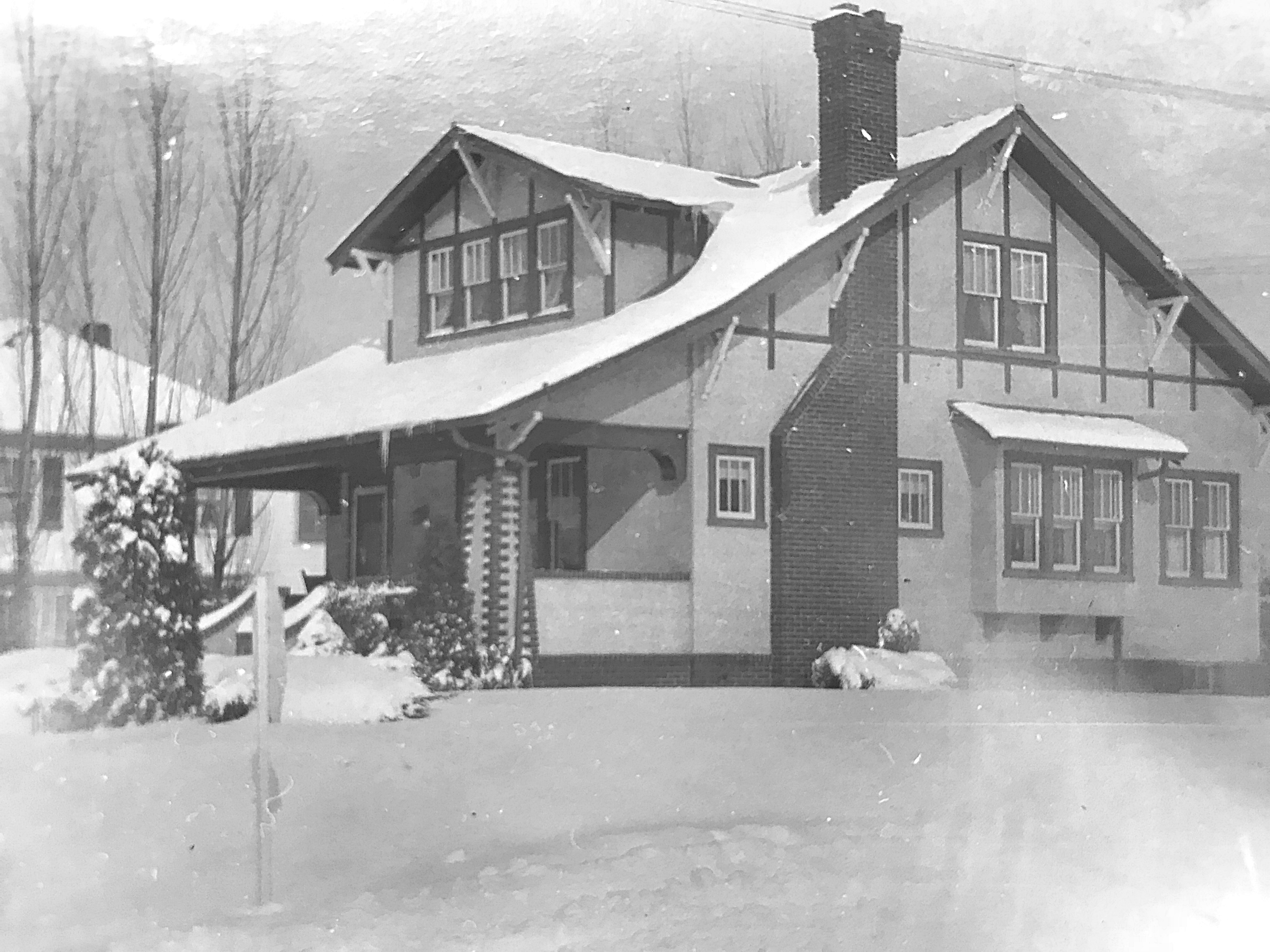
Lewis Reed’s craftsman-style home, looking rather solitary on a snowy day. Photo by Lewis Reed.
With only a few days left until Christmas, I thought it might be fun to take a look at some photos from Lewis Reed’s collection that show us what Christmas trees used to look like 100 years ago. In those days, there was not wide-spread agreement on exactly what a tree should look like, which made for a lot of creativity. Not surprisingly, they were very different than the perfectly shaped tress we have on display today.
The trees were big back then and always fresh. They went right to the ceiling and were very wide. Early Christmas trees were generally fastened onto a flat board surrounded with fence-rails, snow villages and carpeted with cotton blankets of snow. The tree in the photo below has an abundance of tinsel, which grew in popularity to the point that, by the 1920s, it was common to nearly cover the tree in the decorative material.
So, what is tinsel (aka icicles) exactly? Originally made from strands of silver alloy, tinsel was in fact first used to decorate sculptures. It was only later that it became a Christmas tree decoration, employed to enhance the flickering of the candle flames. In the 1950s, tinsel became so popular that it was often used as a substitute for Christmas lights.
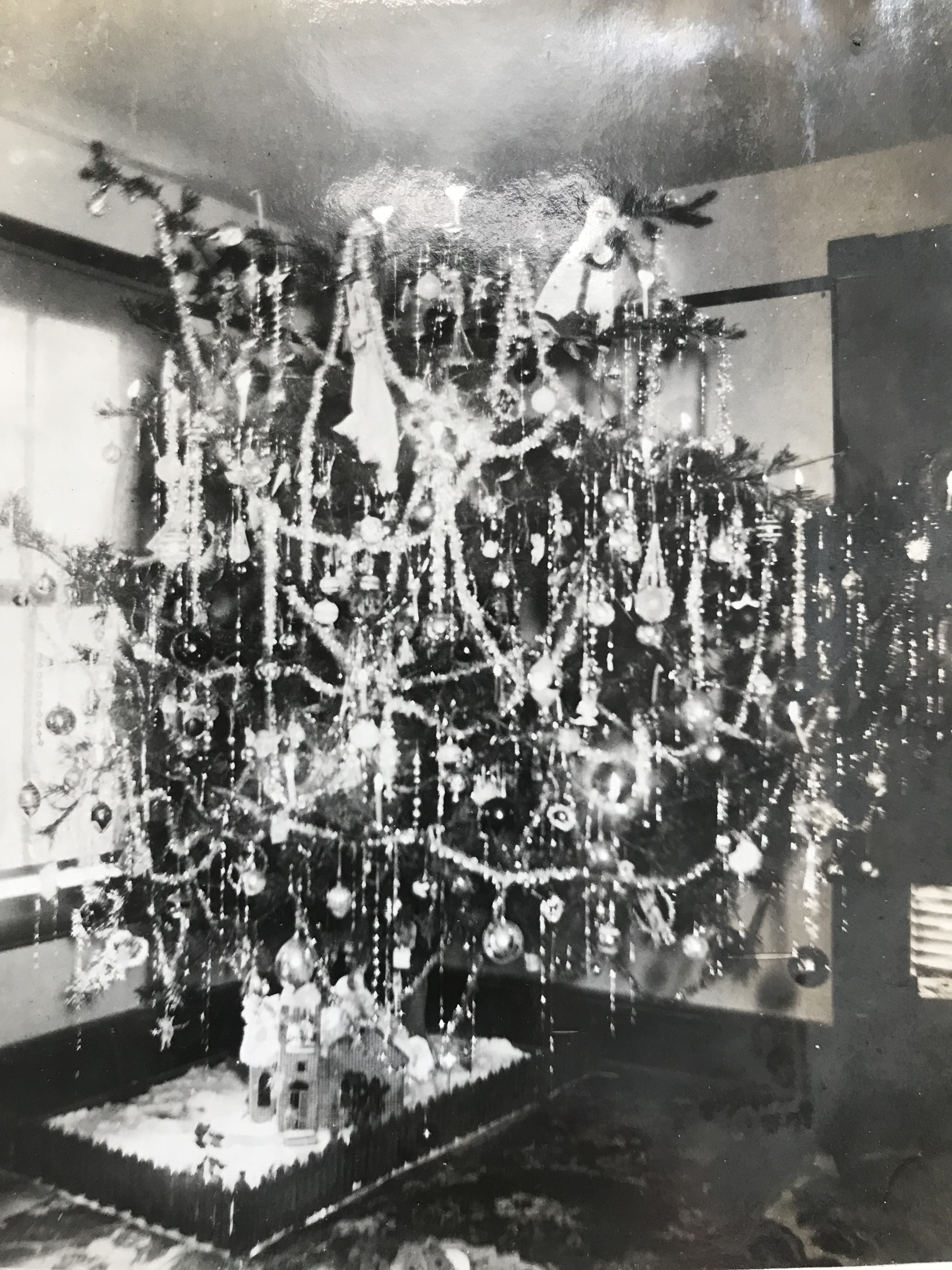
A small snow scene with what appears to be a miniature church is arranged at the foot of the Christmas tree. A popcorn garland adorns the tree. Photo by Lewis Reed
So, where did Washingtonians get their trees?
From The Evening Star, Washington, DC 23 December 1923:
Conduit Road on the long stretch between Glen Echo and Great Falls for many years has been a favorite hunting ground where hundreds and hundreds of families have customarily obtained scrub pine trees for Christmas week. Usually there is plenty of holly and some mistletoe to be found in the rugged and rolling hill lands which are the gateway to Great Falls.
In the early 1900s, Christmas trees weren’t the uniform, perfectly trimmed evergreens we see today. They were large, often reaching the ceiling, and proudly displayed their natural, sometimes misshapen forms. Families fastened them to flat boards, surrounded them with fence rails, and carpeted the ground with cotton blankets to mimic snow. Tinsel, originally made from strands of silver alloy, became a staple used to catch the flicker of candlelight and later, as a substitute for electric lights by the 1950s.
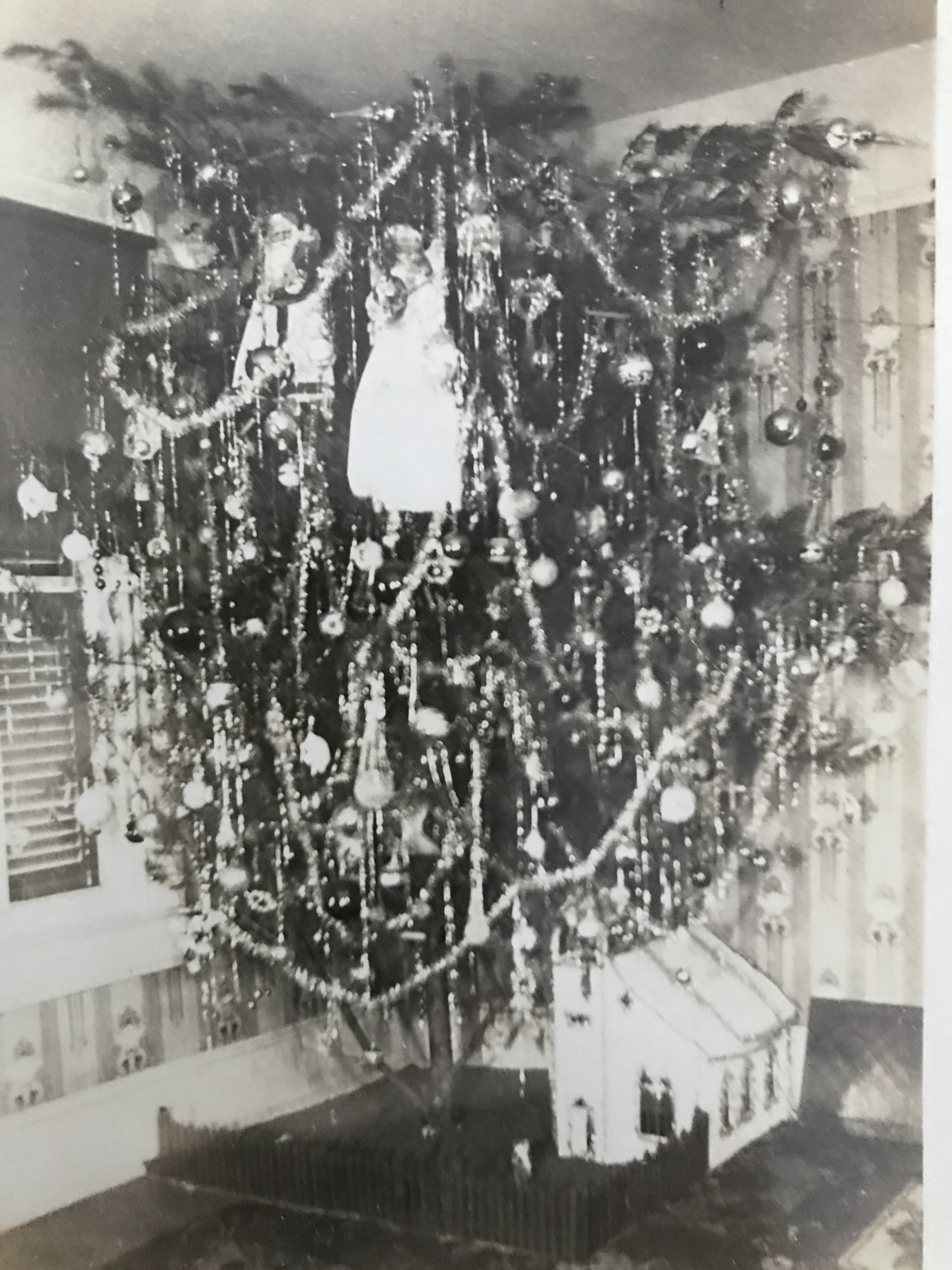
No room for a star on the top of this tree! And just look at those big Santa and Angel dolls. Other fun little details are notable, including a miniature church with picket fence is arranged at the base of the tree. Photo by Lewis Reed
There’s a fine art to decorating Christmas trees that’s been developing since over 100 years ago. People consider lights, garland, ornaments, skirt, and more. But one thing that’s hard to resist sometimes is just filling every available space with decorations. Clearly, that was the case years ago, too. What I like about these trees is that they are so randomly shaped and even misshapen. Folks back then didn’t trim them down to a more aesthetically pleasing symmetry like we do today.
The tradition of building miniature Christmas village landscapes, including houses, animals, and other hand-crafted wooden figures, began with the Pennsylvania Dutch in the late 1800s. Mass-produced cardboard houses, sold in dimestores, became popular in the mid-20th century. Today, these villages in good condition can be highly collectible.
Below are photos of Lewis Reed’s snow village set up under the Christmas tree decorated with vintage ornaments, tinsel, and lights. I don’t remember the odd-shaped Christmas trees, but I do remember having a lot of fun helping my grandfather set up the miniature landscapes with the varied figures, little houses, and trees at Christmastime each year. It seemed like a holiday village right out of a storybook.
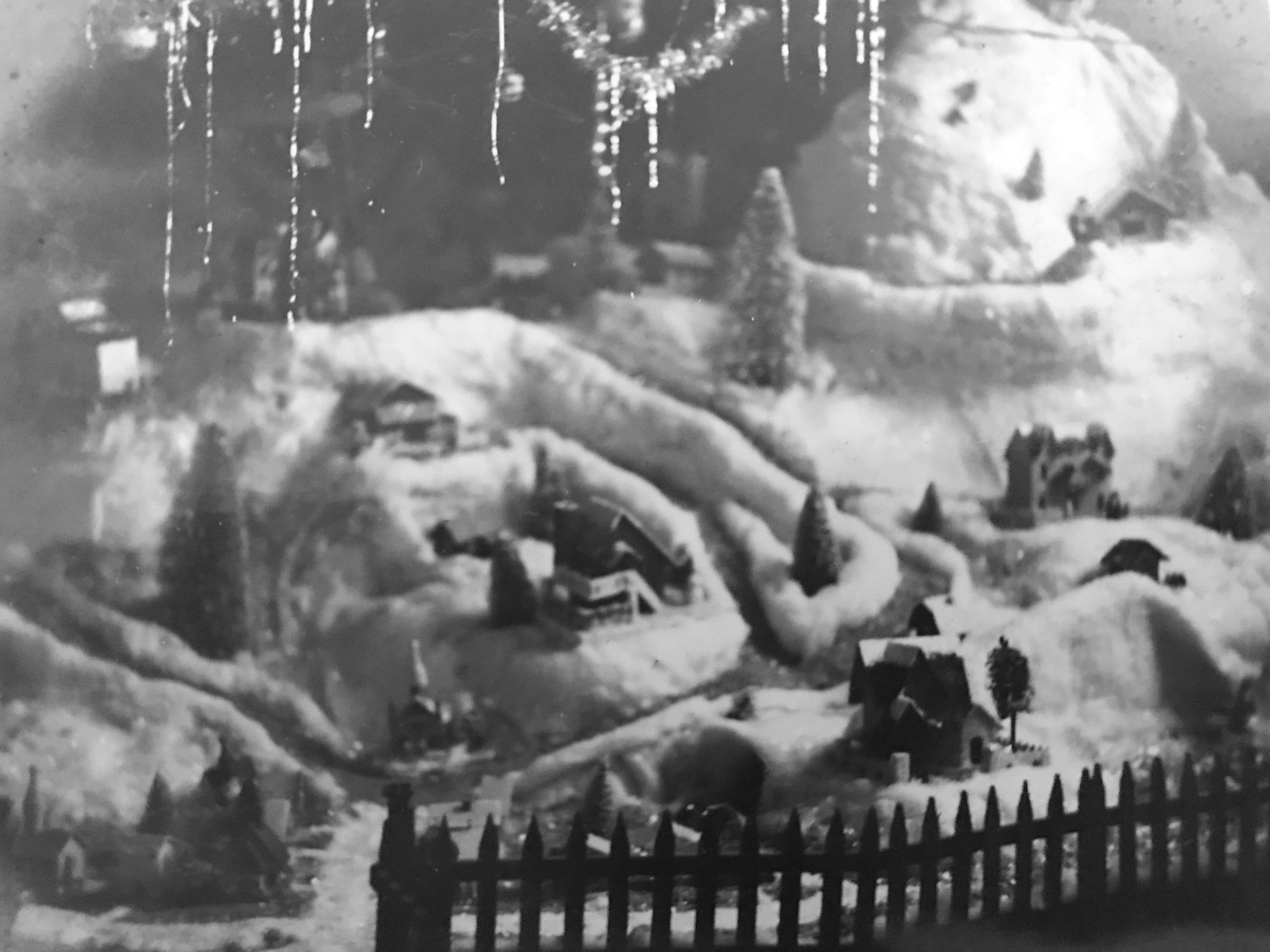
A rustic picket fence is used to set off the village display. Dangling strands of tinsel hang below the tree. Photo by Lewis Reed
The snow villages were set up in Lewis Reed’s basement on top of a big table beneath a small Christmas tree. He made the snow scenes entirely by hand using wire-covered cardboard and balled up paper to make hills and pathways. The little houses and figurines would fit into the landscape with cotton ‘snow’ all around; and lights would be wired underneath.
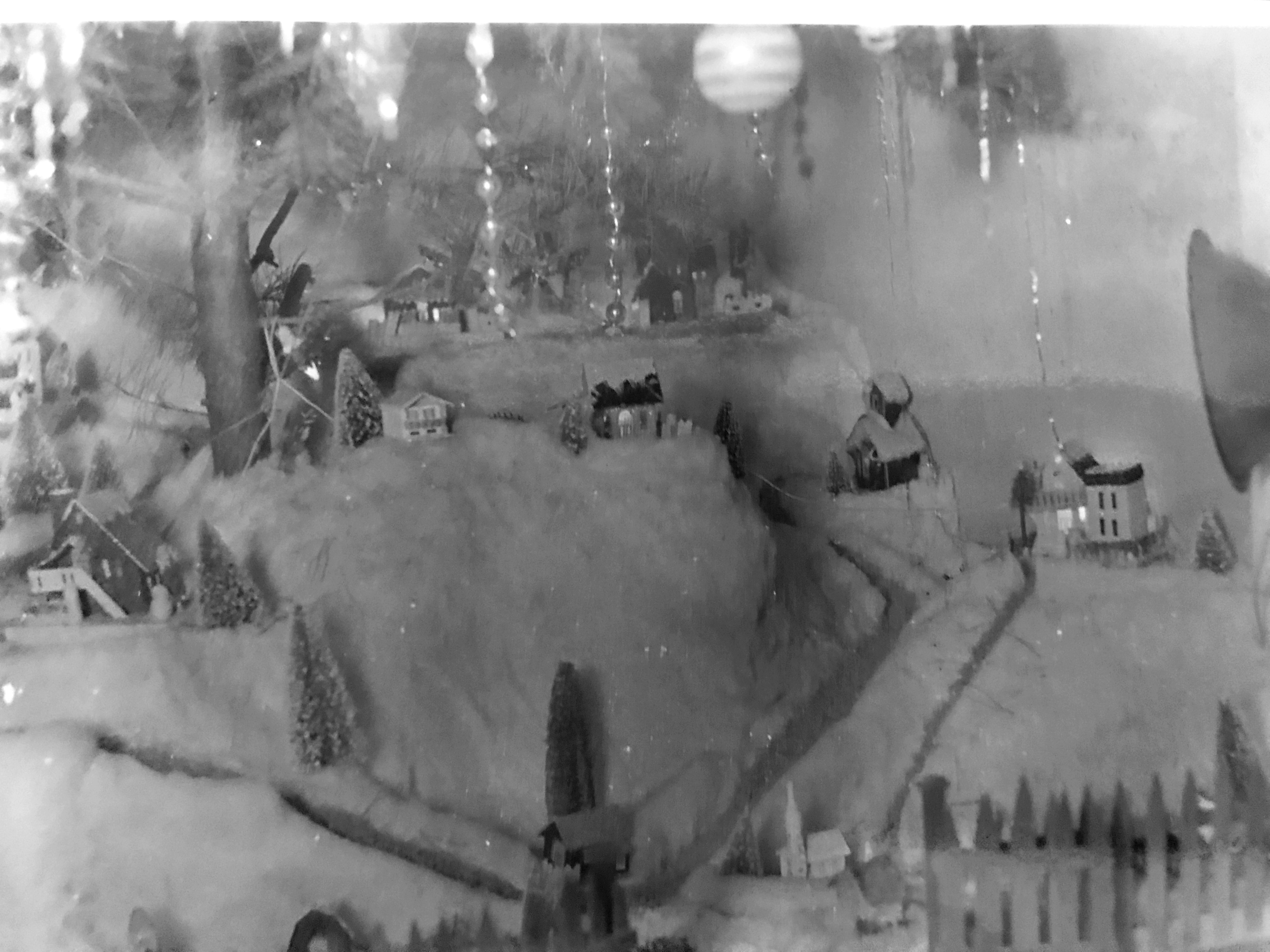
Little houses, churches, fences, trees, and pathways were added to the scene. Some of the houses have charming light effects in the windows. The roofs of the houses were decorated with fake snow. Photo by Lewis Reed
These early Christmas villages were the forerunners of today’s elaborate holiday displays, most famously popularized by Department 56. What began as simple, handmade scenes beneath family Christmas trees eventually evolved into the collectible ceramic villages that fill shelves and mantels during the holidays today.
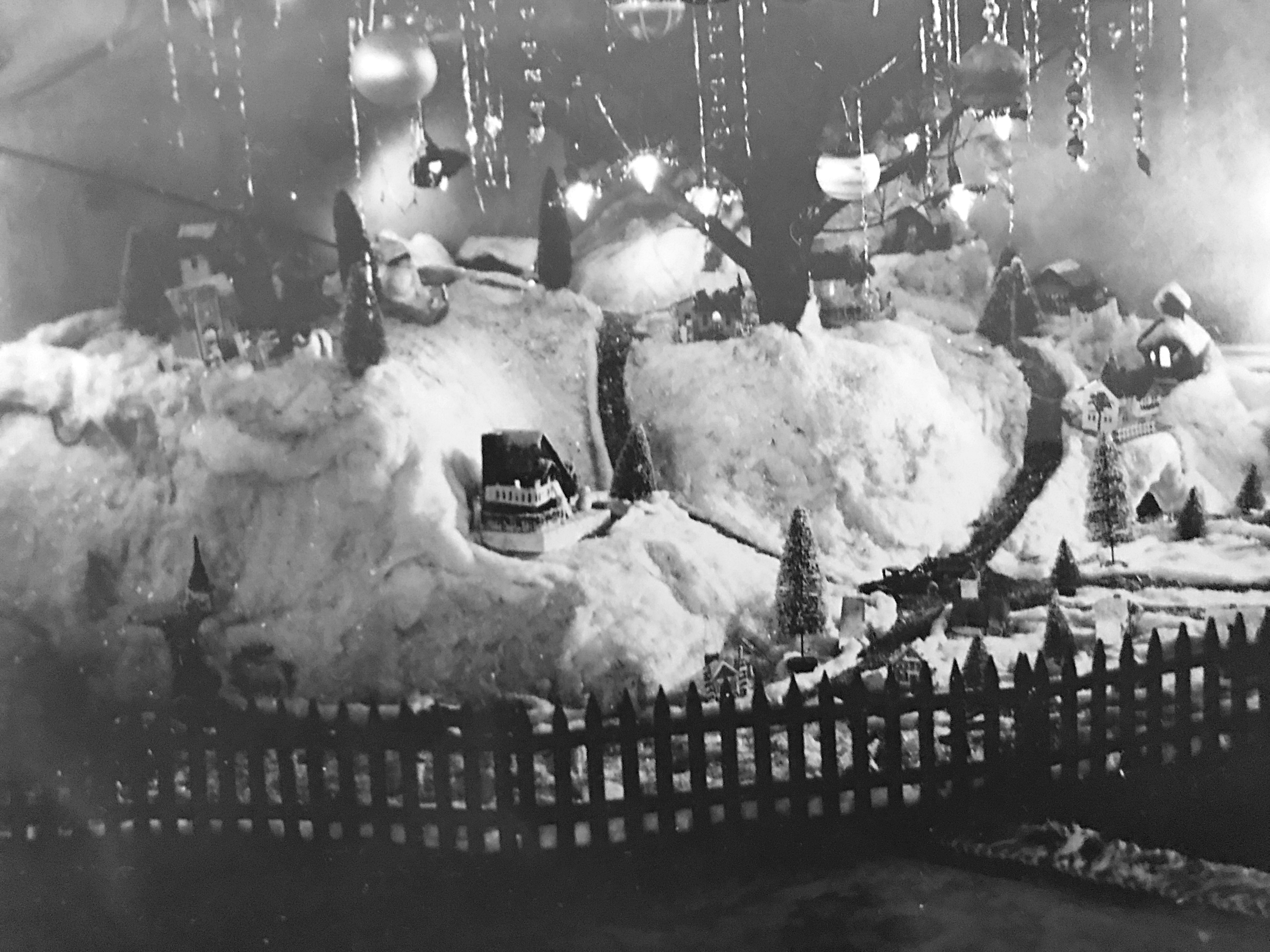
Old-fashioned lights can be seen on the tree, along with lit windows in the houses. The miniature houses usually had holes in the back or the bottom through which tiny lights were placed to provide illumination. Photo by Lewis Reed
Thanks for taking the time to visit. May your Christmas be merry, your New Year bright, and your holidays filled with everything that brings you joy. Stay safe and enjoy the season with family and friends!

Halloween History: Montgomery County 100 Years Ago
Have you ever wondered how families in Montgomery County marked Halloween 100 years ago? Thanks to a collection of photographs from Lewis Reed, we can journey back to the year 1914 and glimpse the traditions of that era.
At the start of the 20th century, Halloween costumes were simple, women usually donned their everyday attire enhanced with homemade masks. The concept of full costumes was just emerging, inspired by the popular masquerade balls of the early 1900s. It wasn’t until the 1920s and 1930s that manufactured costumes became widely available for purchase.

Halloween, ca. 1914. These women are holding homemade Halloween masks for their upcoming celebration. Photo by Lewis Reed
In those days, a simple mask was all it took to join in the festivities. Curious about how your ancestors celebrated? Old newspapers provide wonderful insights into the customs and community spirit of the time, and Lewis Reed’s photos enrich this nostalgic look back.
Stores Well-Stocked for Festivities
Local stores prepared for the season by stocking Halloween essentials. Advertisements from the period featured costumes and masquerade suits for parties and social events, signaling that the holiday was well embraced.

The Washington Post, 30 October 1916
The photo below captures a Halloween gathering from around 1914. The image shows a group of family and friends dressed in early 20th-century attire, adorned with costumes and decorations typical of Halloween celebrations of the era. The costumes are homemade, featuring masks and hats that reflect the masquerade style popular at the time.
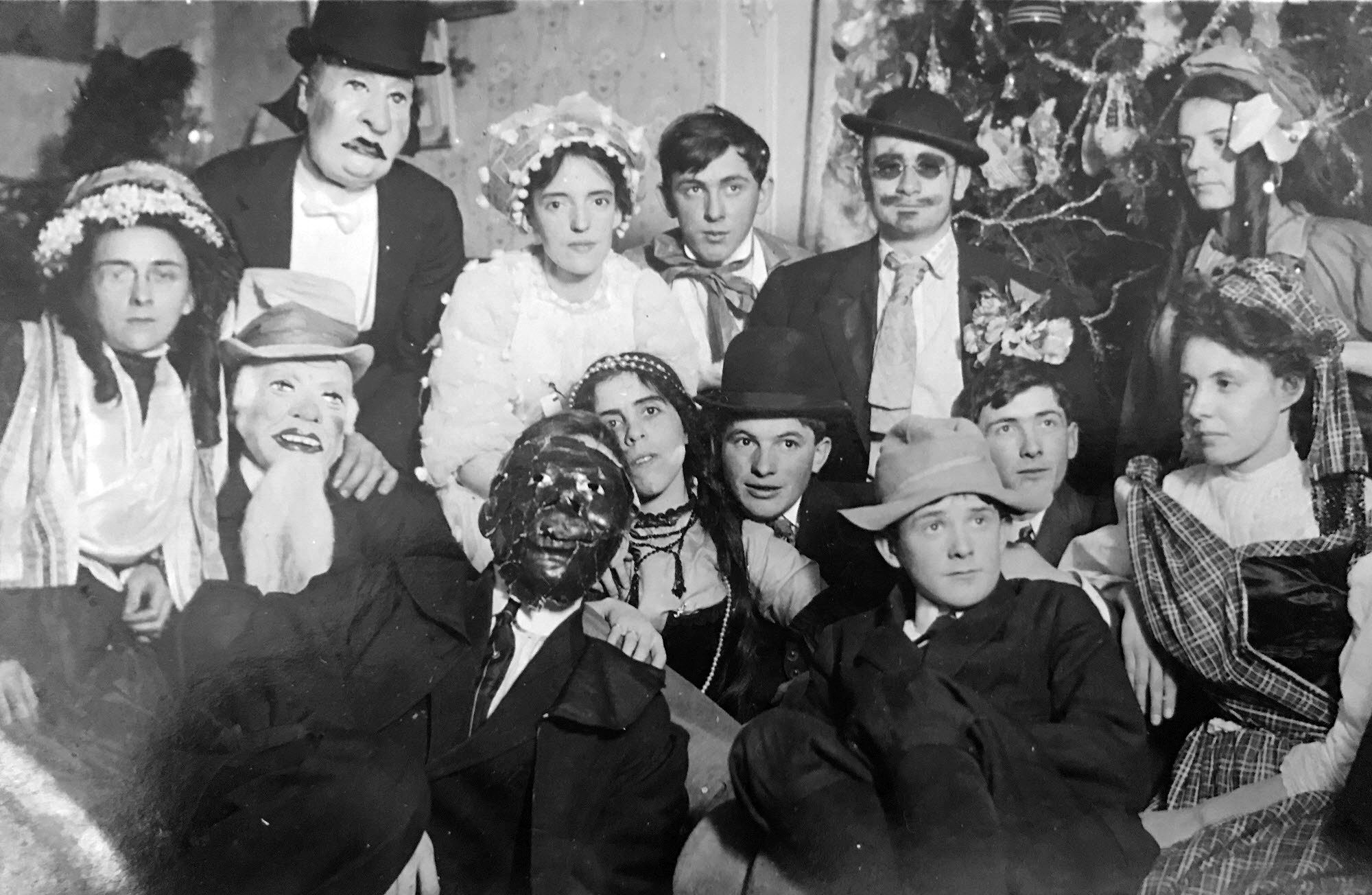
This photo captures a moment from a Halloween party over 100 years ago and is equal parts amusing and creepy. Photo by Lewis Reed
Dancing and Social Gatherings
Halloween was often celebrated with lively parties and dancing. Some society columns even listed the guests attending these events. A 1916 Halloween party described in The Evening Star painted a vibrant picture: rooms were decorated with autumn leaves, lanterns, chrysanthemums, and orange-and-black streamers. Guests played old-fashioned games, followed by gathering around a fireplace in darkness to be led through the house by a ghostly figure. The night concluded with music, dancing, and refreshments.
Refreshments included traditional pumpkin pies, molasses cookies, and even festive Halloween salads, demonstrating the importance of food to the celebrations.

The Evening Star, October 24, 1915
Mischievous Halloween Pranks
Mischief and pranks were also a notable aspect of Halloween in the early 1900s. Children, often referred to as “witches and goblins, ghosts and mischief-making youngsters,” were permitted a certain degree of revelry. However, some pranks were considered “downright bizarre” by modern standards, such as children knocking on doors and throwing flour at those who answered. This widespread mischief eventually led to a societal push by 1920 to re-frame Halloween as a holiday centered on community gatherings and festive parades, rather than unruly behavior. The shift aimed to channel the holiday’s energy into more organized and less disruptive forms of celebration.
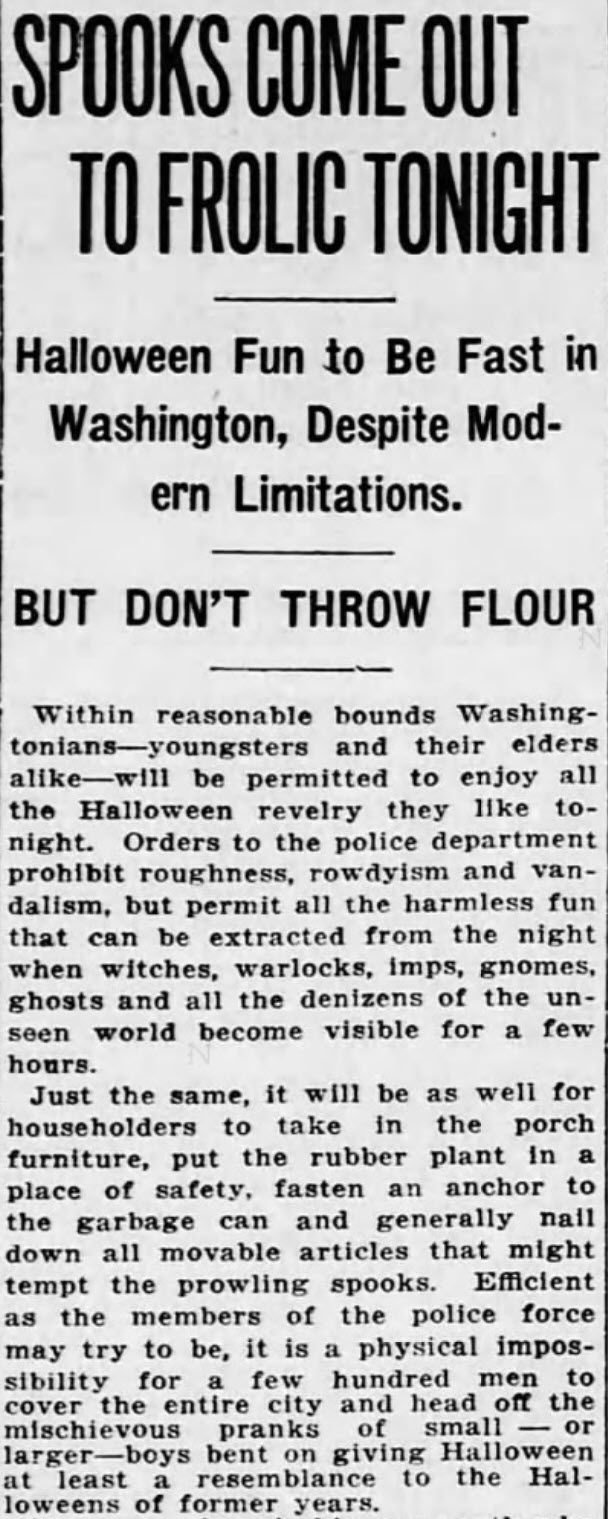
The Evening Star, October 31, 1916
The Birth of Halloween Parades
By the 1920s, pranks had become too unruly, prompting communities to steer Halloween toward organized festivities, including parades. These events fostered safer, family-friendly celebrations focused on community gathering rather than mischief.
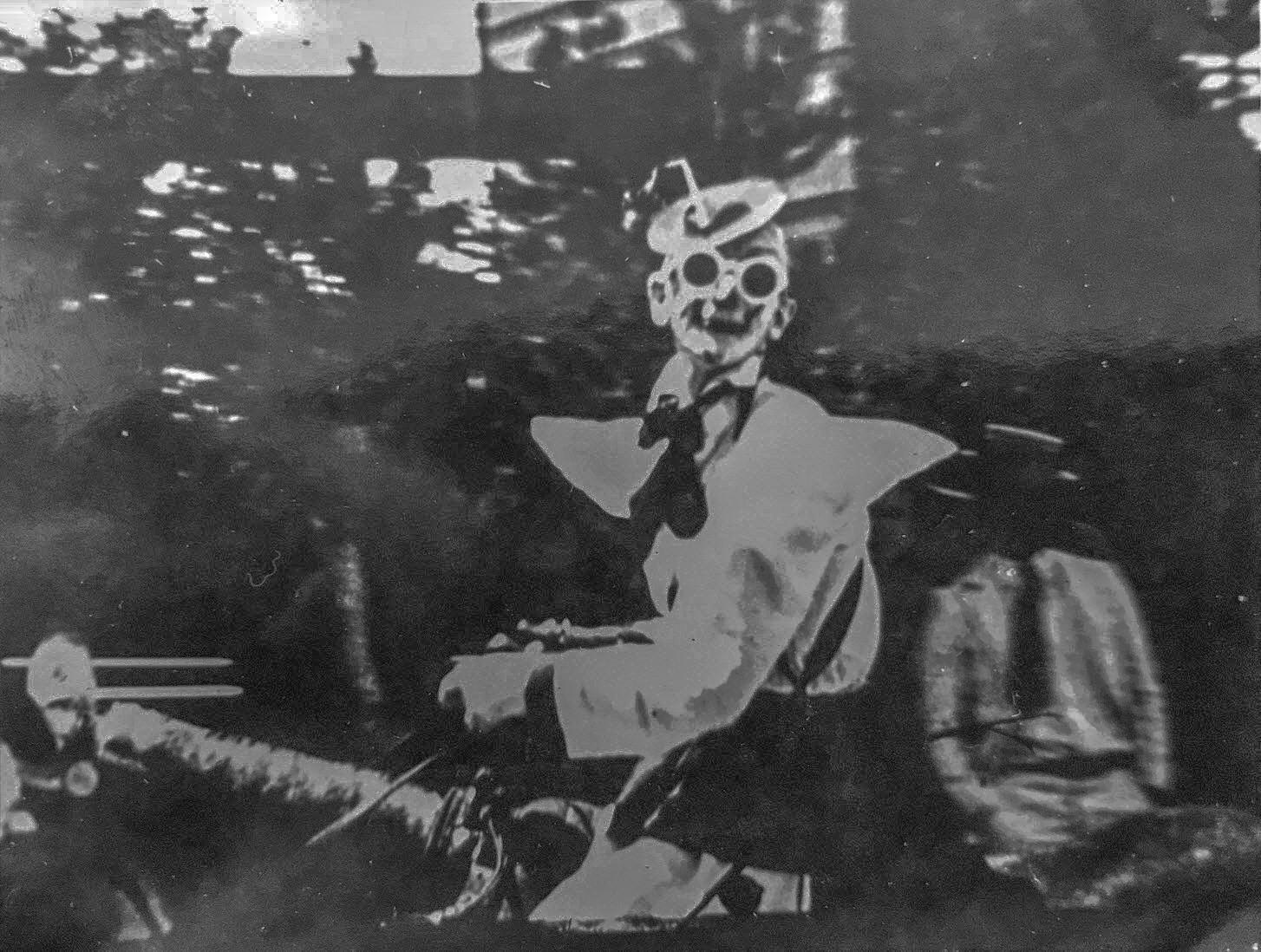
There is something undeniably creepy about this clown in sunglasses riding on a horse in a Halloween Parade. Location is unknown. Photo by Lewis Reed
The above intriguing image captures a performer dressed as a clown riding a horse during an early Halloween celebration. The costume features a striking pointed collar and a whimsical hat, but notably includes round dark sunglasses; an unusual and playful accessory for the era. This detail highlights the creativity and individuality often showcased in homemade Halloween costumes of the period, blending theatrical flair with a touch of modern whimsy.
Happy New Year 2025
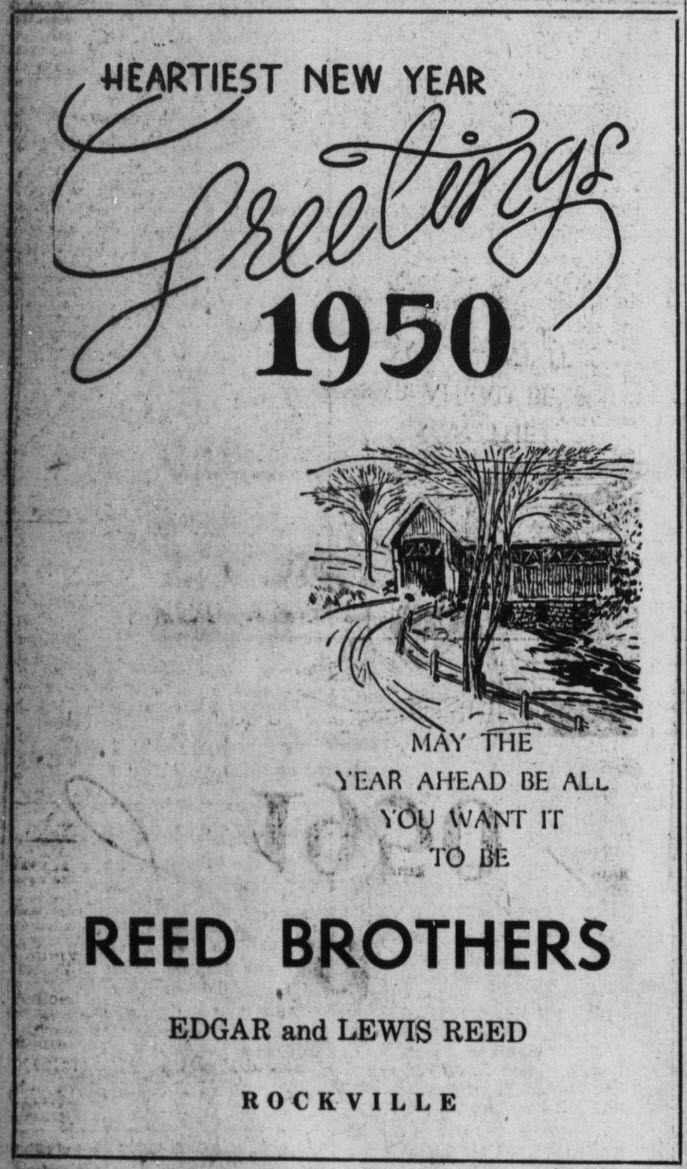
Montgomery County Sentinel. December 29, 1949
May the year ahead be all you want it to be
Books

Related Resources


Copyright Notice

Reed Brothers Dodge History (1915-2012) by Jeanne Gartner is licensed under a Creative Commons Attribution-NonCommercial 3.0 Unported License.
 Reed Brothers Dodge History 1915 – 2012
Recent Comments