
Featured Photos: Reed Brothers Service Dept circa 1960

Service Area
This photo of the inside of Reed Brothers Dodge service area was taken circa 1960. At the time this photo was taken, the dealership was located at the intersection of Veirs Mill Road and Rockville Pike.
Along the back wall inside the service area is the entrance to the new car showroom, parts counter and the cashier’s window. The new car showroom and service department were connected by large double doors, which was how new cars were moved in and out of the showroom. Above the cashier’s window is a small door that opened into the parts department storage area for the stock of tires. Reed Brothers was also a Goodyear tire retailer.
The roof is supported by steel trusses, which keep the entire floor free of pillars and makes the movement of cars easier. Also, most of the light for the area is provided by skylights and windows.
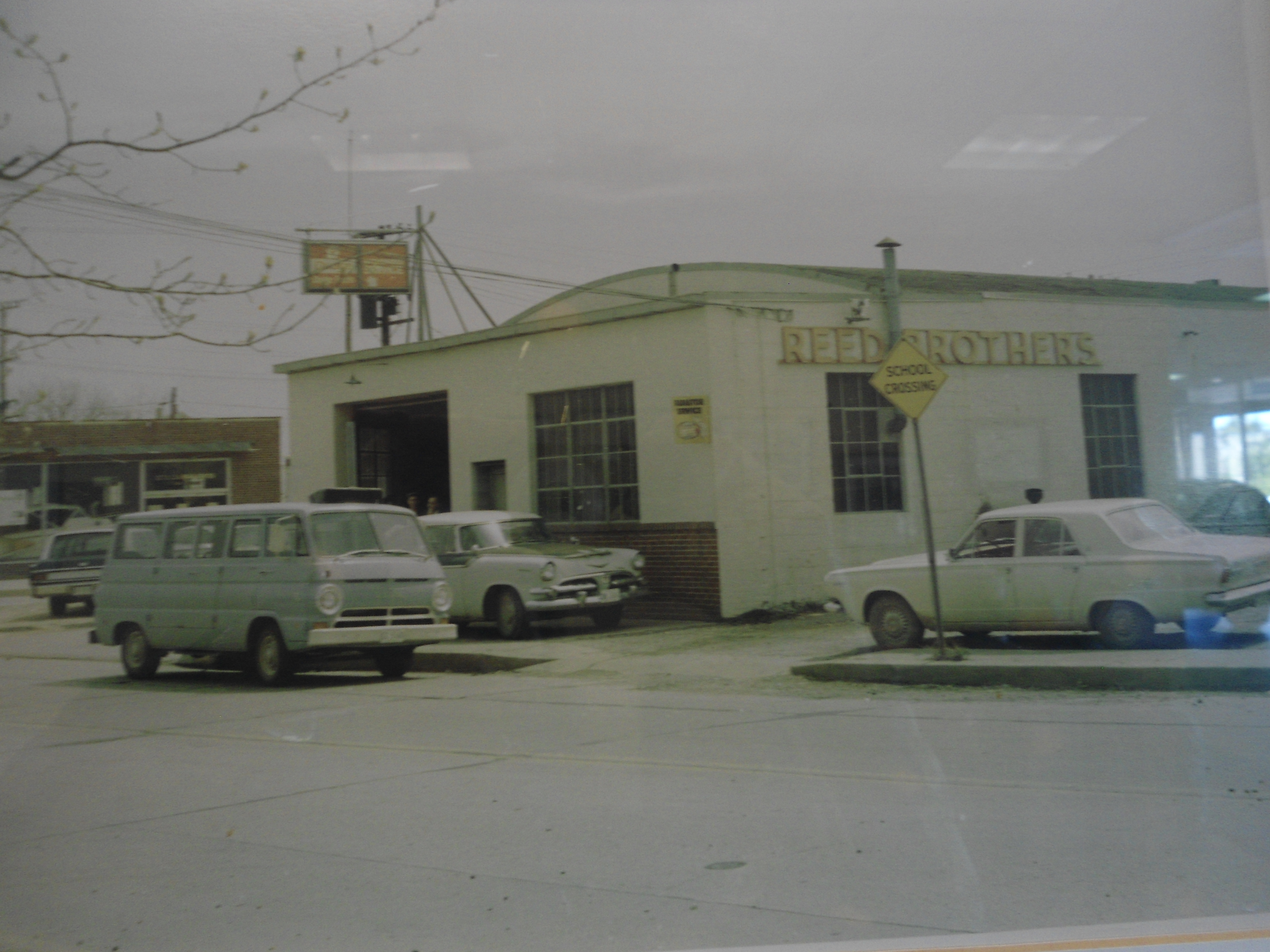
Rear entrance to the Service Department on what is now known as “Dodge Street”
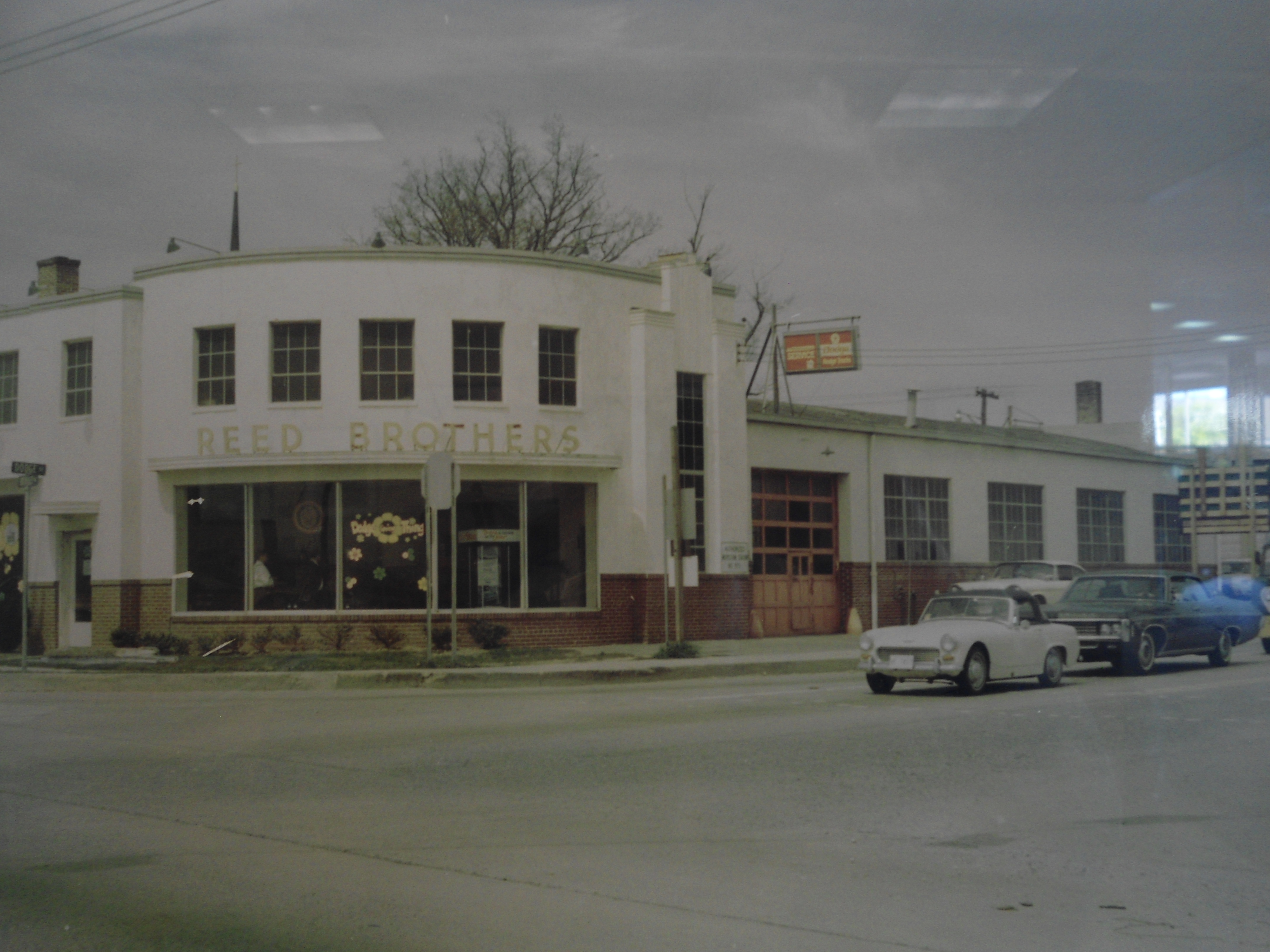
Sales and Service Departments on the corner of Rockville Pike and Dodge Street
Featured Photo: Market Street, Frederick, MD circa 1915
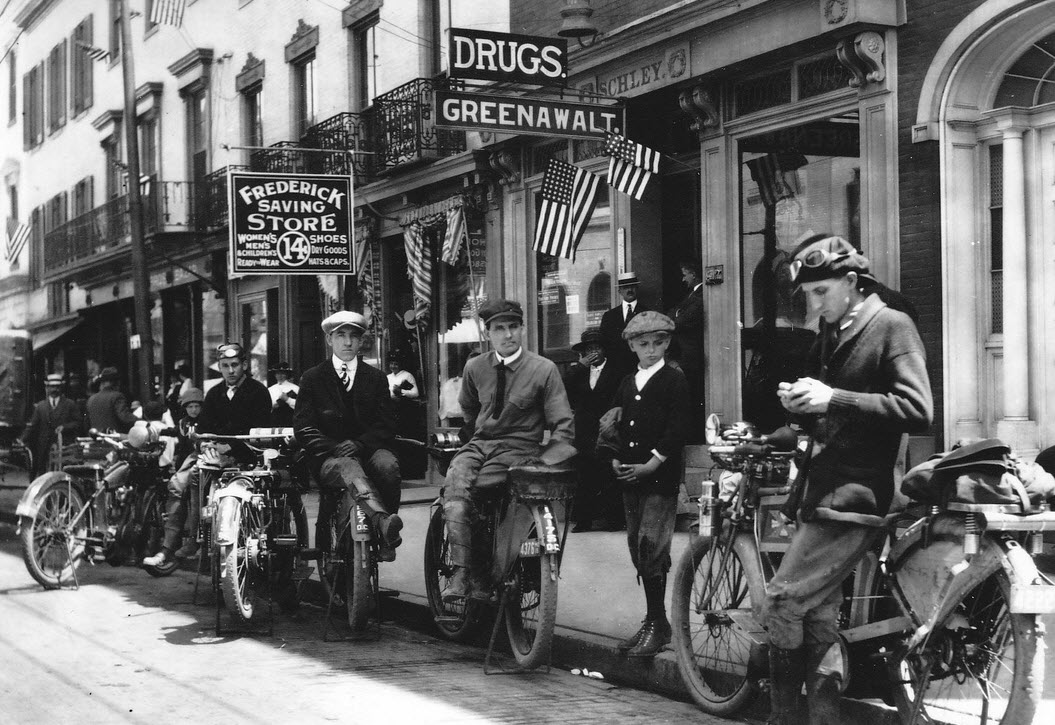
Lewis Reed taking photograph (from left: Lewis Reed’s motorcycle, Edgar Reed, unknown person, Bernard Hanshaw, unknown child, unknown man) in front of Greenawalt Drug Store on Market Street in Frederick, MD circa 1915
Things look pretty quiet in front of Greenawalt Drug Store on Market Street in Frederick, Maryland on this day some 100 years ago. Lewis Reed was not only passionate about automobiles, he also enjoyed riding motorcycles and photography.
In the early days, motorcycles were a staple of transportation, and both Lewis and Edgar Reed rode Harley-Davidson motorcycles. Motorcyclists in the 1900s were more likely to wear a tie and sporty little cap than the leather of today.
1976 Showroom & Car Lot
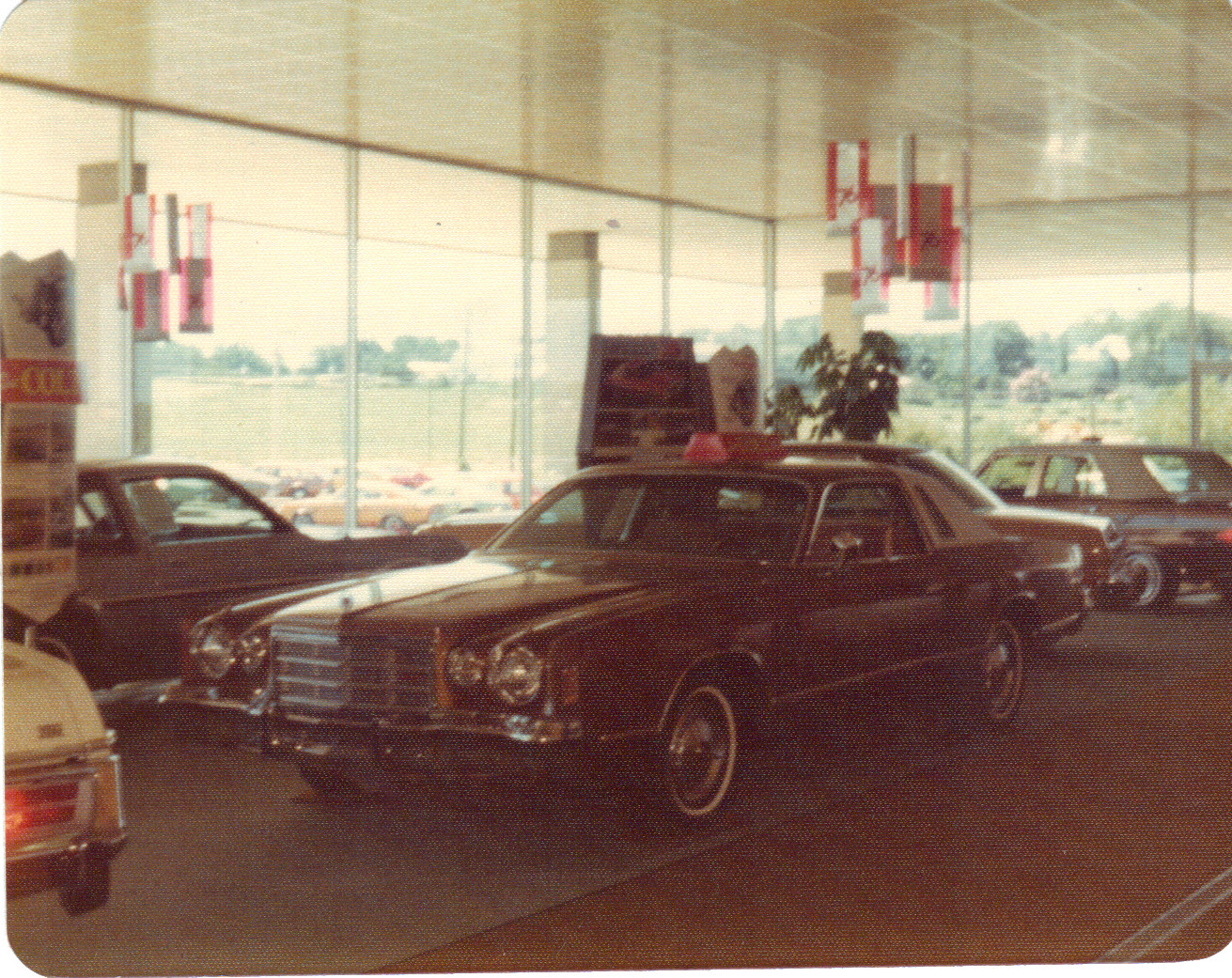
A 1976 Dodge Charger displayed on showroom floor
I found these two gems while looking through some of my old photo albums. The top photo shows what appears to be a 1976 Dodge Charger displayed on the showroom floor at Reed Brothers. Usually, the flashiest of the new models, spit-shined to perfection, would be displayed inside the showroom. Banners touting the new models were also strung up in the showroom.
In the second photo, nothing screams 1970s like the line of beige and baby blue cars all lined up in rows on the side lot. Across the road is the big barn that said, “MILK FOR THOMPSON’S DAIRY” on the field that is now the new urban development known as King Farm. I remember Lawson King’s dairy cows. Lots of them! They used to graze in the fields just a few feet from the roadway right across the road. At its peak, King Farm was the largest milk producer in the area and had been in agricultural use for nearly 75 years before it was approved for development in 1996.
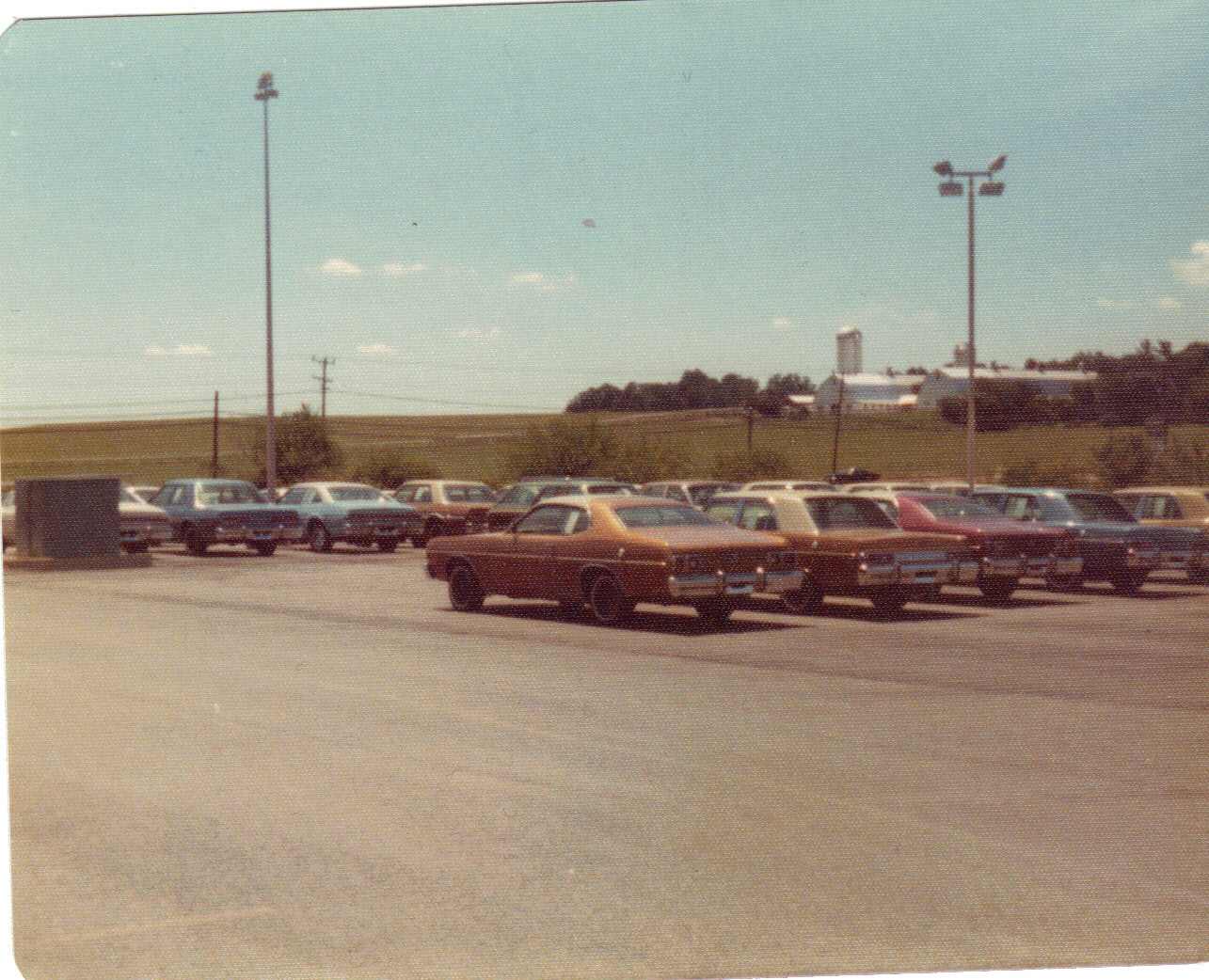
Cars lined up awaiting prospective buyers
Featured Photos: 1917 Texaco Tanker Trucks
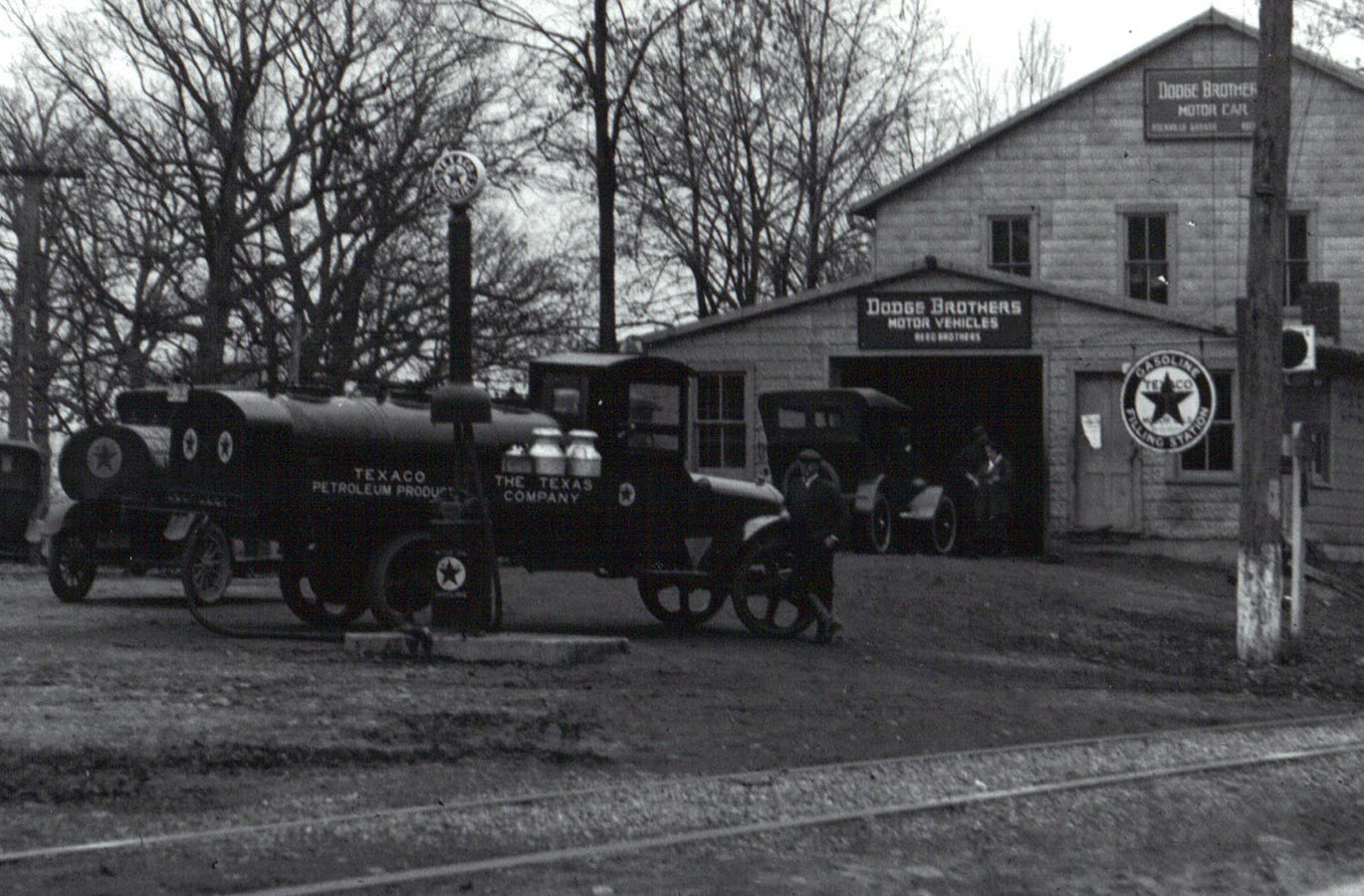
A Texaco Petroleum tanker is delivering its load of fuel to Reed Brothers Dodge in this circa 1917 photo. The delivery driver seems to be wearing his best suit on this job, something that you don’t see these days at all.
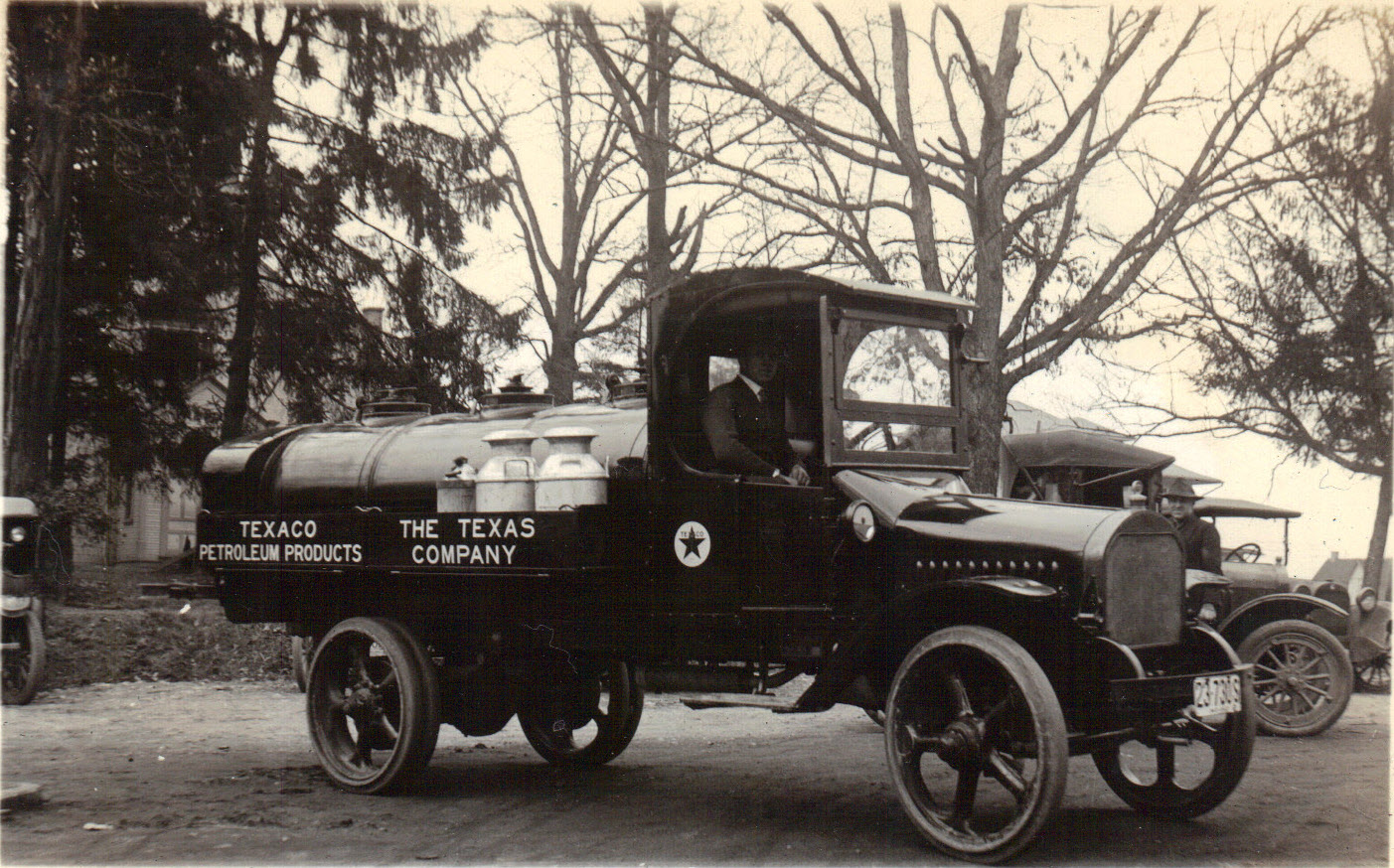
A circa 1917 Texaco Petroleum Truck sits in front of Reed Brothers Dodge after delivering its load of fuel.
The most essential vehicle of the early 20th century (and today) had to have been the tanker truck. In the pioneering period of tanker trucks, 1910 to 1920, The Texas Company was among many that were fitted with tanks to carry refined products such as gasoline, kerosene and fuel oil.
All that remains of some models are vintage photographs in an archive somewhere. A few restored tank trucks are in transportation museums.
Featured Photo: Hand-Cranked Car
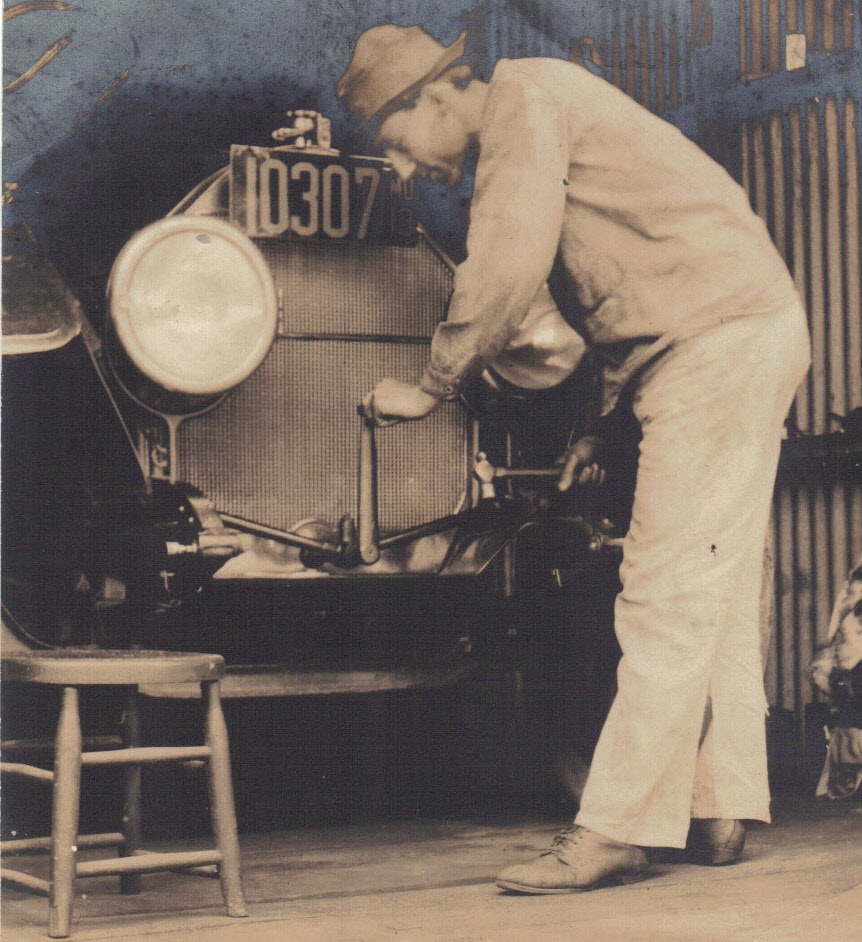
Lewis Reed hand cranking an old car. The license plate is MD 10307 dated 1913.
Today, we take the starting of automobiles for granted. Simply place the key in the ignition, turn, and VROOM, the engine starts.
However, this was not always the case. Cars in the early parts of the century had to be started by hand. This was accomplished by turning a crank, usually located in the front of the automobile. When the crank was turned, it moved the pistons in the automobile’s engine until enough momentum was built up to keep the engine going on its own. Hand cranking was also physically demanding making it very difficult for anyone with a small stature to start the engine.
By 1920, nearly all manufacturers were producing cars equipped with starters making it easy for anyone, regardless of physical abilities, to start a car by pressing a button mounted on the dash or floor. An ignition on and starter engage switch operated by a key was introduced by Chrysler in 1949.
Books

Related Resources


Copyright Notice

Reed Brothers Dodge History (1915-2012) by Jeanne Gartner is licensed under a Creative Commons Attribution-NonCommercial 3.0 Unported License.
 Reed Brothers Dodge History 1915 – 2012
Recent Comments