
Not Just a Car Guy
The activities of Lewis Reed outside of his main occupation as a car dealer has always been of interest to me. Social activities, pastimes, and hobbies often help define a person and sometimes those activities can be found in later generations.
Lewis Reed was not only passionate about automobiles, he also enjoyed riding motorcycles and photography. With photography for a hobby, one that began even before automobiles were around, he amassed a large library of photographs of many scenic locations from touring on his motorcycle all over the country. All I know is, as I look at these photos and try to make out the details, my grandfather was ready for adventure. (click images to enlarge)

Lewis Reed sitting on his Harley Davidson motorcycle circa 1915 somewhere outside Frederick MD

Lewis Reed taking photograph (from left: Lewis Reed’s motorcycle, Edgar Reed, unknown person, Bernard Hanshew, unknown child, unknown man) in front of Greenawalt Drug Store on Market Street in Frederick, MD circa 1915
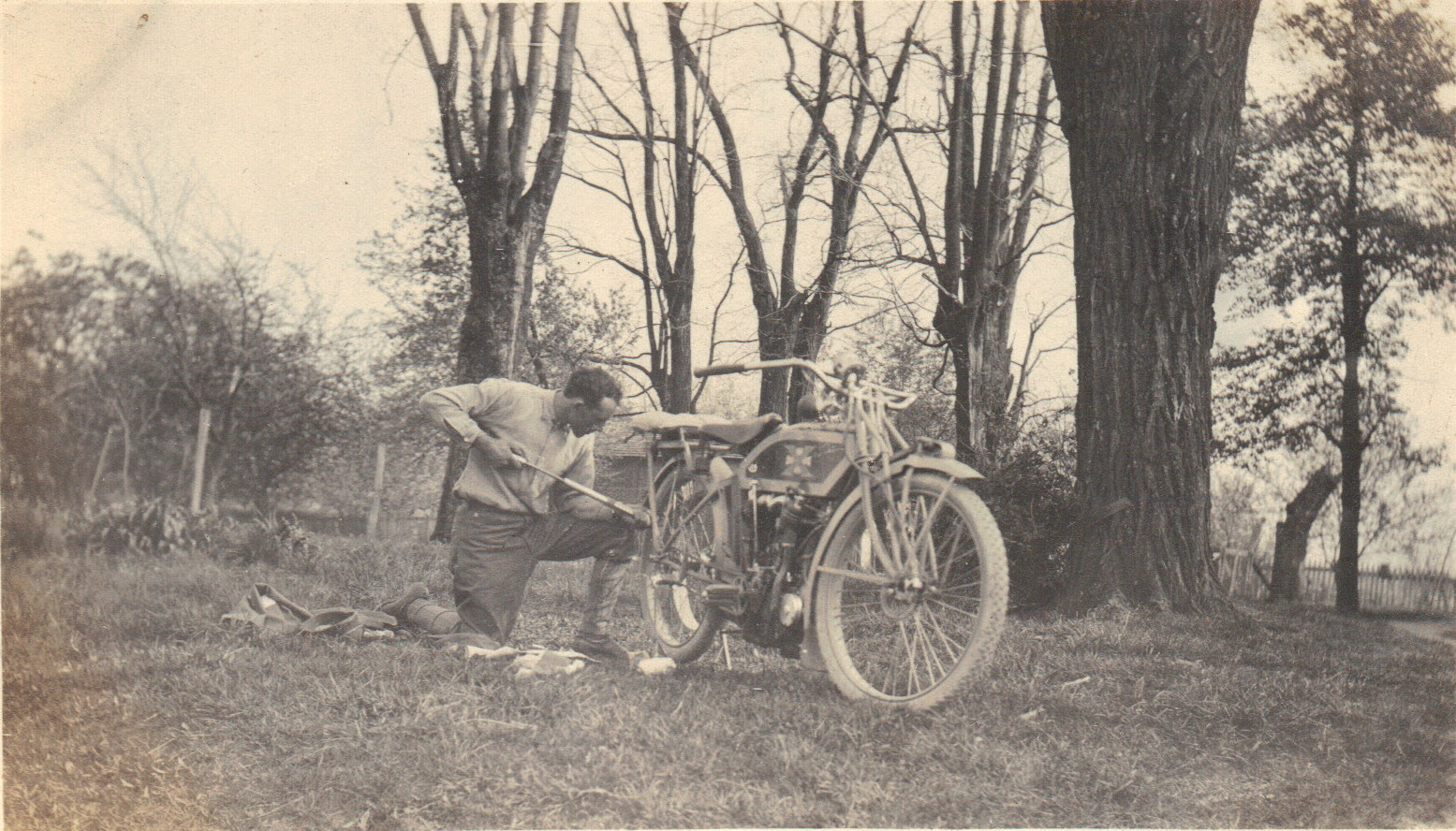
Lewis Reed repairing his motorcycle
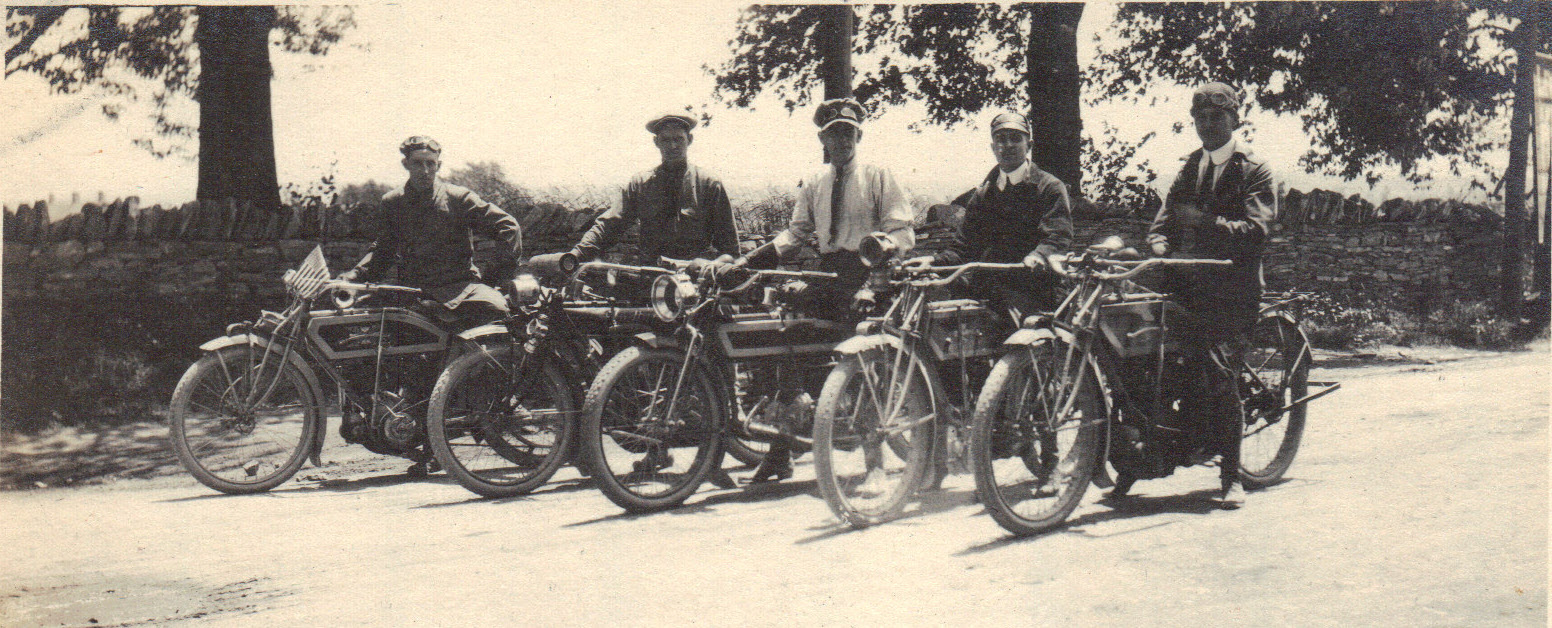
Lewis Reed (far left)

Lewis Reed (far right)
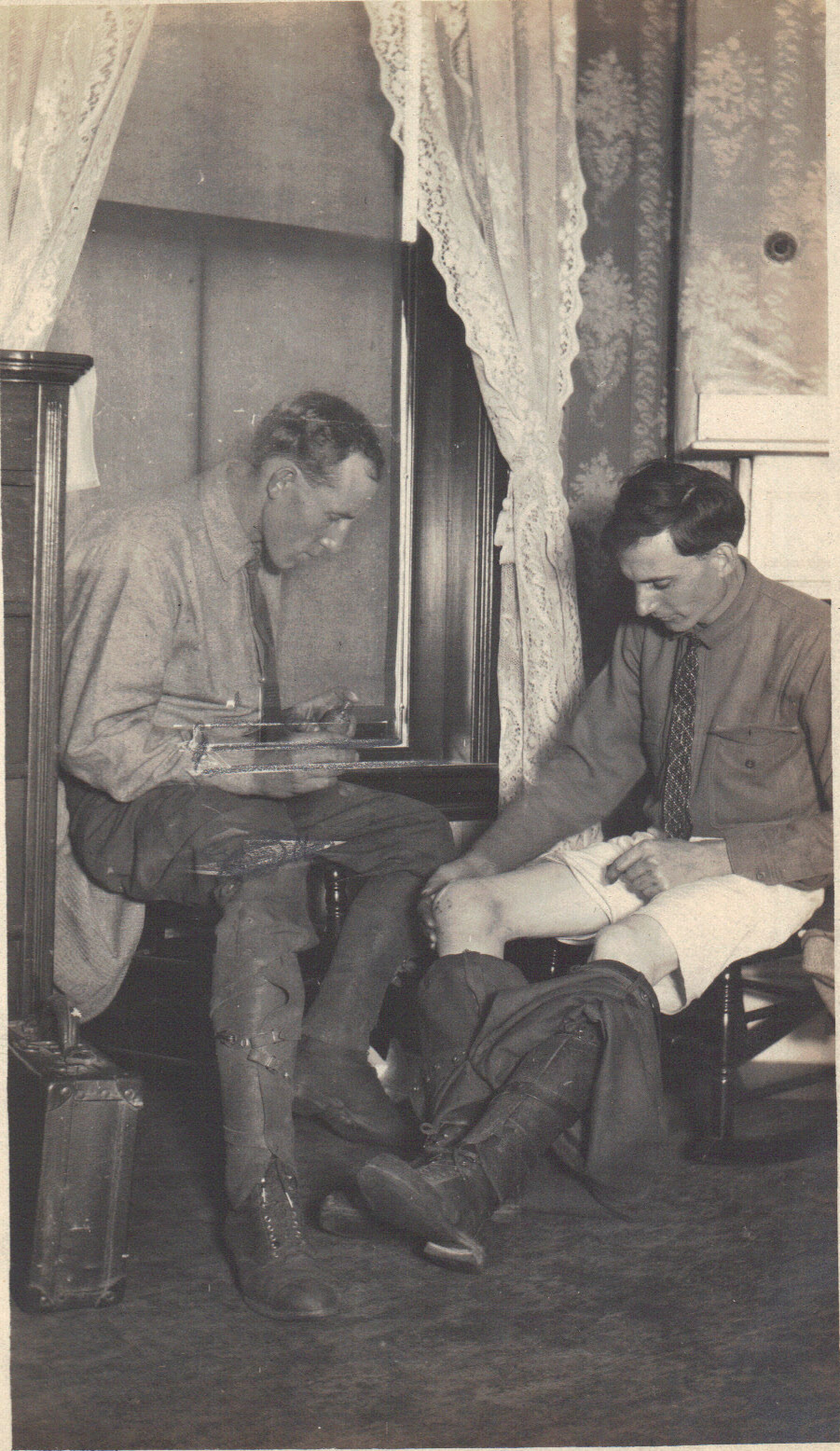
Lewis Reed patching up Uncle Bernie Hanshew after he fell off motorcycle

1912 – Second from left are Edgar Reed (sitting on motorcycle) and Lewis Reed standing behind him.

Lewis Reed (back) & Edgar
Happy 90th Birthday, Mom!

Today is a very special post in honor of my mother, Mary Jane (Reed) Gartner – 90 years young today! Not everyone lives long enough to celebrate their 90th birthday, so I’m thrilled to report that my mother is marking this momentous occasion today.
Mom, thank you for your wisdom and perseverance, and for the many years of love and support you have given me. I wish you many more years of health and happiness.
Happy Birthday, Mom … I love you!!!
Lewis Reed: Charter Member, Gaithersburg-Washington Grove Volunteer Fire Department
Lewis Reed was a charter member and Past President (Feb.1933 – Feb 1937) of the Gaithersburg – Washington Grove Volunteer Fire Department. The newspaper article below shows the first members of the GWGVFD standing in front of a 1928 Broadway fire truck. The picture was taken in 1929 in front of old Barnett Drug Store where Diamond Drugs in Olde Towne Gaithersburg now stands. (click image to enlarge)
The Gaithersburg – Washington Grove VFD is now a Fire Museum located at 13 E. Diamond Avenue in Olde Towne Gaithersburg.

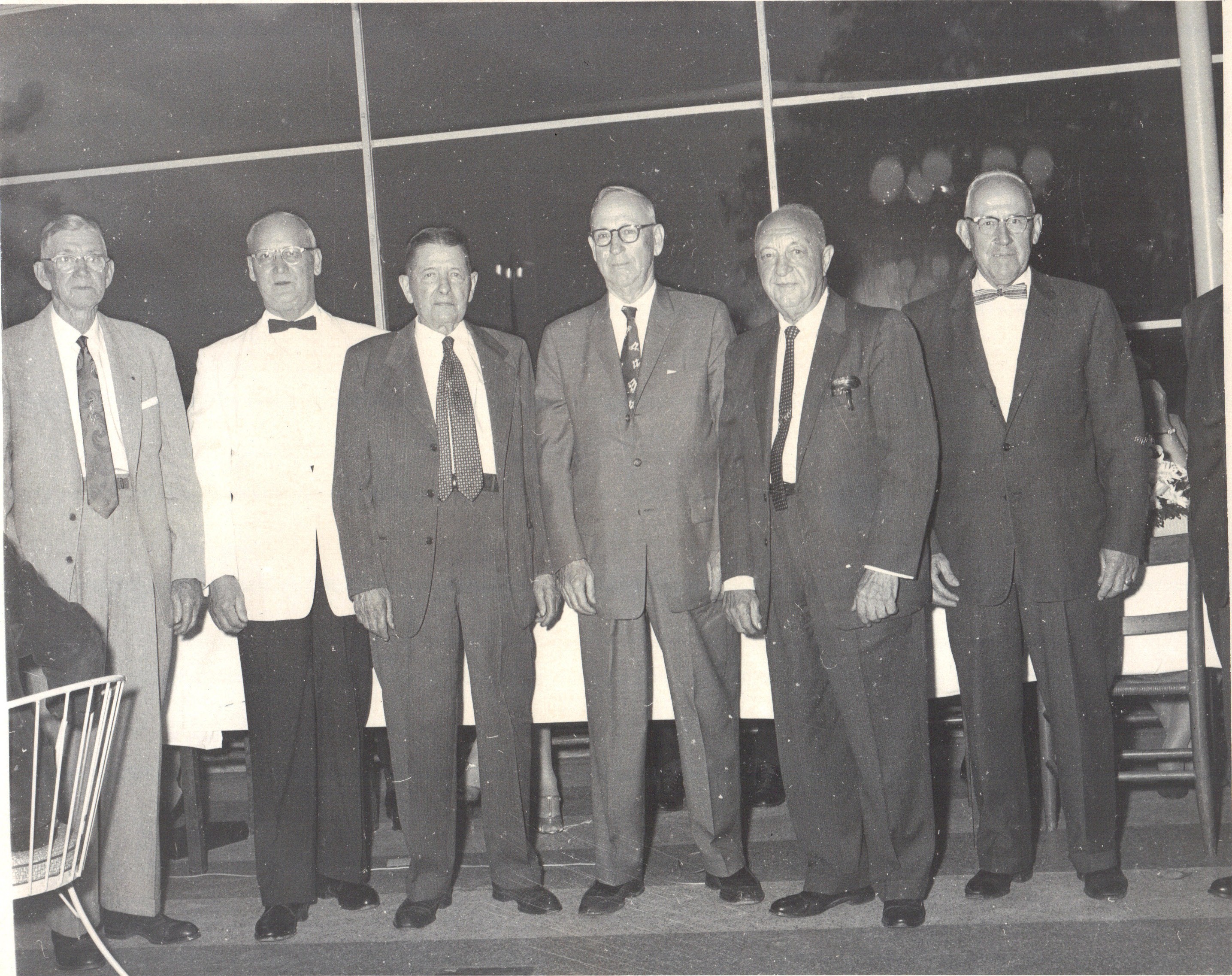
Past Officers of the Gaithersburg-Washington Grove Fire Department. Pictured left to right: name unknown, Ernest C. Gartner, Charles Fox, Clyde Thomas, Dr. Frank Broschart, Lewis Reed
The wall plaque below displays Past Presidents and Past Chiefs of the Gaithersburg-Washington Grove Fire Department. Lewis Reed was President from Feb.1933 – Feb 1937. His name plate is 5th down on the left.

Final Chapter in Reed Brothers Dodge History
When Lewis Reed opened his car dealership in 1915, he never knew he was starting a family tradition that would be carried out for 97 years and three generations.
After almost a century of serving Rockville – and two and a half years after Chrysler terminated the Reed Brothers Dodge franchise – the dealership property went to settlement on August 30, 2012. The dealership site was sold to a developer whose future plans include constructing a $90M project to include a 6-story residential building with 417 multi-family units and a 517 space parking structure.
Lewis Reed’s legacy, however, lives on in the business ventures that his family grew and continues to grow. In Lewis Reed’s spirit of entrepreneurship, the family has formed RBI Properties, LLC, the private holding company of Reed Brothers, Inc – and the legacy continues.
How Dodge Street in Rockville Got Its Name
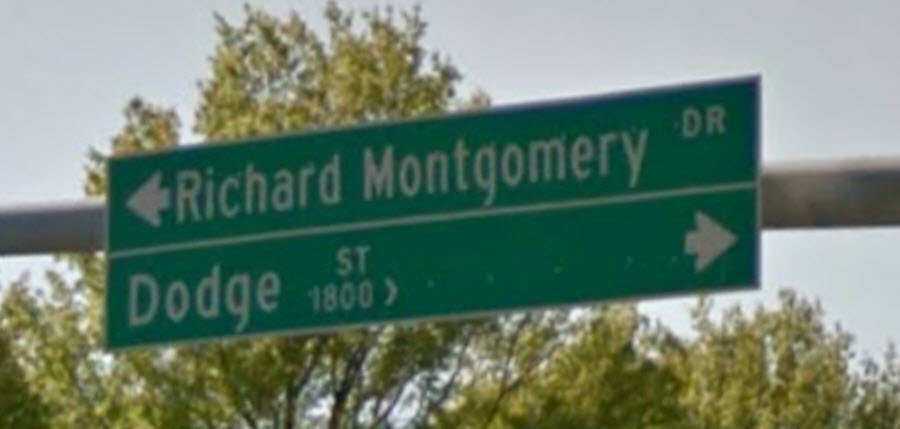
How Dodge Street In Rockville Got Its Name
In honor of Rockville automobile pioneer, Lewis Reed, the State of Maryland named the connector street behind the dealership’s original location, “Dodge Street,” commemorating Reed Brothers’ presence from 1915-1970.
The connector street was so short that Lewis Reed always joked, if the state wanted to name a street after him, the street needed to be longer. Hence the street was named, “Dodge Street”. Maryland Route 660 is the unsigned designation for Dodge Street, which runs 0.05 mi from Rockville Pike (MD 355) north to Veirs Mill Road (MD 28) in Rockville. Dodge Street is one of the shortest highways in the state of Maryland.

Dodge Street Google capture 2017
By tracking Reed Brothers Dodge on successive Sanborn maps—1915, 1924, and 1949—I have confirmed that sometime between 1924 and 1949, CADIZ ALLEY became Dodge Street. CADIZ ALLEY is an arbitrary designation supplied by the Sanborn Map Company in the absence of a suitable official name. The street was named “Dodge Street” by the State of Maryland sometime following the dealership’s 1941 expansion.

Nov 1915 Rockville Maryland Sanborn Map, Sheet 5 (zoomed in)
When the state of Maryland widened the roads in 1970, Reed Brothers Dodge relocated from its original location at the triangle at Veirs Mill Road and Rockville Pike to a new complex at 15955 Frederick Road in Rockville. The dealership’s original site is now the Veterans Park.
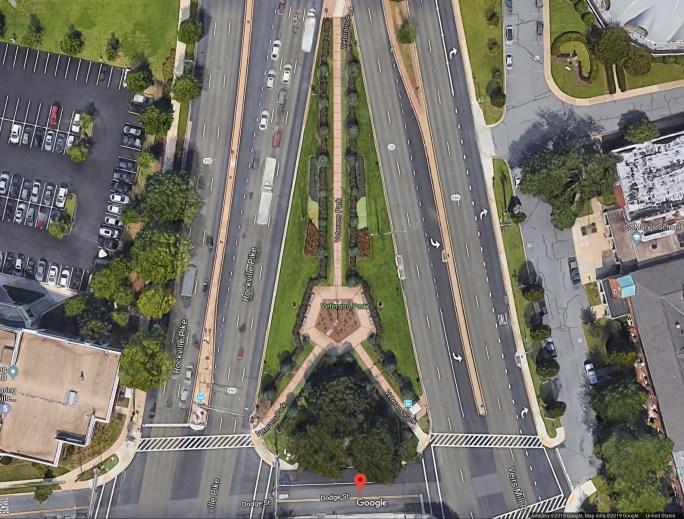
2019 Google Map view showing the original location of Reed Brothers Dodge triangle and Dodge Street
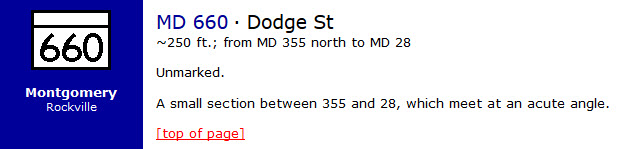
Sources:
Wikipedia, List of state highways in Maryland shorter than one mile
MDRoads Routes 660-679 Maryland Highways of the Automobile Era
Books

Related Resources


Copyright Notice

Reed Brothers Dodge History (1915-2012) by Jeanne Gartner is licensed under a Creative Commons Attribution-NonCommercial 3.0 Unported License.
 Reed Brothers Dodge History 1915 – 2012
Recent Comments