
How Reed Brothers Looked Forward After the 2009 Auto Crisis
June 9, 2009, remains etched in Montgomery County history as the day an era officially ended. Seventeen years ago today, Reed Brothers Dodge received the fateful letter that abruptly severed its historic relationship with Chrysler; a partnership that had stood unbroken since 1915.
As part of Chrysler’s sweeping nationwide dealership reductions during the height of the 2008-2009 economic crisis, the Rockville mainstay was ordered to cease operating as a franchised Dodge dealer. After nearly 94 years of representing the iconic American brand on the local streets, the signs were forced down, bringing a remarkable, century-old chapter of local automotive history to an unexpected close.
A Historic Stand Captured on National Television
The sudden restructuring sent shockwaves through the community and caught the attention of national media. When FOX News arrived at the dealership to interview the owners amidst the chaos, the message from Reed Brothers wasn’t one of defeat, it was one of quiet resolve.
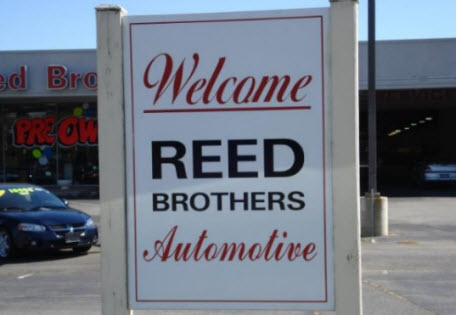
“We plan on keeping our dealership open, selling pre-owned cars, and we are going to do the best we can to take care of our customers and employees,” leadership told FOX News reporters at the time. “We have officially changed our name to Reed Brothers Automotive and we are not planning on going anywhere.”
True to their word, the dealership chose to look forward, focusing their energy on writing a positive new chapter rather than letting corporate changes define their future.
Last Unsold Dodge Cars Roll Off the Lot


Dodge Brand Signs Come Down


New Reed Brothers Automotive Signs Go Up


Weathering the Storms of a Century
For a resilient family business that had already weathered the Great Depression, two World Wars, and decades of shifting automotive trends, the June 2009 crisis became just another test of endurance.
The dealership rapidly adapted, rebranding itself as Reed Brothers Automotive. By pivoting to pre-owned vehicles and doubling down on its deep-rooted commitment to local drivers, the business managed to keep its doors open and its staff employed, continuing to serve the Rockville community for several more years.
While June 9, 2009, represents one of the most heartbreaking and significant dates in the city’s commercial history, it also stands as a testament to local resilience. It proved that while corporate logos may change, a business built on community trust is not easily erased.
Spring of ’40: When Reed Brothers Turned Easter into an Auto Show
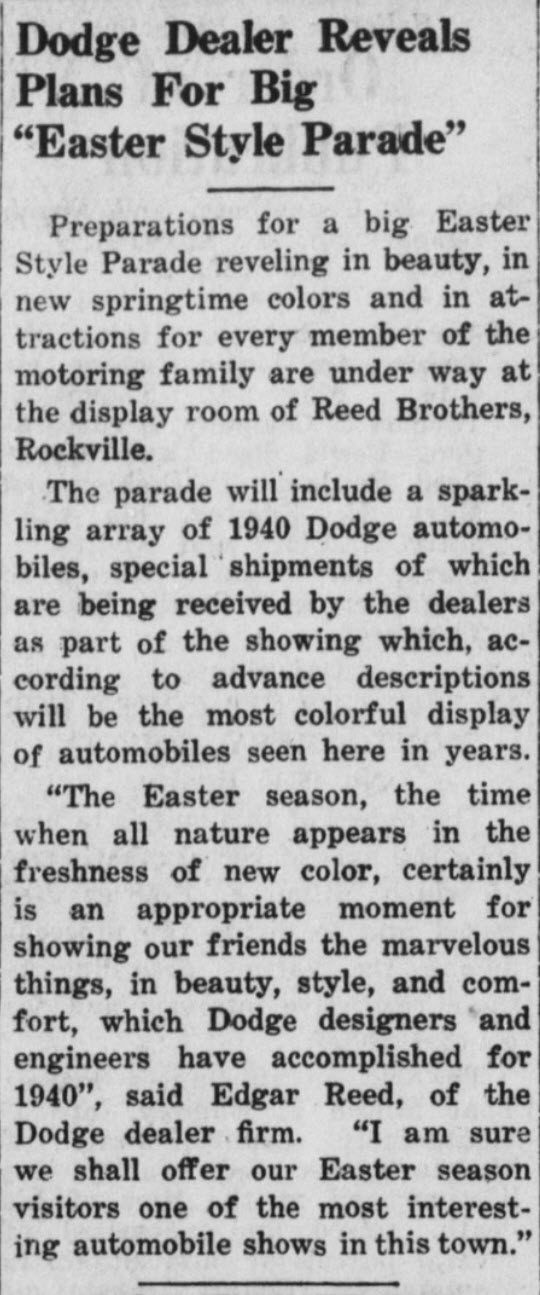
Montgomery County Sentinel, March 21, 1940
In March of 1940, as winter gave way to spring in Rockville, Maryland, Reed Brothers Dodge was preparing something far more ambitious than a typical seasonal promotion. According to The Montgomery County Sentinel, the dealership announced plans for a full-fledged “Easter Style Parade”; a vibrant showcase designed to celebrate both the arrival of spring and the latest in automotive design.
This was not a parade in the traditional sense, but rather an immersive showroom experience. Reed Brothers promised a “sparkling array” of brand-new 1940 Dodge automobiles, many arriving as part of special factory shipments. These cars, finished in fresh springtime colors and featuring the latest styling updates, were meant to dazzle visitors and highlight the evolution of the American automobile at the start of a new decade.
The language of the advertisement reflects an era when automobiles were marketed not just as transportation, but as expressions of beauty, comfort, and modern living. The display was crafted for the entire “motoring family,” underscoring how central the car had become to everyday life by 1940. Visiting a dealership was an event; something to experience, not just a transaction.
Edgar Reed himself captured the spirit of the occasion, noting:
I am sure we shall offer our Easter season visitors one of the most interesting automobile shows in this town.
Events like this helped define Reed Brothers Dodge as more than just a place to buy a car; they were a cornerstone of the Rockville community. Their showroom became a gathering place where residents could see the latest innovations, socialize, and share in the excitement of a rapidly changing world.
Looking back, this Easter promotion offers a fascinating snapshot of small-town America at a pivotal moment in history. The country was emerging from the Great Depression, industry was gaining momentum, and the automobile stood at the center of that progress. Yet within a year, the United States would be drawn into World War II, and the production of civilian automobiles would soon give way to the demands of the war effort.
That makes this 1940 “Easter Style Parade” all the more meaningful. It represents a brief window of optimism and growth; a time when the promise of new technology, fresh design, and a bright spring season could bring an entire community together under one roof.
Today, more than eight decades later, the story of Reed Brothers Dodge continues to resonate. This single advertisement is more than a promotion, it documents how a local dealership engaged its community, how automobiles were presented to the public, and how seasonal traditions were woven into the commercial life of a small but growing town.
Wishing all our readers and visitors to this blog a very Happy Easter!
More Than Just Motors: The Enduring Link Between Reed Brothers Dodge and the MCPD
When you look back at the history of Montgomery County, Maryland, certain names are synonymous with the growth of the region. Reed Brothers Dodge is certainly one of them, but while we are often remembered as the first Dodge dealership in the area, our history is also deeply intertwined with the very foundation of the Montgomery County Police Department (MCPD). This connection wasn’t just about the cars and motorcycles; it was about the people who kept them on the road.

This is the first known photograph of the entire Montgomery County Police Force Motor Unit. Pictured left to right: Earl Burdine, Lawrence Clagett, Guy Jones, Chief Charles Cooley, Leroy Rodgers, and Oscar Gaither. Photo taken by Lewis Reed on July 4, 1922.
The relationship between Lewis Reed and the MCPD began on the department’s very first day of duty: July 4, 1922. On that historic morning, Chief Charles Cooley and his five original officers gathered at Reed Brothers Dodge to have their first official group photo taken. At the time, the department was a “mounted” unit on Harley-Davidson motorcycles. Because modern, branded dealerships didn’t exist yet, Reed Brothers served as a vital hub for sales and service. Lewis Reed and his brother Edgar were motorcycle enthusiasts who had founded Rockville’s Park Avenue Motorcycle Club a decade earlier in 1912, and their expertise made the dealership the natural home for the county’s early fleet. In those early days, each officer was allotted $300 a year for motorcycle upkeep, and our shop was where much of that vital work happened.
As the decades passed and the MCPD grew into a modern force, the need for expert maintenance grew with it. The department eventually established its own internal garage, but they didn’t have to look far to find the best talent to staff it. The “Reed Brothers standard” was so well-regarded that the police garage specifically recruited veteran mechanics from the dealership. By the late 1970s, two of our most skilled technicians, Ben McGowan and John Hall, transitioned from the service bays at Reed Brothers Dodge to work for the Montgomery County Police garage. Ben, an electrical and AC specialist, and John, a Maryland State Inspector and ASE-certified mechanic, brought a wealth of “under-the-hood” knowledge to the county.


This pipeline of talent from the dealership to the public sector highlights a beautiful piece of Rockville history. It shows that Reed Brothers Dodge was more than just a business; it was a training ground for the craftsmen who kept the county moving. When we see photos of those early 1922 officers on their Harleys or hear stories of the police fleet in the decades that followed, we aren’t just looking at machines. We are looking at the legacy of men like Lewis Reed, Ben McGowan, and John Hall– the hands that built, serviced, and supported the safety of our community for over a century.
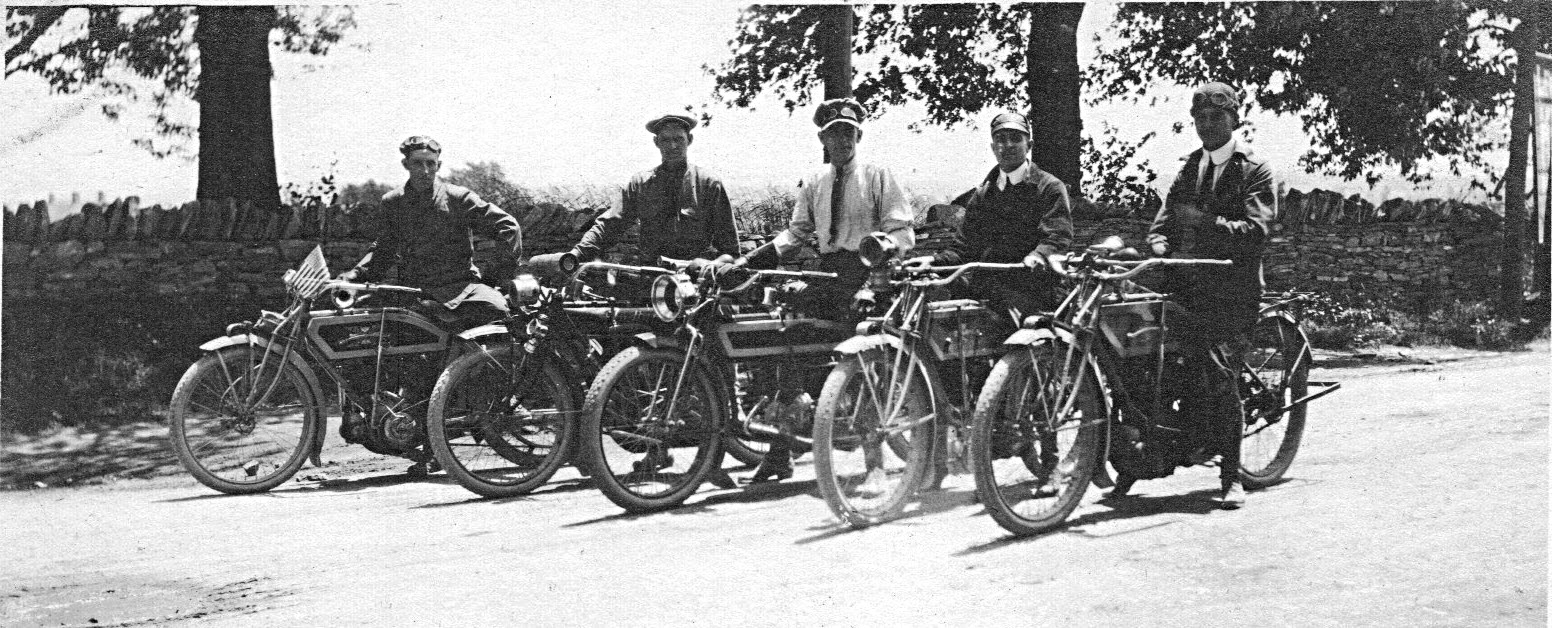
First motorcycle club in Rockville, Maryland. One Harley Davidson, one Indian, and Three Excelsior motorcycles on Park Avenue, 1912. Lewis Reed, far left.
As the curator of these archives and the granddaughter of Lewis Reed, I feel a great sense of pride in preserving these connections. Seeing the faces of men like Ben McGowan and John Hall reminds me that our family business was built on the shoulders of dedicated craftsmen who served their neighbors and their county. It is a legacy of service that I am honored to document and share with you today.
Books

Related Resources


Copyright Notice

Reed Brothers Dodge History (1915-2012) by Jeanne Gartner is licensed under a Creative Commons Attribution-NonCommercial 3.0 Unported License.


Recent Comments