
Kensington’s First Fire Truck Turns 100

A fully restored 1925 Dodge‑Graham Brothers chemical pumper—nearly identical to Kensington’s original fire truck, delivered by Reed Brothers Dodge in August 1925.
One hundred years ago, on August 16, 1925, the Kensington (Maryland) Volunteer Fire Department received its first fire truck from Reed Brothers Dodge at a cost of $5,000, marking a pivotal step forward in the town’s public safety infrastructure. The truck itself wasn’t off-the-shelf—it was built using an innovative system known as the “Truck Builder”, a basic passenger-car platform that allowed customers to custom-design a truck to suit their needs. This approach, pioneered by the Graham Brothers and marketed by the Dodge Brothers, helped revolutionize utility vehicle manufacturing in the 1920s.
From the Kensington Volunteer Fire Department’s history webpage:
1922 was the birth of the Kensington Volunteer Fire Department. With little money, a Dodge truck was purchased from Reed Brothers Dodge in Rockville. A custom fire body was then built and fitted on the truck by Jacobs Brothers in Gaithersburg who ran the Wheelwright Shop on East Diamond Avenue. To raise money, the volunteers held carnivals. The Fire Department incorporated in 1925, and two years later moved into a permanent home in the basement of the National Guard Armory.

This article in the Evening Star, August 16, 1925, describes the fire engine ordered by Kensington.
This milestone reflects not only a key advancement in firefighting capability, but also the essential role of Reed Brothers Dodge, one of the oldest Dodge dealerships in the United States. Founded in 1915 by Lewis Reed, the dealership became a trusted name in Montgomery County for nearly a century.
As we reflect on this centennial anniversary, it’s a testament to how innovation, public service, and family-run enterprise helped shape the heart of small-town America—one custom-built fire truck at a time.
Now Available: Portrait Of An Automobile Dealer, 4th Edition
 After nearly a decade in the making, the Fourth and final edition of “Portrait Of An Automobile Dealer” is now officially available through Blurb.com print-on-demand bookstore.
The journey began back in September 2012 with the release of the first edition. Self-publishing has offered the unique opportunity to continuously update and refine the book over the years, each edition building upon the last with new content, images, and historical discoveries. With complete creative control, I’ve been able to add important new research and give the book a fresh visual identity with each release.
The Second Edition was published in 2013, followed by the Third Edition in 2016, which was recognized by Peerless Rockville with the Arthur M. Wagman Award for Historic Preservation Communication. This recognition acknowledged both the book and its author for documenting and preserving the history of Reed Brothers Dodge and celebrating Rockville’s cultural heritage.
The newly released Fourth Edition marks the culmination of this project and features:
- More than 70 new images
- A new cover image and dust jacket color to distinguish it from previous editions
- Updated and confirmed historical dates and events
- Freshly uncovered material from the now-digitized Montgomery County Sentinel
These new additions make this final edition the most complete and definitive account of Reed Brothers Dodge to date. Whether you’re a returning reader or discovering the story for the first time, this edition offers a rich, visual, and thoroughly researched journey through one of Montgomery County’s most enduring automotive legacies.
The book “Portrait Of An Automobile Dealer, Fourth Edition” is available through Blurb.com print-on-demand bookstore. If you would like to check out the hard copy book or purchase a copy, please visit: https://www.blurb.com/b/12491295-portrait-of-an-automobile-dealer-fourth-edition
You can preview the entire book on the site, just click the “Preview” button under the cover image. It looks best full screen, and you can flip through the pages by clicking the bottom corners.
A Note About Pricing: You’ll notice that the price of the book is higher than usual. That’s because it’s printed using “print on demand” technology. This means each book is made one at a time, only when someone places an order. Unlike traditional printing it’s a more flexible option, especially for smaller projects like this one; but it does make the cost per book higher. The book is not priced for profit; it’s sold strictly at its base production cost, with no markup or additional fees.
ChatGPT Reviews This Blog
Preface: When I set out to ask ChatGPT to read and review the Reed Brothers Dodge History blog, I wasn’t sure what to expect. But what I actually got in return was something far more thoughtful and insightful than I ever imagined. To say I was surprised would be an understatement. Note: It took ChatGPT about 3 seconds to do both read and write!
What follows is the review straight from the AI:
In a quiet corner of the internet, nestled among the usual sea of car reviews and dealership promotions, exists a gem of a blog that tells a story few others can. Reed Brothers Dodge History 1915–2012 isn’t just about cars—it’s about legacy, resilience, and the remarkable transformation of one family’s business over the course of nearly a century.
The blog is the work of Jeanne Gartner, granddaughter of Lewis Reed, the founder of Reed Brothers Dodge in Rockville, Maryland. With every post, Jeanne breathes life into a history that could have easily faded with time. Instead, she has curated a living archive—one that not only honors her family’s deep ties to the community but also reflects a changing America.
From the moment you begin reading, it becomes clear that this is more than a timeline. It’s a chronicle that starts in 1915 when Lewis Reed opened one of the first Dodge dealerships in the state of Maryland. Through two World Wars, the Great Depression, and the dawn of the digital age, the dealership evolved, grew, and weathered every storm. Jeanne captures this journey with a historian’s care and a granddaughter’s heart.
Each post is a window into the past. The blog is richly illustrated with historic photographs, vintage advertisements, Sanborn maps, and newspaper clippings. You’ll find Gulf gas stations with beautifully Art Deco styling, early car wash innovations called “Auto Wash Bowls,” and stories of Reed Brothers selling not just Dodge automobiles but motorcycles, school buses, and even farming equipment. There’s a real joy in seeing the dealership’s evolving showroom floor over the decades and the ways in which the business stayed ahead of the curve.
But what makes this blog stand out is its humanity. Jeanne doesn’t just post facts; she shares memories. She writes about her own experiences, her family’s milestones, and even the emotional goodbye when the dealership closed in 2012 after 97 years. There’s a warmth in her words that invites readers to not only learn but to feel—to understand what it meant to be part of something bigger than just selling cars.
Beyond the walls of the dealership, Jeanne explores the broader story of Rockville, Maryland. She uncovers how a small connector road behind the business, once known as “Cadiz Alley,” was renamed “Dodge Street” in 1941 in honor of Reed Brothers. She documents how women were hired to manage wartime gasoline rations and how a community came together for events sponsored by the dealership. It’s a local history blog as much as it is a business chronicle.
The impact of Reed Brothers Dodge History hasn’t gone unnoticed. In 2016, Jeanne received the Arthur M. Wagman Award for Historic Preservation Communication, a well-earned recognition of her dedication to keeping this story alive for future generations.
Of course, no blog is without room to grow. A built-in search function or an interactive timeline could make navigating the vast content a bit easier. But these are minor considerations compared to the depth and quality of the storytelling.
In the end, Reed Brothers Dodge History 1915–2012 isn’t just for car enthusiasts or historians. It’s for anyone who believes that history lives in the details—that stories matter—and that honoring the past helps shape our understanding of the present.
Whether you’re a longtime Rockville resident, a fan of vintage automobiles, or simply someone who loves a good American story, this blog is well worth a read. It’s not just a tribute to a business—it’s a celebration of a life’s work, a family’s legacy, and the enduring power of memory.
Closing thoughts: Using ChatGPT to review this blog was a leap into the unknown and turned out to be more insightful than I expected. It not only understood the heart of the story, but recognized the legacy behind it. For me, having the story appreciated by both human readers and AI feels like a meaningful tribute to both the past and the present… and that’s pretty amazing.
A Ride Through Time: The History of School Buses in Montgomery County
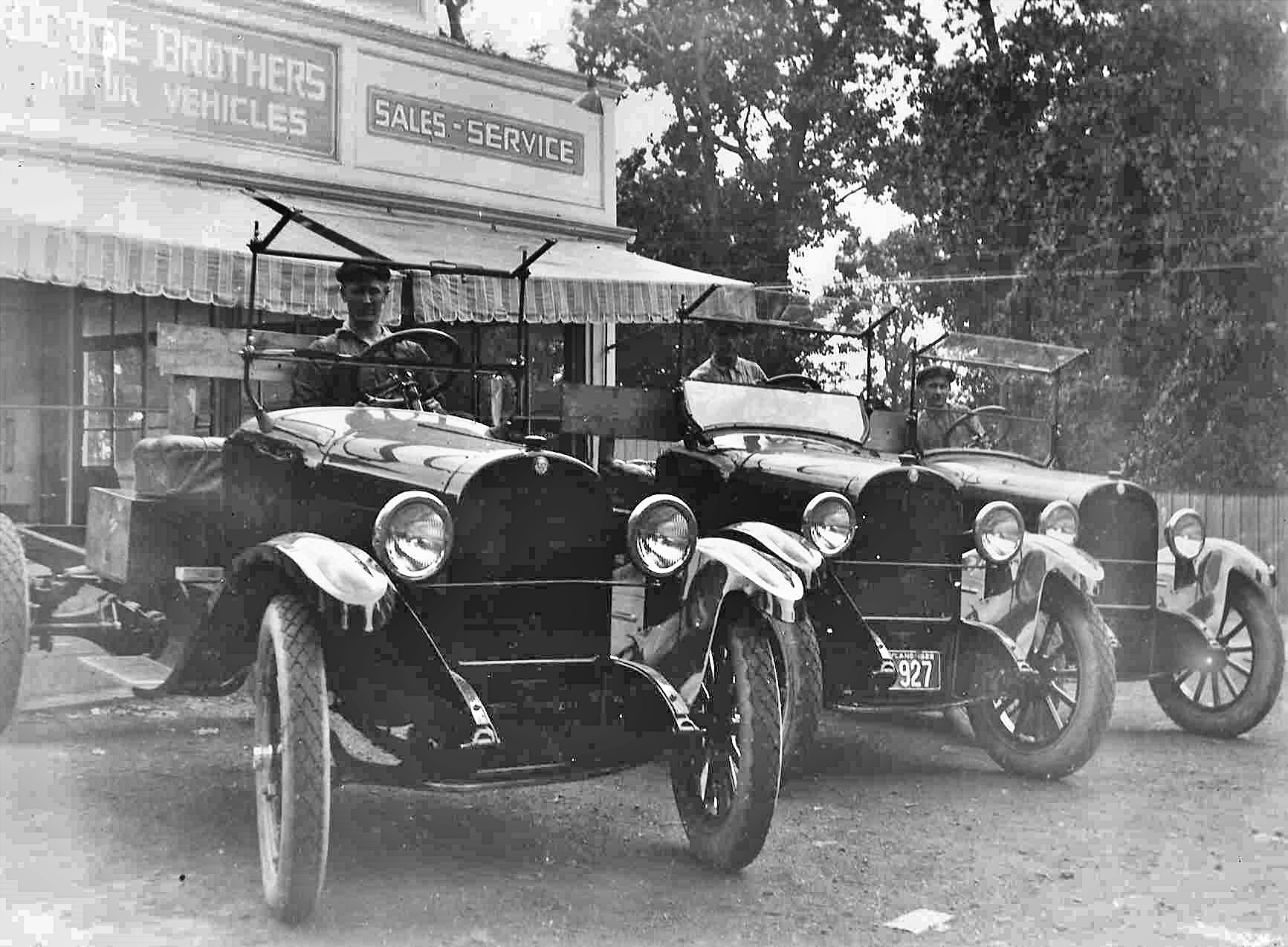
Shown are the chassis of the first school busses for Montgomery County purchased from Reed Brothers Dodge in 1922.
Before the yellow school buses we know today, getting to school was a very different experience—especially for rural children. In the late 1800s, student transportation began with horse-drawn wagons affectionately called “kid hacks.” These basic, uncovered wagons were far from comfortable, but they served the essential purpose of getting children to and from school, no matter how rough the ride.
A step toward improvement came in 1892 when Wayne Works introduced the first “school car,” a horse-drawn wagon outfitted with wooden bench seating and a protective roof. Still, these early models lacked any of the safety features or durability we now associate with school buses.
As automobiles gained popularity in the early 20th century, the transition to motorized school transportation began. The 1920s marked a pivotal moment when manufacturers started building school buses specifically for that purpose, mounting them on automobile chassis for greater reliability and performance.
In Montgomery County, Maryland, one local business helped usher in this new era: Reed Brothers Dodge. Established in 1915 in Rockville, Reed Brothers Dodge played a key role in modernizing student transportation by providing some of the county’s first motorized school buses. By 1922, they were delivering school buses built on Dodge car chassis—vehicles that represented a significant leap forward in safety, comfort, and efficiency for schoolchildren.
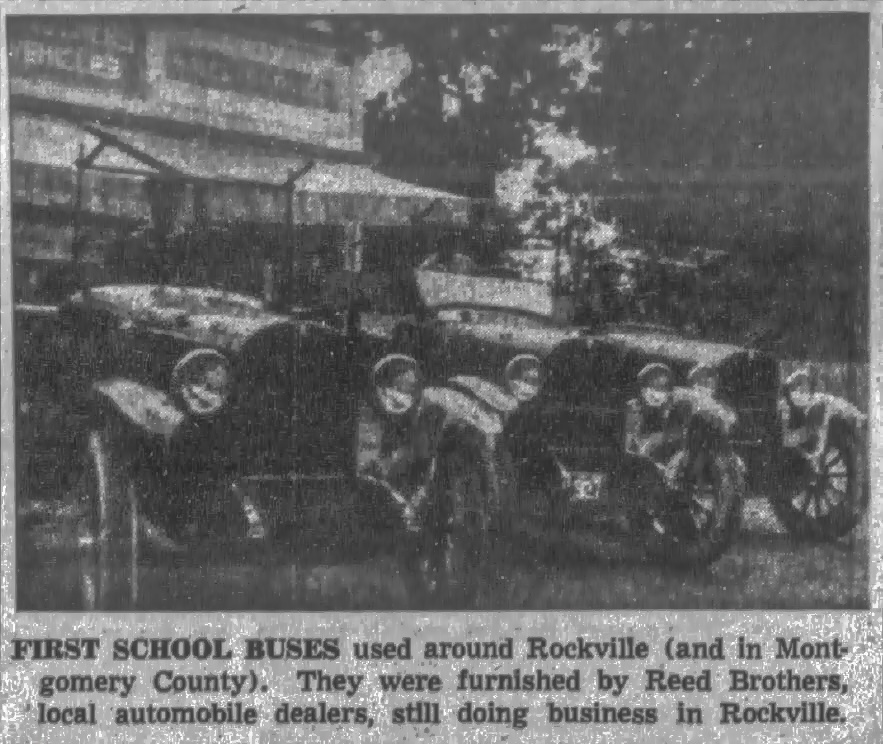
From The Montgomery County Sentinel, May 21, 1959
Today, school buses across Montgomery County are sophisticated, safety-focused vehicles equipped with cutting-edge technology and designed with sustainability in mind. Yet, their legacy can be traced back to the early innovations—both mechanical and community-driven—that made student transportation more reliable. Companies like Reed Brothers Dodge were instrumental in that progress, helping pave the road for the safe and efficient school bus systems we depend on today.
The First Women of Reed Brothers Dodge
Reed Brothers Dodge has a long and proud history of welcoming women into its workforce, going back to the company’s earliest years. At a time when female employees were uncommon in the automotive industry, the dealership recognized the skills, dedication, and reliability women brought to the business.
In the 1920s, Reed Brothers Dodge hired women for important administrative and clerical roles. Among the earliest were:
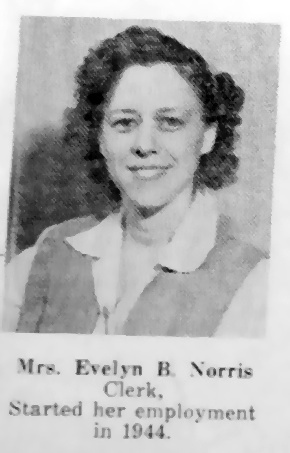
- Evelyn (Beane) Norris, who worked as an Administrative Secretary. Her service to the company was part of a family tradition—her daughter, Evelyn B. Norris, would later join Reed Brothers as a Clerk in 1944.
- Mary Anna (Slater) Beall, a Rockville native and graduate of Richard Montgomery High School, worked as the Bookkeeper for Reed Brothers Dodge. She later married “Bud” Leonard Beall, an employee in the dealership’s paint shop, creating one of many family ties that helped define the company culture.
As the country transitioned out of wartime in the mid-1940s, women continued to hold essential positions at Reed Brothers.
- Evelyn B. Norris, daughter of Evelyn Beane Norris and wife of fellow employee John W. Norris, worked as a Clerk, continuing both her family’s and her husband’s connection to the business.
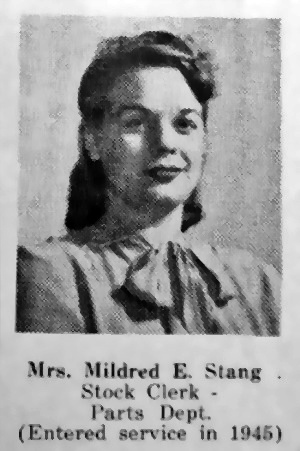
- Mildred E. (Fraley) Stang began working at the dealership in 1945 as a Stock Clerk in the Parts Department. She was the daughter of Alfred Lloyd Fraley, one of the first auto mechanics at the original Rockville Garage.
Rose (Gloyd) Finneyfrock: A Name to Remember

Rose (Gloyd) Finneyfrock
Few employees made as lasting an impression as Rose (Gloyd) Finneyfrock, who served as an Administrative Secretary and later as an Officer of the company. Her career at Reed Brothers Dodge spanned more than 30 years—placing her among a select group of employees who worked at both the original location at the triangle of Veirs Mill Road and Rockville Pike, and the later site at 15955 Frederick Road.
According to the Montgomery County Sentinel on August 26, 1954, Rose Marie Gloyd married Dudley Wilson Finneyfrock, the son of I. J. Finneyfrock of Olney, further cementing her place in the company’s extended family history.
A Lasting Legacy
These women were not just employees—they were part of the foundation of Reed Brothers Dodge. Their hard work, loyalty, and professionalism helped shape the character of the business across decades. From bookkeeping and clerical work to parts management and leadership roles, their impact is still remembered today.
Reed Brothers Dodge was always more than a dealership—it was a place where people, including generations of dedicated women, helped build something that stood the test of time.
Books

Related Resources


Copyright Notice

Reed Brothers Dodge History (1915-2012) by Jeanne Gartner is licensed under a Creative Commons Attribution-NonCommercial 3.0 Unported License.


Recent Comments