
How the 1984 Dodge Caravan Changed Automotive History

1984 Dodge Caravan
On November 2, 1983, history shifted on wheels: the first modern minivan rolled off Chrysler’s production line, marking the birth of an entirely new vehicle class. At the time, Chrysler was teetering on the edge of collapse, but this bold launch would become the gamble that revived the company.
A Risk Worth Taking
Under Lee Iacocca’s leadership, Chrysler bet heavily on the idea that the next generation of young families wanted something more practical than a station wagon. With the U.S. economy struggling and Chrysler’s survival uncertain, Iacocca pressed forward with a $660 million minivan program, financed in part by a $1.5 billion government loan guarantee.
The strategy paid off. Sales of the company’s K-car models helped stabilize finances and set the stage for the debut of the Dodge Caravan and Plymouth Voyager. Demand was so strong that Chrysler was able to repay its federal loans years ahead of schedule.
The Minivan that Changed Everything
The original 1984 Dodge Caravan was engineered with families in mind. Though boxy in shape, with wood-grain style panels reminiscent of the classic station wagon, it offered an interior that was spacious, comfortable, and remarkably versatile. The sliding side door made entry safe and convenient, especially for families with young children, while interior features such as power windows and a car-like dashboard gave it a sense of refinement previously unseen in utility vehicles.
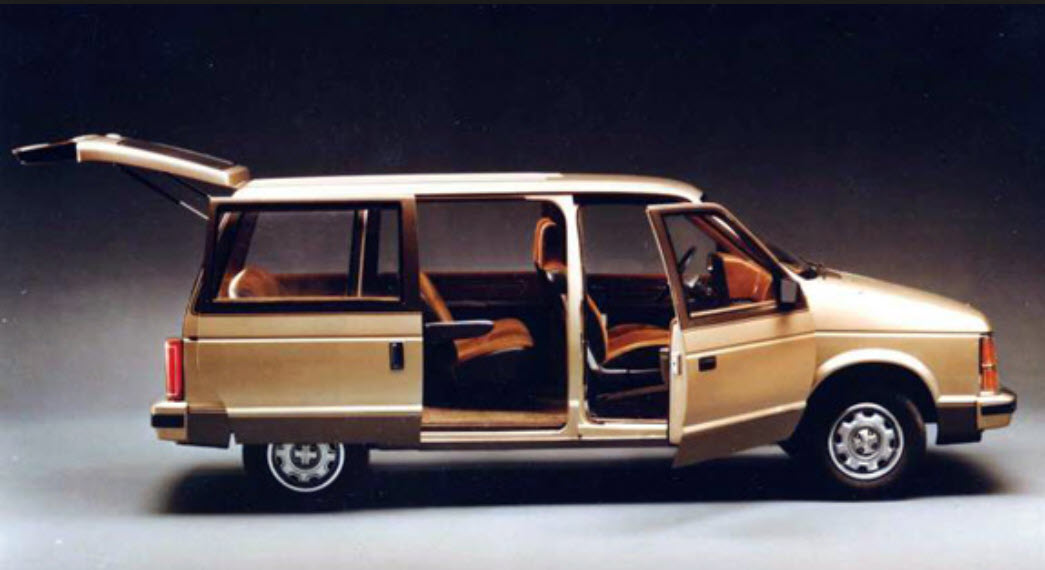
1984 Dodge Caravan
The 1984 Dodge Caravan was an immediate success. It brought Chrysler back from the brink of bankruptcy and reinvigorated the automotive market. Many buyers had to wait weeks for delivery because demand far outstripped supply. Dodge had created an entirely new market segment with the minivan—and competitors soon rushed to follow suit.
The early 1980s had been an extremely painful period for Chrysler, but Reed Brothers Dodge survived, continuing to serve its loyal Montgomery County customers through one of the most turbulent times in the company’s history.
A Legacy That Lasts
When Lee Iacocca introduced a 12,000-mile Voyager at Chrysler’s Windsor, Ontario plant that November day, he declared it the beginning of a new era. He was right. The minivan reshaped family transportation, inspired countless imitators, and cemented Chrysler’s place in automotive history.
September 7, 1979: The First Chrysler “Bailout”
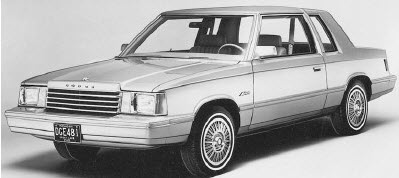
In the early 1980s, the Dodges Aries-K inspired Chrysler’s renaissance.
In 1979, Chrysler was at death’s door and petitioned the U.S. government for $1.5 billion in loan guarantees to avoid bankruptcy. It made gas guzzlers that nobody wanted to buy and it asked for $1.5 billion to keep itself going until a fleet of more fuel efficient cars could take up the sales slack. It was by far the largest government bailout in US history. On September 7, 1979 Chrysler formally petitioned the U.S. government for the loans, and on December 20, 1979 Congress ratified the appropriation in the “Chrysler Corporation Loan Guarantee Act,” which President Carter subsequently signed into law. It was an extremely painful period for Chrysler, but Reed Brothers survived the first Chrysler Bailout and resurgence under Lee Iacocca.
The K-Cars, the Dodge Aries and Plymouth Reliant, were, quite literally, the cars that saved Chrysler from the abyss in 1980. Their only real savior other than the K-Car was a government bailout. Though it came after bankruptcy, they managed to save the company with it by 1983. The K-Cars were inexpensive, reliable, and they delivered economical transportation for 6 people at an affordable price. Sales from the K-Car enabled Chrysler to emerge from bankruptcy and evolve into a profitable company.
Reeling from the combined effects of a recession and a global energy crisis, in 1979 Chrysler was forced to seek government loan guarantees. Meanwhile, Chrysler chairman Lee Iacocca took the company’s case straight to the people in a series of television commercials. Looking straight into the camera, the legendary auto executive pitched the company’s new K-cars with total conviction, asserting, “America, if you can find a better car, buy it.”
Buyers took up Iacocca’s challenge, flocking to the showrooms to buy their own K-cars. Nearly one million Aries were sold (and another million Reliants), allowing Chrysler to pay off its loans a full seven years early. Soon Iacocca was back on the airwaves with another ad campaign. This one was called “The Pride Is Back.”
These models were soon followed by what would become a home run product for Chrysler: minivans.
Nearly thirty years later, in 2008, Chrysler would receive billions in a new bailout from the U.S. government in the aftermath of the financial crisis that decimated automotive sales over the following few years. In 2009, Chrysler files for Chapter 11 bankruptcy protection. On May 14, 2009, Chrysler left 789 dealerships, about a quarter of its dealer base, out in the cold by rejecting their franchise agreements and giving them about a month to sell all their remaining new cars, factory parts and service equipment.
Whether a franchise is run by a second- or third-generation dealer, or is older than even Chrysler itself, didn’t seem to matter when Chrysler decided to cut dealerships ranks during their 2009 bankruptcy process. After almost 95 years selling Dodges, Reed Brothers was one of the 15 dealerships in Maryland and 789 dealerships nationwide notified by Chrysler that their franchise agreement would not be renewed. Chrysler was acquired in total by Fiat in 2014.
Source: Chrysler
35 Years Ago Today, Chrysler Invented the Minivan, And Changed History
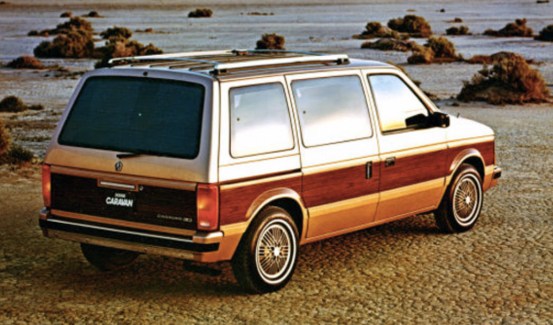
1984 Dodge Caravan
On November 2nd, 1983, the world’s first minivan rolled off of Chrysler’s assembly line. It was the vehicle that saved Chrysler from financial doom. When Ronald Reagan was president — the economy was far from robust and Chrysler was on death’s doorstep. Chrysler needed a home run, and Lee Iacocca, who was running the company at the time, gambled that the first wave of baby boomers who were starting families would likely want something roomier and far more practical than the traditional family hauler, the station wagon. Iacocca practically bet the company on the fact that a new automotive segment dubbed “the minivan” would catch on with the boomers. It was a $660-million gamble, only made possible by money acquired earlier from Washington’s $1.5-billion bailout of Chrysler.
Sales improved dramatically with the debut of the well-received K-car platform and the introduction of the Dodge Caravan and Plymouth Voyager. Chrysler paid off government loans seven years early. Reed Brothers successfully navigated through numerous Chrysler setbacks during the 1970’s and 80’s, including the first Chrysler Bailout and resurgence under Lee Iacocca.
The 1984 Dodge Caravan was designed specifically with families in mind. The early design looked like station wagons at the time, featuring a wood panel along the sides. The Caravan was essentially a big, roomy box on wheels, utilizing maximum form efficiency — small on the outside, huge on the inside.
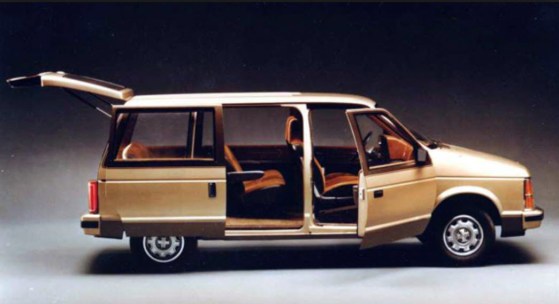
1984 Dodge Caravan
The other distinguishing features of the new minivan were its car-like features – notably including power windows, comfortable interiors, a nice dashboard, and front-wheel drive. These also explain the appeal of the vehicle. Not only did it fit in a garage like a car, but it actually drove like a car, while also providing plenty of room for the kids and luggage and giving mom a nice, high view of the road. The sliding door made it easy to for people to quickly enter or exit the vehicle and, with its lack of hinges, the sliding door was seen as a safer option for children.
After The 1984 Dodge Caravan was released, it became an immediate success. The minivan helped bring the company back from the brink of bankruptcy, and it reinvigorated the automotive market. Many buyers had to wait weeks to have their orders filled because there was so much demand. Dodge created an entirely new market with the minivan, and other models soon followed suit.
Lee Iacocca, the mastermind of the minivan era, presented this 12,000-mile Voyager at the assembly line in Windsor, Canada on November 2, 1983. A truly game-changing vehicle…
Minivan – How It All Began
 Minivans… you must have heard about them. Back in 1983 — when Ronald Reagan was president — the economy was far from robust and Chrysler was on death’s doorstep (talk about déjà vu). Chrysler needed a home run, and Lee Iacocca, who was running the company at the time, gambled that the first wave of baby boomers who were starting families would likely want something roomier and far more practical than the traditional family hauler, the station wagon.
Mentioning “family car” in 1983 would have conjured up a station wagon. I remember getting carsick while sitting in the rear-facing third row torture chamber, cut off from the rest of the family and their forward-looking vantage point. The tail-gunner position, however, was a great way to test out new hand gestures and making silly faces on following motorists. Do you have any idea how impossible it is to win the alphabet license plate or billboard game when you’re the last one to see everything? I spent many a family car trips never once seeing where we were going, only where we’d been. “Oh, look, there WAS the Bay Bridge. There WAS a bear. There WAS the most incredible thing ever except … whoops, now it’s gone. Too bad.” Indeed, how soon we forget that the minivan, when it debuted 30 years ago, was such a welcome replacement for the station wagon.
Iacocca practically bet the company on the fact that a new automotive segment dubbed “the minivan” — a front wheel drive small van built on the K-car platform — would catch on with the boomers. It was a $660-million gamble, only made possible by money acquired earlier from Washington’s $1.5-billion bailout of Chrysler.
It soon turned out that Iacocca’s gambit wasn’t merely a home run — the Dodge Caravan/Plymouth Voyager turned out to be a bases-loaded grand slam.
On November 2, 1983, the first minivan rolled down the assembly line in Windsor. These 1984 model-year Dodge Caravan and Plymouth Voyager models quickly appeared in dealerships alongside the Dodge Aries and Plymouth Reliant K-cars.Along the way, Chrysler has developed countless minivan firsts and toppled countless competitors that imitated them — and it remains just about the last one standing — as Chrysler just passed its 30th anniversary in the minivan market.
Now that I think about it, maybe facing backward so much during my formative years is why I tend to look backward too much in life and get nostalgic for silly things like rear-facing station wagon seats and minivans.
Sources: Autoevolution & Allpar
Books

Related Resources


Copyright Notice

Reed Brothers Dodge History (1915-2012) by Jeanne Gartner is licensed under a Creative Commons Attribution-NonCommercial 3.0 Unported License.
 Reed Brothers Dodge History 1915 – 2012
Recent Comments