
From Horsepower to Headlines: Reed Brothers’ Early Auto Ads
Advertisements do more than just simply pitch a product, they capture a moment in history. The following early auto ads placed in local newspapers by Rockville Garage/Reed Brothers Dodge do more than mirror the evolution of automotive technology and related advertisement, they present a snapshot of the motoring experience.
Auto ads at the end of the 19th century were similar to the printing technology at that time. Especially at the start of the century, the vintage car prints didn’t have any vehicle image on them and most used black and white paper. But as soon as the 20th century started, vehicles started to appear on the ads with a lot of font style variation. The history of branding begun at the start of the century. However, they used a uniform approach of black and white images, and more focus was on the safety and speed of the car.
The first ever car advertisement in 1898 featured the headline “Dispense With a Horse” and simply sold the benefits of the Winton Motor Carriage. The ad showed that it’s not costly to maintain, its speed is 20 mph, and it had no odor. In the end, the ad compared it with the horse saying that a horse would never be able to do these tasks.
The first ever car advertisement by the Rockville Garage was placed in The Washington Herald less than 20 years later. During the early years, Reed Brothers represented several franchise nameplates along with Dodge, including Oldsmobile, Hudson, and Essex. The Hudson and Oldsmobile were sold at Reed Brothers from roughly 1917 through 1923. Through the years the ads have definitely improved from a timeless, artistic aspect; however the older ads definitely transport you back to a simpler time, both in the car world and in American history.
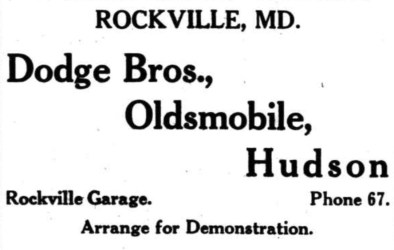
The Washington Herald, Monday, March 5, 1917
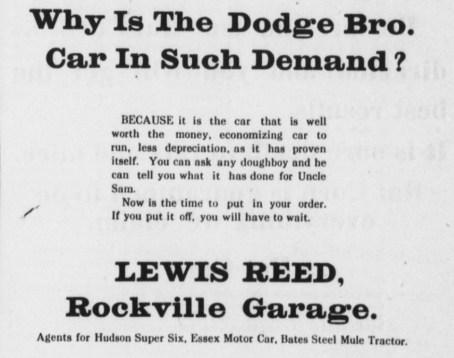
The Montgomery County Sentinel. May 02, 1919
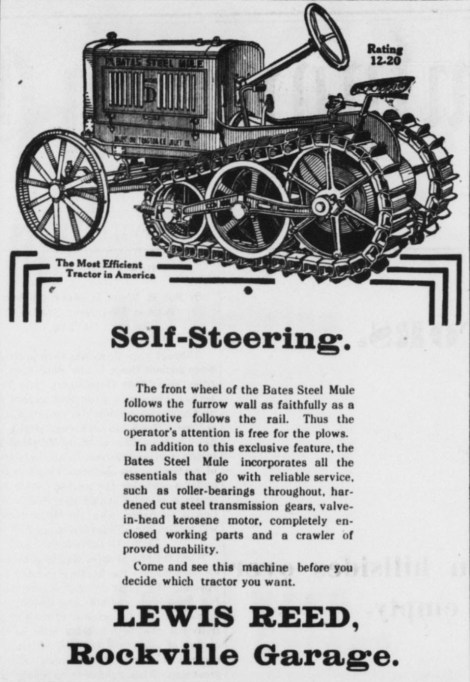
The Montgomery County Sentinel. June 20, 1919
World War I, and the food shortage that came along with it, was a defining moment in history and a direct cause of the rise of the lightweight tractor. — Rick Mannen, editor, Antique Power.
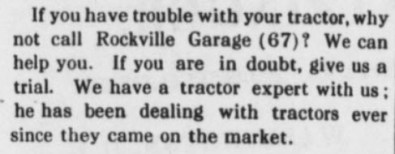
The Montgomery County Sentinel, April 18, 1919
A demonstration of The Bates Steel Mule Tractor will be given on the farm of J.B. Diamond, Jr., near Gaithersburg, on December 3rd and 4th by the Rockville Garage.
Upside Down to Prove Its Strength
We make this test at our store to show the strong, rigid body construction of the Hudson and Essex Coaches. In this position it is supporting a crushing load of 2700 pounds. Come see it. Test the doors and windows, which operate with ease, showing a total absence of body strain.
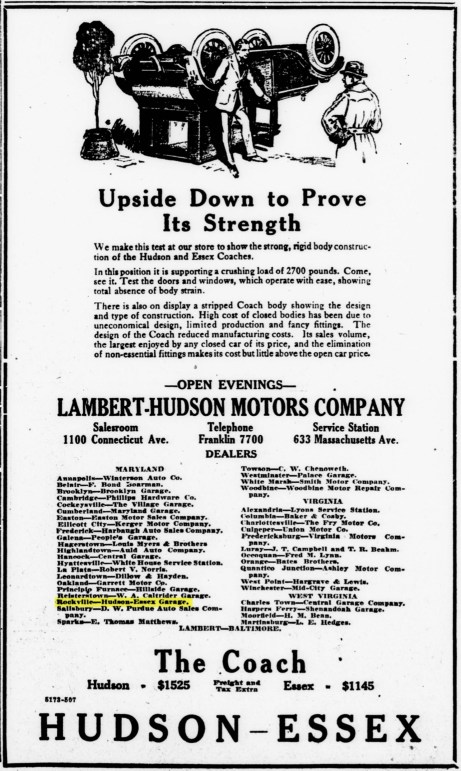
Rockville Garage Hudson-Essex Advertisement: The Evening Star, Washington DC, March 1, 1923
Dependability, The Dependables (1920s-1967)
Capitalizing on their reputation, the Dodge Brothers used their name, “Dodge Brothers” followed by “Reliable, Dependable, Sound” to market their products. Devoted Dodge customers raved about the rugged construction, quality, and power of their vehicles. Buyers consistently commented that this was a car that could be depended upon. In a Dodge marketing stroke of genius, Theodore MacManus coined the word “dependability.” Dodge was using the term in advertising from around 1914, and by the 1930’s, the word was appearing in dictionaries, and soon found its way into common, everyday usage.
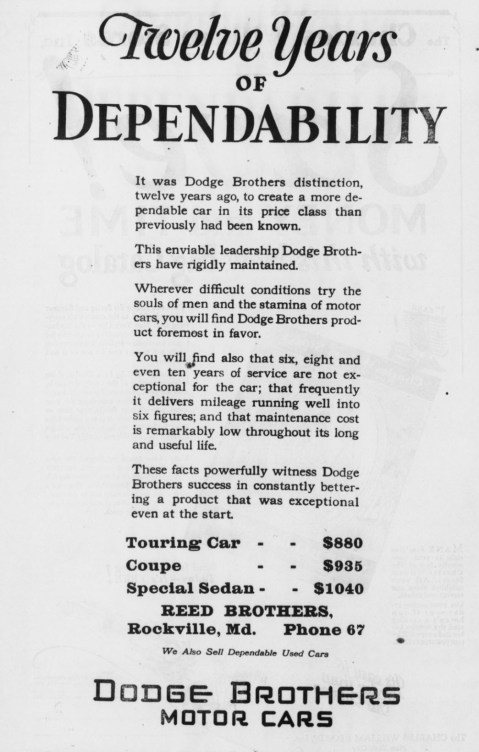
Montgomery County Sentinel. Feb 25, 1927
Dodge “Punishment Pit” – Torture Makes Them SAFER!
Rather than trying to compete with other manufactures with claims of mechanical prowess, Dodge tried a different approach in 1933 with their “Show Down” Plan.
Did you know that Dodge Brothers corporation had a “punishment pit”? This pit was a new type of automobile proving ground that was regarded as the quickest and most satisfactory way of finding out how an automobile can stand up under treatment of the most severely abnormal sort. Before Dodge introduced its latest models, some of the test cars were tortured in the punishment pit for as long as 600 hours.
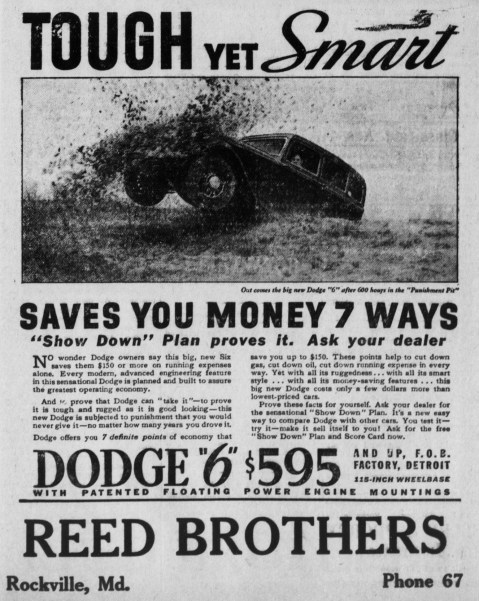
The Montgomery County Sentinel. August 24, 1933
The 1930s seemed to be the last great age of the publicity stunt for automobiles. Radio had already made inroads, and within a decade or two television would become the next great medium to reach the masses, but in the 1930s promoting new cars to a nationwide audience still took some creativity, something that Dodge had plenty of.
The Dodge Boys White Hat Specials (late 1960s)
In the late ’60’s, The Dodge Boys “White Hat Specials” were part of Dodge’s marketing and advertising campaigns. In these ads, the Dodge sales people, “the Dodge Boys,” were referred to as “good guys in white hats” and portrayed as friendly, helpful, and customer-oriented, as well as able to “beat the competition to the draw.”
Here are clips from a two-page ad that Reed Brothers ran in The Gaithersburg Gazette on Thursday, August 26, 1965 to promote their 50th anniversary. The title of the ad reads: “The Dodge Boys and Reed Brothers celebrate a 50 Year Success, 1915 to 1965! If you need a New or Used Car, come in today and cut yourself a “Slice of Savings…”
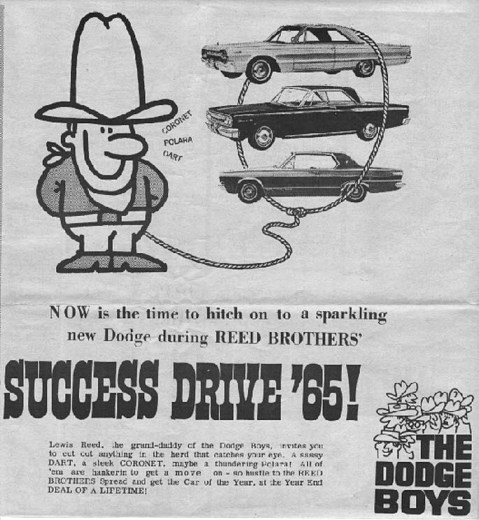
The Gaithersburg Gazette. Thursday, August 26, 1965
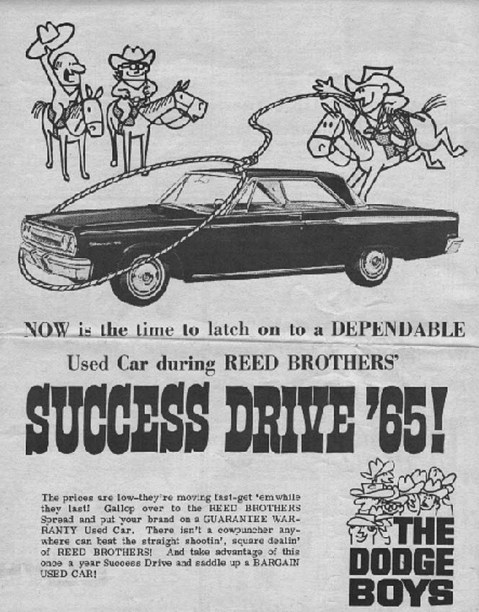
The Gaithersburg Gazette. Thursday, August 26, 1965
Rockville Garage Hudson Motor Car Ads (1919-1920)
The advertisements in this post do more than just simply pitch a product, they capture a moment in history. A moment in history when Lewis Reed’s Rockville Garage represented several franchise nameplates along with Dodge, including Oldsmobile, Hudson, and Essex. The Hudson and Oldsmobile were sold at Reed Brothers from roughly 1917 through 1923.
Hudson introduced the Essex brand in 1919. The Essex was intended to compete with Ford and Chevrolet for budget-minded buyers. The Essex offered one of the first affordable sedans and by 1925 the combined Hudson and Essex sales made Hudson the third largest automobile manufacturer in the United States.
Prior to the advent of television and radio advertising, print media was the most popular form of advertising and most car ads were black and white. The following ads distributed by the Lambert Automobile Company in The Baltimore Sun newspaper advertises the Hudson and Essex automobiles.
In addition to franchise car dealers, there were also factory stores. In the early days, the factory stores did the national advertising. A factory store, also known as a branch store or branch dealer, was a dealership owned and run by the manufacturer. A list of area Dealers was placed in fine print at the bottom of the ads. Rockville Garage, Rockville, Md, is highlighted in yellow on each of these ads.

The Baltimore Sun 2 March 1919
By the 1920s, Hudson and Essex Motor Car advertisements featured elegant architectural borders with static drawings of their cars; some ads never pictured people during this period.

The Baltimore Sun 30 May 1920

The Baltimore Sun 29 Aug 1920
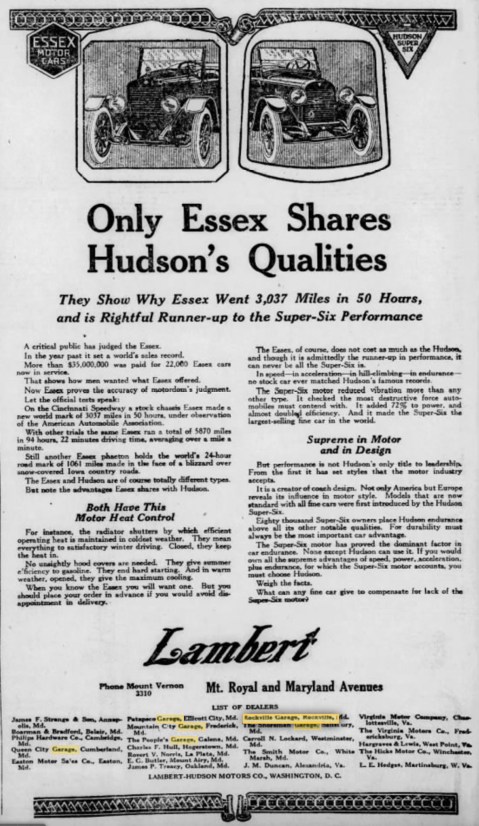
The Baltimore Sun 25 Jan 1920
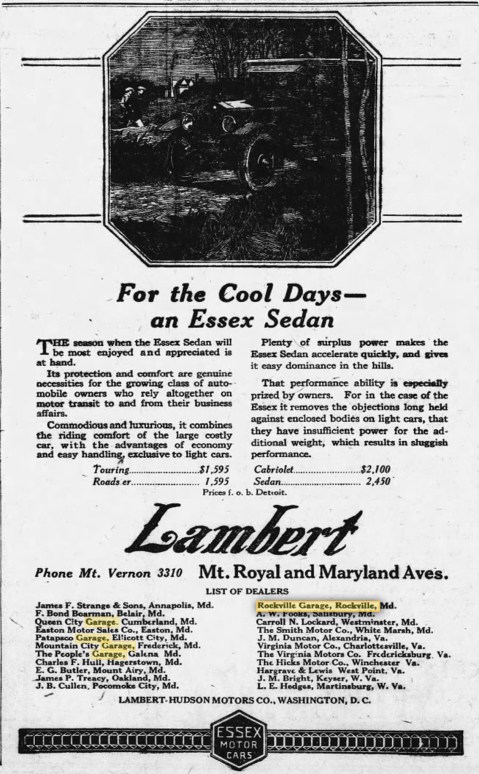
The Baltimore Sun 24 Oct 1920

The Baltimore Sun 21 Nov 1920

The Baltimore Sun 17 Oct 1920

The Baltimore Sun 13 Jun 1920

The Baltimore Sun 10 Oct 1920

The Baltimore Sun 1 Feb 1920

The Baltimore Sun 3 Oct 1920
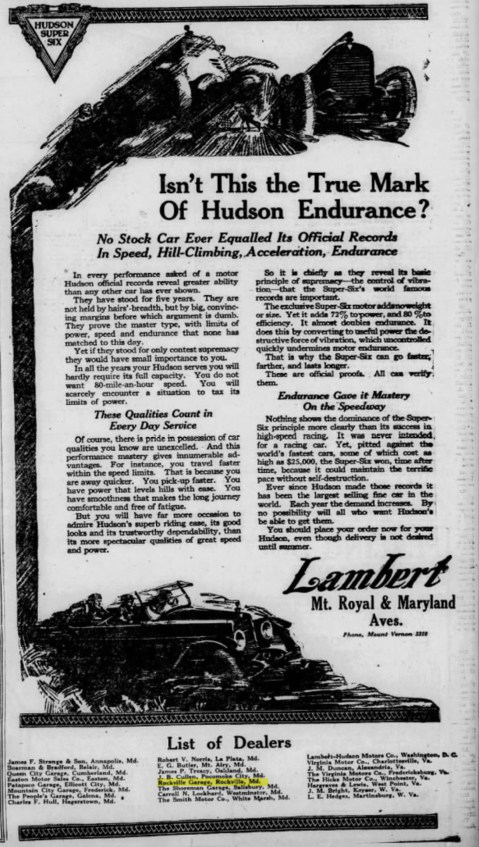
The Baltimore Sun 28 Mar 1920
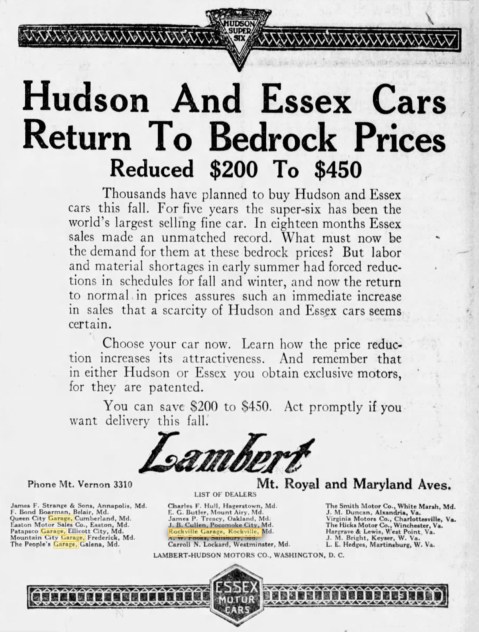
The Baltimore Sun 30 Sep 1920

The Baltimore Sun 5 Mar 1922
A lot of old newspapers have found their way online and with digital archival, it’s easier to take a trip back through old newspapers than ever before. These ads were found on NewspaperARCHIVE.com, the largest historical newspaper database online.
Graham Brothers Trucks
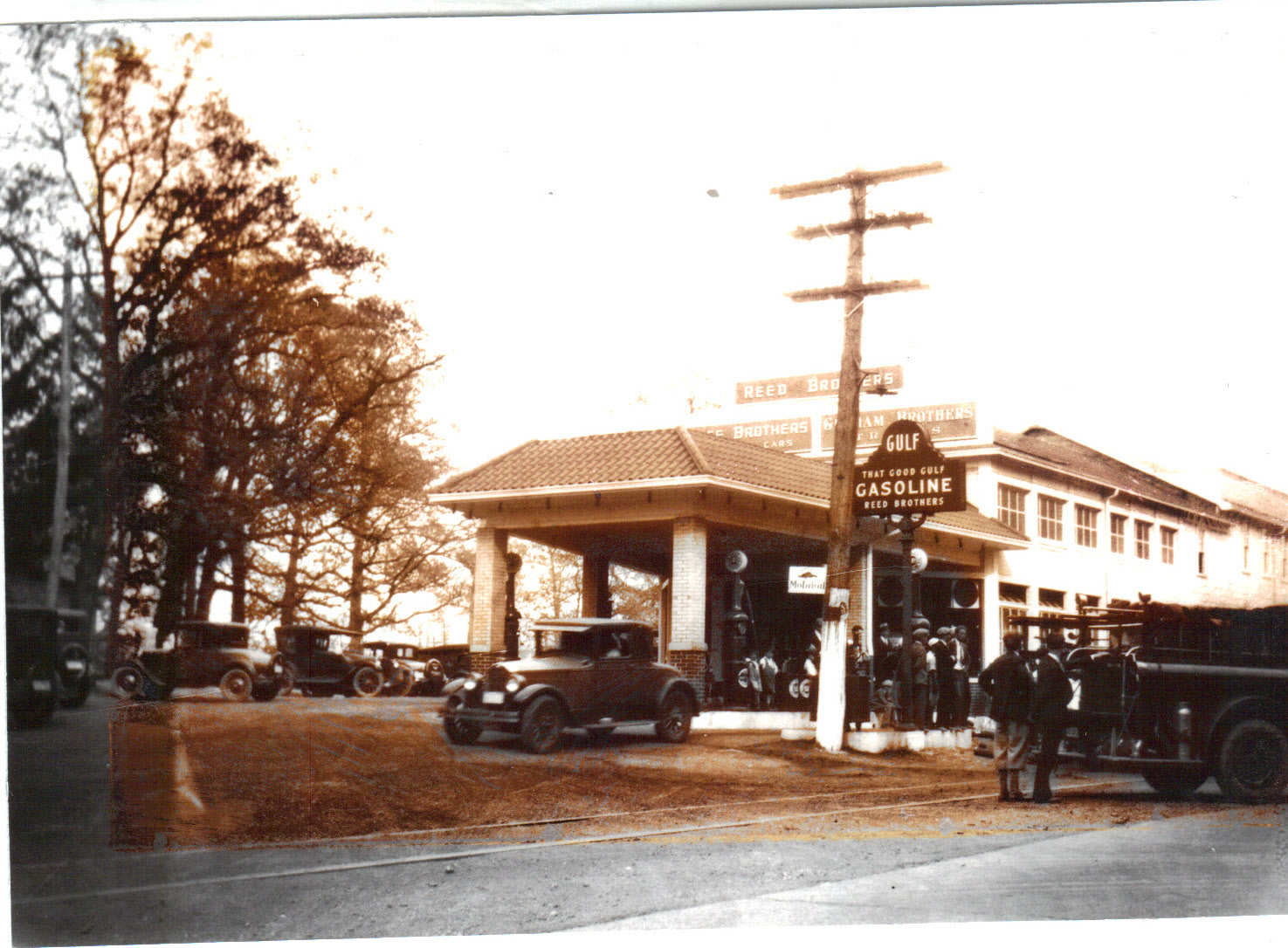
In the 1920s Reed Brothers sold Dodge Brothers Motor Cars and Graham Brothers Trucks
History fascinates me, and something about the development of the Dodge pickup truck fascinates me even more. It’s a story inextricably linked to our country’s history like baseball and apple pie.
After the introduction of mass-produced automobiles, people started to modify their vehicles for enhanced utility. These people stripped off the rear bodywork and mounted open-topped boxes that resembled the first step towards the modern pickup truck.
Dodge trucks actually began with three brothers named Graham. In reality, it is the story of two companies – the Dodge Brothers Company and the Graham Brothers Company. In 1916, seeing the need for a good, dependable truck to serve people such as themselves, the Graham brothers entered the truck body business. By 1919, they had produced the “Truck-builder,” which is a basic platform from which a customer could spec a truck according to his or her needs. The Truck Builder was essentially a truck conversion that began with a passenger car. The Truck Builder worked this way: The new-car dealer would sell a new car to a customer, then suggest to the buyer that his old car could be converted into a truck.
In 1921, Dodge Brothers began to market Graham Brothers medium-duty trucks through its dealerships; in turn, every Graham vehicle utilized a Dodge engine. This partnership provided Dodge dealers with a full line of trucks to sell in addition to the highly regarded Dodge passenger cars, and the resulting sales increases prompted Dodge to buy the Graham Brothers Company.
The Dodge trucks would carry the Graham Brothers nameplate until 1928 with a few of the designs lasting as long as the 1930s.
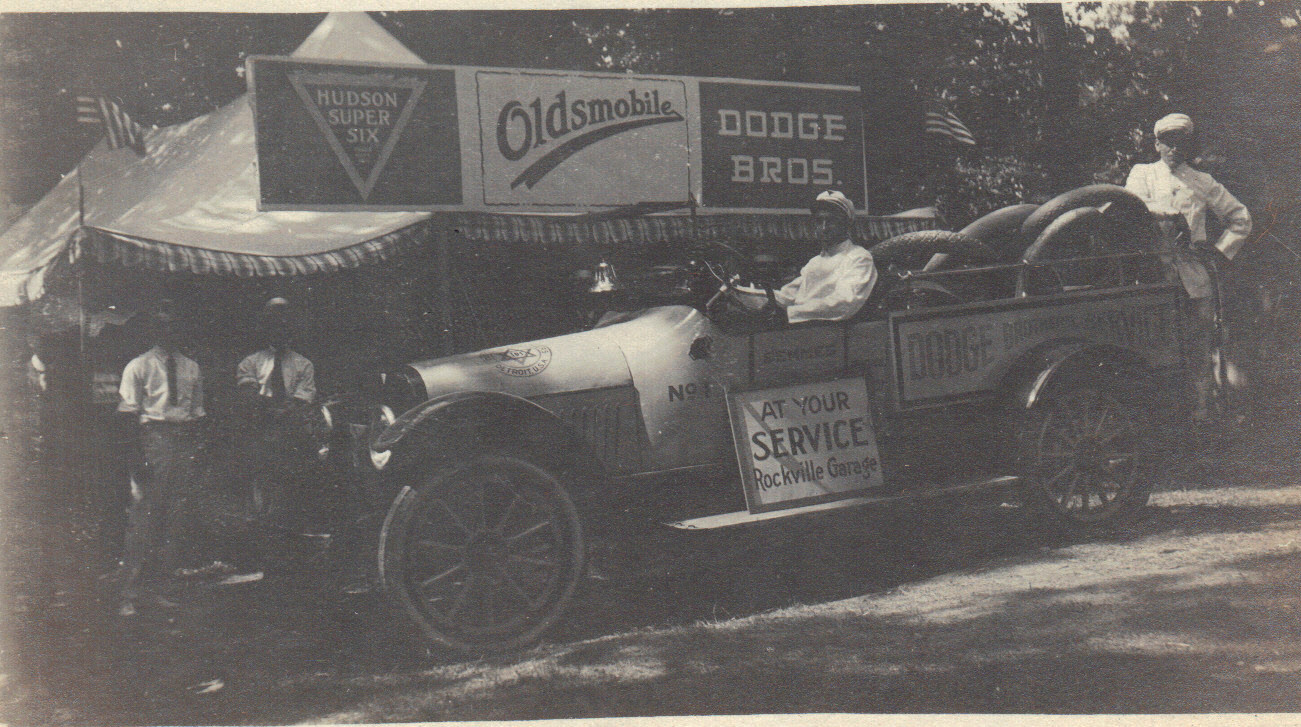
Rockville Garage, 1918 – Hudson Super Six, Oldsmobile, and Dodge Brothers Motor Cars on display at Rockville Fairgrounds. Lewis Reed is seated in the drivers seat of the Rockville Garage Graham Brothers Service Truck.
Source: Allpar
1976 Showroom & Car Lot
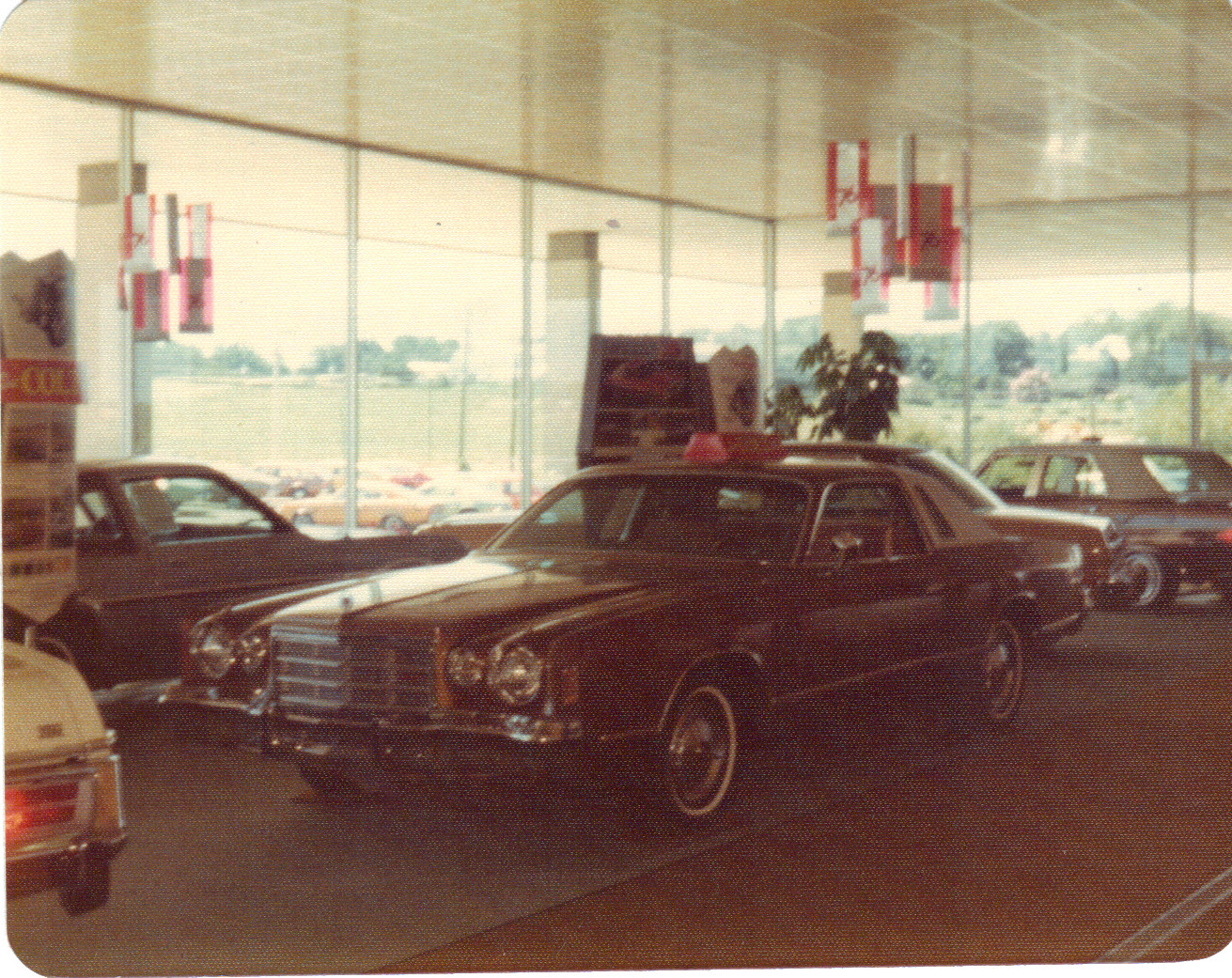
A 1976 Dodge Charger displayed on showroom floor
I found these two gems while looking through some of my old photo albums. The top photo shows what appears to be a 1976 Dodge Charger displayed on the showroom floor at Reed Brothers. Usually, the flashiest of the new models, spit-shined to perfection, would be displayed inside the showroom. Banners touting the new models were also strung up in the showroom.
In the second photo, nothing screams 1970s like the line of beige and baby blue cars all lined up in rows on the side lot. Across the road is the big barn that said, “MILK FOR THOMPSON’S DAIRY” on the field that is now the new urban development known as King Farm. I remember Lawson King’s dairy cows. Lots of them! They used to graze in the fields just a few feet from the roadway right across the road. At its peak, King Farm was the largest milk producer in the area and had been in agricultural use for nearly 75 years before it was approved for development in 1996.
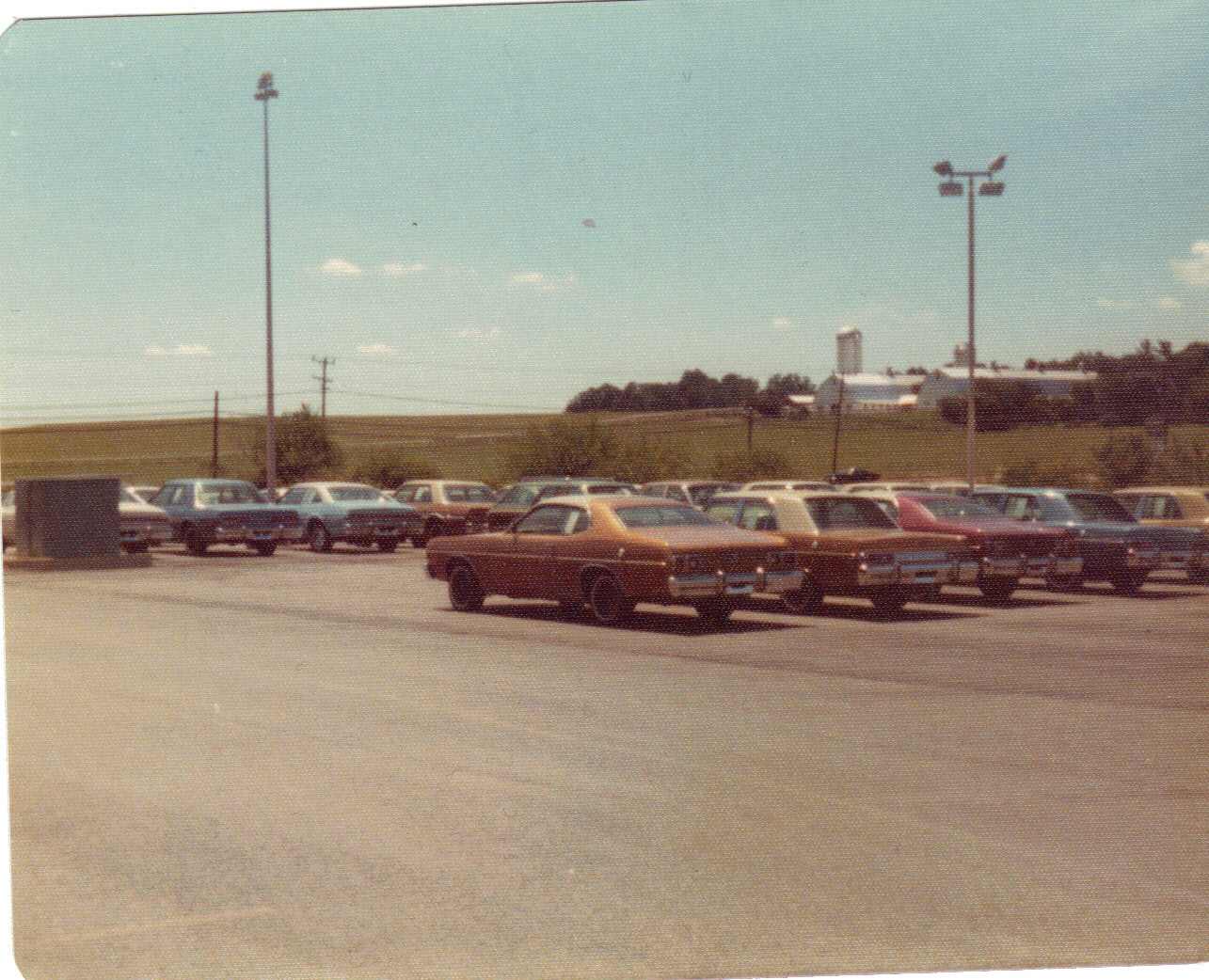
Cars lined up awaiting prospective buyers
Fisk Tires
Reed Brothers was founded and franchised as a Dodge dealership in 1915; only one year after the first Dodge automobile was made. Initially, Reed Brothers sold Oldsmobile and Hudson, along with Dodge. Reed Brothers was a successful company, combining car sales, auto accessories and repair service. They also sold Fisk Tires which were made in Chicopee Falls, Massachusetts.
After seeing the Fisk Tire signs in the photos below, I was curious to learn more about the company and the tires that they made. The history of the Fisk Tire Company is relatively obscure, but as far as is known, Noyes W. Fisk purchased a failing rubber manufacturing company in 1898. Fisk continued the company under his own name and branched out to sell automobile tires. By 1904, most of the country’s major car manufacturers were buying Fisk tires. The tire business, along with many other businesses, fell upon hard times during the great depression. Despite all the country’s hardships, Fisk survived and introduced its new Safti-Flight tire in 1930, and it proved to be an impressive success. (click images to enlarge)
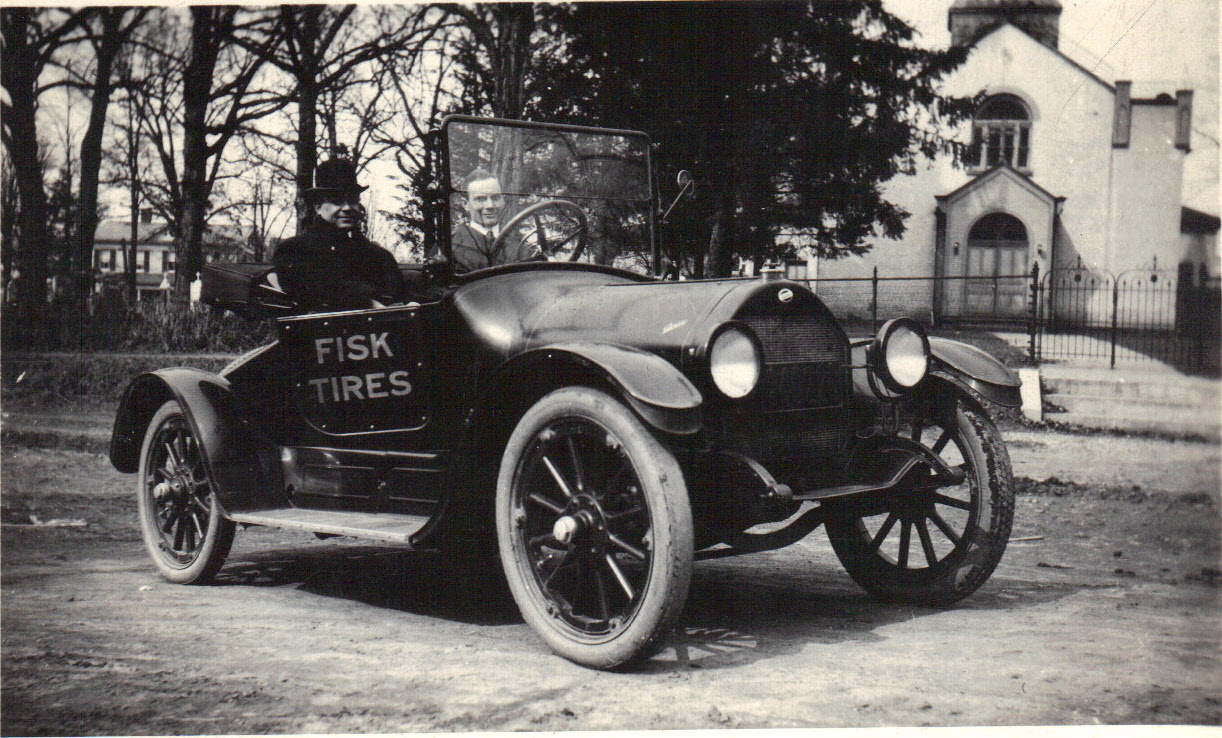
This photo was taken by Lewis Reed across from Reed Brothers Dodge, circa 1915. Old St Mary’s Church is in the background.
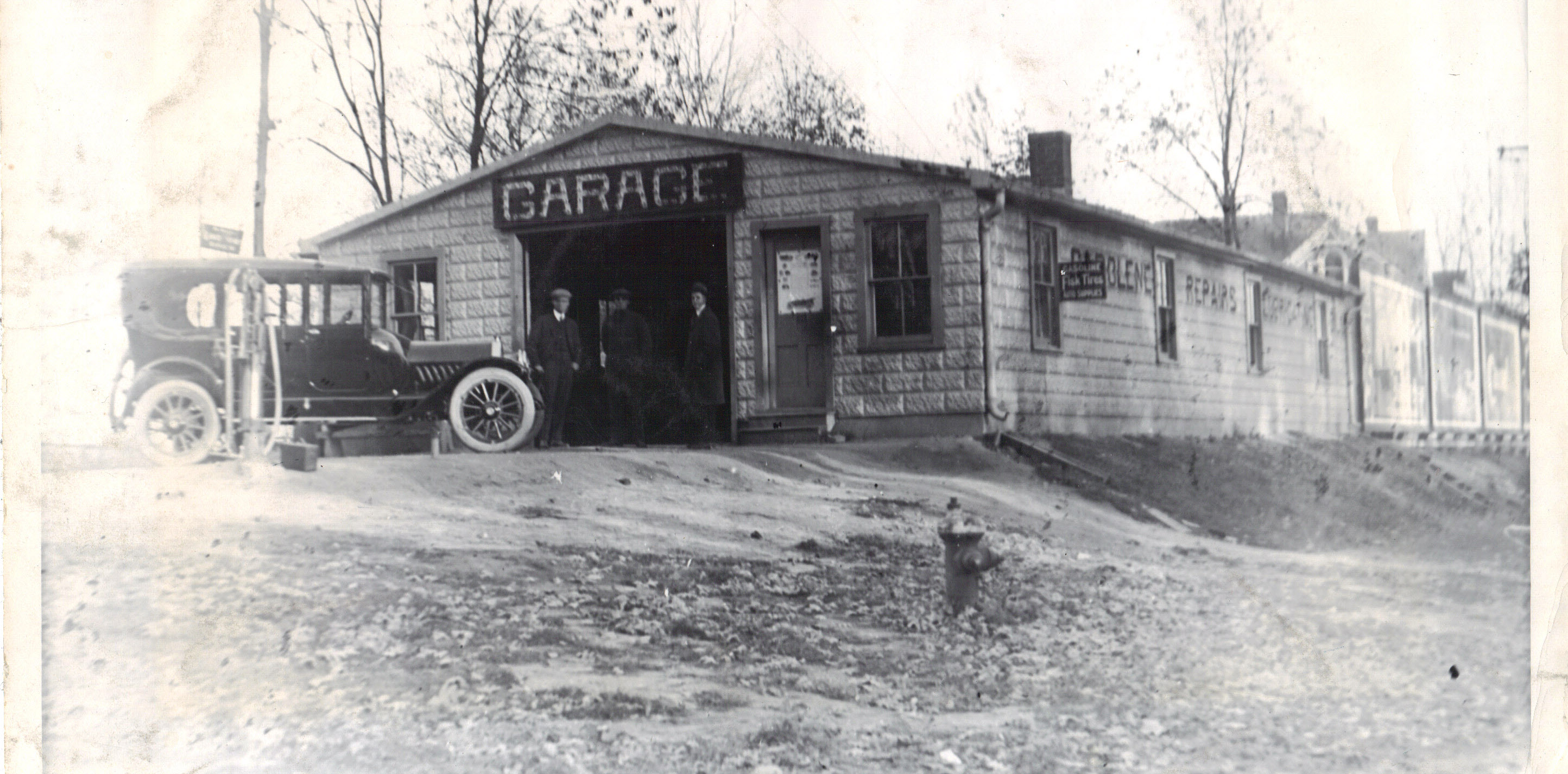
Original 1915 Rockville Garage located at the intersection of Veirs Mill Road and Rockville Pike. The small sign on the right side of the Garage advertises Gasoline, Fisk Tires and Supplies.
Below is an ad I found in the September 18, 1915 edition of Automobile Topics that gives you an idea of the cost of tires at the time, which was considerable.


Source: Chicopee (Google eBook)
Books

Related Resources


Copyright Notice

Reed Brothers Dodge History (1915-2012) by Jeanne Gartner is licensed under a Creative Commons Attribution-NonCommercial 3.0 Unported License.
 Reed Brothers Dodge History 1915 – 2012
Recent Comments