
Reed Brothers Becomes an Original Member of Chrysler
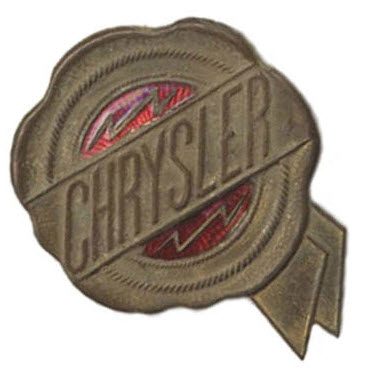
1930s Chrysler radiator “ribbon” emblem
May 28, 1928 marks an important milestone in the history of Chrysler. It was on this day in 1928 that Dodge Brothers, Horace and John Dodge, became a part of Chrysler. It was on this same date that Lewis Reed, founder of Reed Brothers Dodge in Rockville, Maryland also became an original member of the Chrysler family.
During 1920, the Dodge Brothers company lost its founding fathers. John Dodge died in January, and his younger brother Horace succumbed the following December. A New York investment banking firm paid the brothers’ widows, in a single cash payment, $146 million for the Dodge Brothers firm. Within three years, the bankers initiated negotiations, and on May 28, 1928, Walter P. Chrysler purchased Dodge Brothers, Inc. for $170 million, making it, at the time, the largest business transaction in history. When the transaction was complete, the Chrysler Corporation had grown five-fold overnight to become the third of Detroit’s “Big Three” automakers.
The first Plymouth was built in 1928 and Plymouths were sold at Reed Brothers until 1969, when the Plymouth brand was given to the Chrysler dealers.
11/14/1914: First Dodge Off Assembly Line
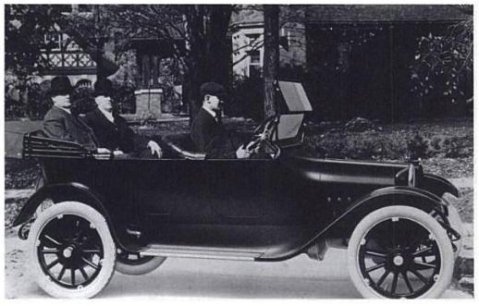
John & Horace Dodge in one of their 1914 Tourers
One hundred and two years ago on this date –November 14, 1914 — the very first Dodge car, “Old Betsy”, rolled off the assembly line. On that day, the Dodge Brothers (Horace and John) were photographed riding in the rear seat of the first car to bear their last name. It cost $785, had a 110-inch wheelbase, and was powered by an L-head 4-cylinder engine that proved so reliable it was continued until 1920 with very little modification. Total production for 1914 was a mere 249 touring cars. The following year. Dodge offered a two-passenger roadster which also sold for $785 and the plant went into full production.
According to “The Dodge Brothers: The Men, the Motor Cars, and the Legacy” by Charles K. Hyde, here’s the full story:
The widely accepted history of the initial production of early Dodge Brothers automobiles in November 1914 is at odds with much of the evidence about the earliest Dodge Brothers cars. Automotive historians have thought that the first production car, later named “Old Betsy,” came off the assembly line at the Hamtramck factory on 14 November 1914. Guy Ameel, superintendent of final assembly for Dodge Brothers since the start of automobile production, served as John and Horace’s chauffeur that day. With the brothers in the back seat, Ameel stopped the first Dodge Brothers car in front of John Dodge’s mansion on Boston Boulevard in Detroit and a photographer recorded this important moment.
“Old Betsy” was more likely an experimental prototype car assembled several months before 14 November 1914 and not a production car at all…
The Dodge Brothers began an aggressive advertising campaign to promote their new automobiles and to attract potential dealers to sell their cars. Lewis Reed was an enterprising young man who put his future in the fledgling automobile industry. In 1915 he received his franchise to sell Dodge Brothers Motor Cars from John and Horace Dodge; less than one year after “Old Betsy” rolled off the assembly line. Lewis Reed and his brother Edgar, were the first to sell Dodge cars in Montgomery County, Maryland. That made Reed Brothers the oldest Dodge dealership under the same family ownership in Maryland, and one of the oldest in the entire nation.
History of Dodge Logos
Many fascinating and mysterious logos have been used by Dodge throughout the past 100 years. Dodge used different logos depending on the model and vehicle purpose. Trucks, passenger cars and performance vehicles typically held different logos on grills. Below are the most notable emblems used by Dodge since its inception.
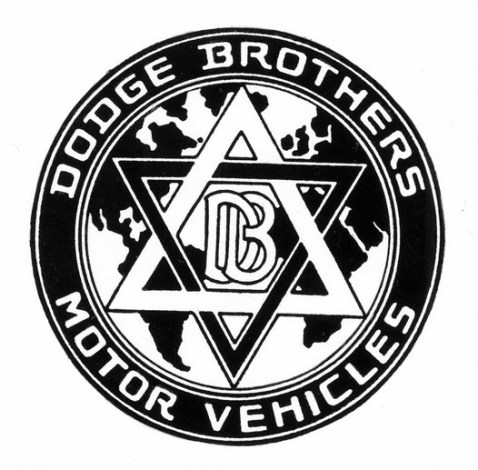
Dodge Brothers logo used from 1914 to 1927
Six-Pointed Star (1914-1938): When the Dodge brothers, Horace and John, built their first automobile in 1914, their final touch was a small enamel badge on the radiator with their company logo: a circle with two interlocking triangles forming a six-pointed star in the middle; an interlocked “DB” was at the center of the star, and the words “Dodge Brothers Motor Vehicles” encircled the outside edge. Although similar to the Star of David, the Dodge brothers were not Jewish. Although the “Brothers” was dropped from the name for trucks in 1929 and cars in 1930, the DB star remained in the cars until the 1939 models were introduced.
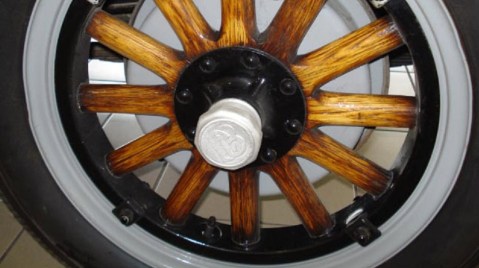
From 1928 Dodge Brothers Standard Six (intertwined “D” and “B”). Photo by Reed Brothers Dodge
 Ram: For 1932, Dodge cars adopted a leaping ram as the car’s hood ornament. Starting with the 1940 models the leaping ram became more streamlined and by 1951 only the head, complete with curving horns, remained. The 1954 model cars were the last to use the ram’s head before the rebirth in the 1980s. Dodge trucks adopted the ram as the hood ornament for the 1940 model year with the 1950 models as the last.
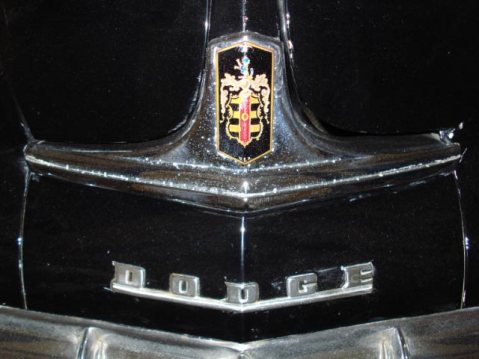
The hood of this 1946 Dodge Deluxe Fluid Drive Sedan is stamped with the Dodge coat of arms and “DODGE”. Photo by Reed Brothers Dodge
Crest: For 1941, Dodge introduced a crest, supposedly the Dodge family crest. The design had four horizontal bars broken in the middle by one vertical bar with an “O” in the center. A knight’s head appeared at the top of the emblem. Although the head would be dropped for 1955, the emblem would survive through 1957 and reappear on the 1976 Aspen. The crest would be used through to 1981 on its second time around, being replaced by the Pentastar for 1982. The knight’s head without the crest would be used for 1959.
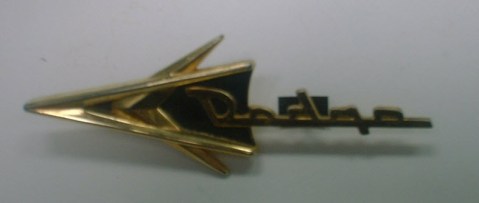
Forward Look
Forward Look (1955-1962): After the Dodge family crest was used between 1941-1957, Virgil Exner designed Dodge’s “Forward Look” logo: two overlapping boomerang shapes that suggested progress and forward motion. The design was heavily influenced by developing rocket propulsion technology and was named after the redesign campaign being used on the Chrysler Corporation’s vehicles.
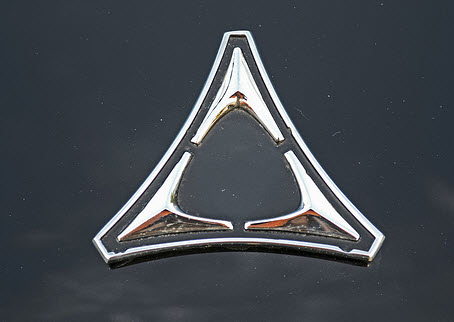
Fratzog
Fratzog (1962–1981): From 1962 to 1981, the Dodge emblem had a colorful internal label: It was called a fratzog. If you’re wondering what that word means (it sounds German, doesn’t it?), it’s totally meaningless. Three arrow shapes pointed inward to form a three-sided star. Not knowing what else to call the imaginative design, a Dodge designer made up the whimsical name.

Red Dodge Pentastar
Pentastar (1982-1992): For a decade, Dodge adopted Chrysler’s Pentastar logo on its vehicles, which had been used for corporate identification since 1962. To differentiate itself, Dodge’s Pentastar was red, while Chrysler-Plymouth’s was blue.
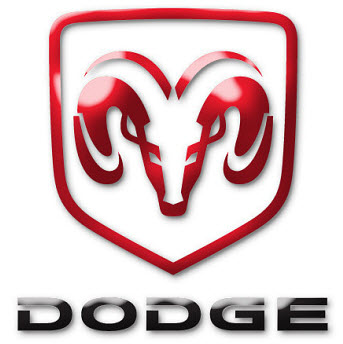
The Ram logo, used 1993–2010
Ram’s head (1993–2010): Dodge reintroduced the ram’s head hood ornament on the new 1973 Dodge Bighorn heavy duty tractor units. Gradually the ram’s head began appearing on the pickup trucks as Dodge began to refer to their trucks as Ram. The present iteration of the Ram’s-head logo appeared in 1993, standardizing on that logo in 1996 for all vehicles except the Viper, which uses the Viper’s Head.
 New Dodge logo (2010): When Ram Trucks was relaunched as its own brand in 2009 and used Dodge’s logo, Dodge was forced to replace its own. The present Dodge logo features several shades of silver and red colors. The Dodge inscription is all silver, but has a light hue at the top and dark, or rather grey, at the bottom. It stands for grandeur, dignity and sophistication. The two inclined stripes at the right side of the logo are painted red to symbolize passion and excitement, associated with the company’s vehicles. The new logo was unveiled in late May 2010.
Sources: Cartype, Wikipedia, Allpar, Dodge Brothers Club
November 14, 1914: The First Dodge Car

Horace Dodge (left rear) and John Dodge (right rear) in “Old Betsy” in front of John Dodge’s Boston Boulevard home, 14 November 1914.
One hundred and one years ago on this date –November 14, 1914 — the very first Dodge car, “Old Betsy”, rolled off the assembly line. On that day, the Dodge Brothers (Horace and John) were photographed riding in the rear seat of the first car to bear their last name. It cost $785, had a 110-inch wheelbase, and was powered by an L-head 4-cylinder engine that proved so reliable it was continued until 1920 with very little modification. Total production for 1914 was a mere 249 touring cars. The following year. Dodge offered a two-passenger roadster which also sold for $785 and the plant went into full production.
According to “The Dodge Brothers: The Men, the Motor Cars, and the Legacy” by Charles K. Hyde, here’s the full story:
The widely accepted history of the initial production of early Dodge Brothers automobiles in November 1914 is at odds with much of the evidence about the earliest Dodge Brothers cars. Automotive historians have thought that the first production car, later named “Old Betsy,” came off the assembly line at the Hamtramck factory on 14 November 1914. Guy Ameel, superintendent of final assembly for Dodge Brothers since the start of automobile production, served as John and Horace’s chauffeur that day. With the brothers in the back seat, Ameel stopped the first Dodge Brothers car in front of John Dodge’s mansion on Boston Boulevard in Detroit and a photographer recorded this important moment.
“Old Betsy” was more likely an experimental prototype car assembled several months before 14 November 1914 and not a production car at all…
The Dodge Brothers began an aggressive advertising campaign to promote their new automobiles and to attract potential dealers to sell their cars. Few people jumped onto the Dodge Brothers bandwagon earlier than Lewis Reed, and not many have lasted longer. Lewis Reed was an enterprising young man who put his future in the fledgling automobile industry. In 1915 he received his franchise to sell Dodge Brothers Motor Cars from John and Horace Dodge; less than one year after “Old Betsy” rolled off the assembly line. Lewis Reed and his brother Edgar, were the first to sell Dodge cars in Montgomery County, Maryland. That made Reed Brothers the oldest Dodge dealership under the same family ownership in Maryland, and one of the oldest in the entire nation.
The Beginning of Dodge | Chrysler Historical Video
Source: “The Dodge Brothers: The Men, the Motor Cars, and the Legacy“
Graham Brothers Trucks
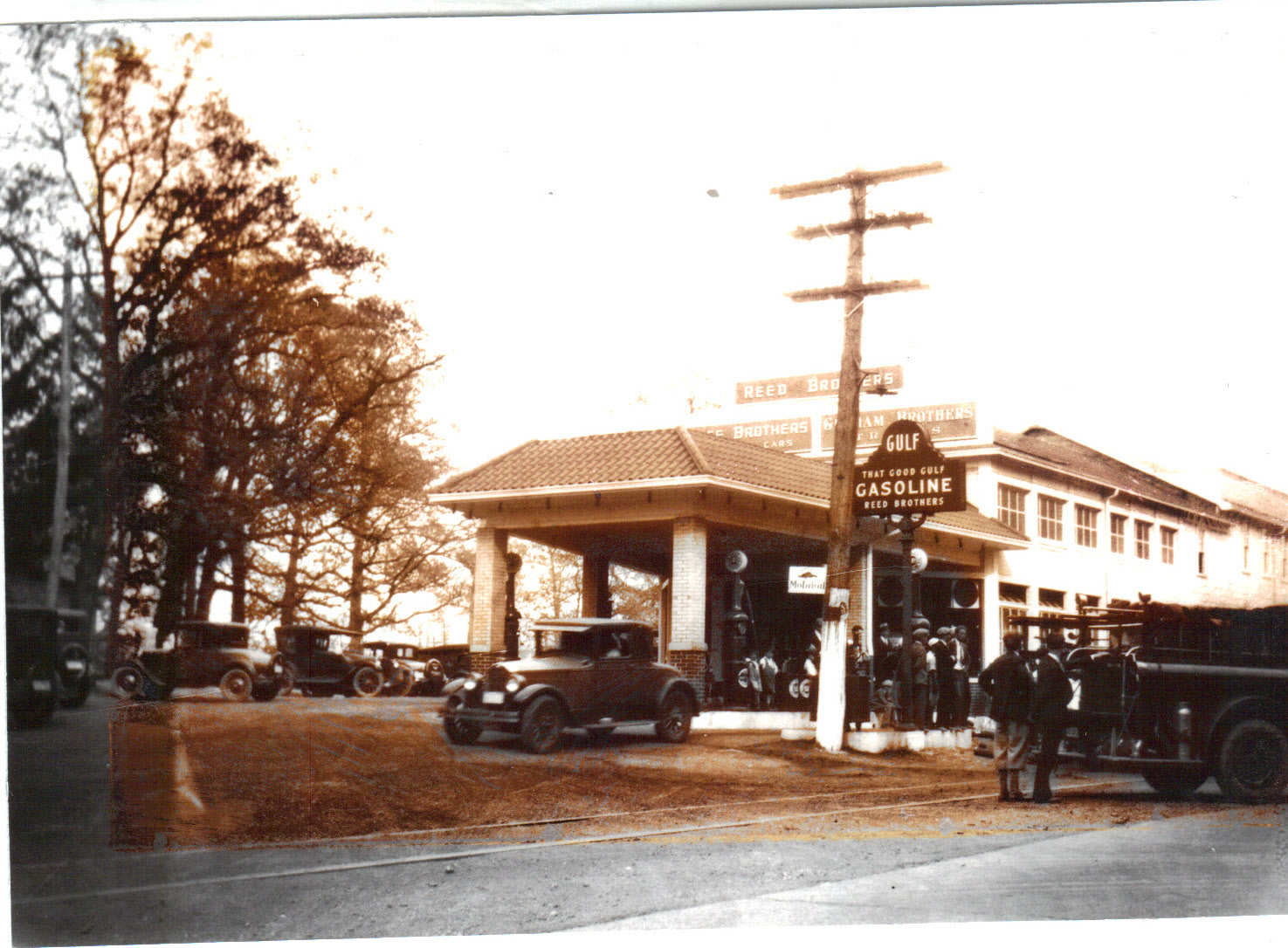
In the 1920s Reed Brothers sold Dodge Brothers Motor Cars and Graham Brothers Trucks
History fascinates me, and something about the development of the Dodge pickup truck fascinates me even more. It’s a story inextricably linked to our country’s history like baseball and apple pie.
After the introduction of mass-produced automobiles, people started to modify their vehicles for enhanced utility. These people stripped off the rear bodywork and mounted open-topped boxes that resembled the first step towards the modern pickup truck.
Dodge trucks actually began with three brothers named Graham. In reality, it is the story of two companies – the Dodge Brothers Company and the Graham Brothers Company. In 1916, seeing the need for a good, dependable truck to serve people such as themselves, the Graham brothers entered the truck body business. By 1919, they had produced the “Truck-builder,” which is a basic platform from which a customer could spec a truck according to his or her needs. The Truck Builder was essentially a truck conversion that began with a passenger car. The Truck Builder worked this way: The new-car dealer would sell a new car to a customer, then suggest to the buyer that his old car could be converted into a truck.
In 1921, Dodge Brothers began to market Graham Brothers medium-duty trucks through its dealerships; in turn, every Graham vehicle utilized a Dodge engine. This partnership provided Dodge dealers with a full line of trucks to sell in addition to the highly regarded Dodge passenger cars, and the resulting sales increases prompted Dodge to buy the Graham Brothers Company.
The Dodge trucks would carry the Graham Brothers nameplate until 1928 with a few of the designs lasting as long as the 1930s.
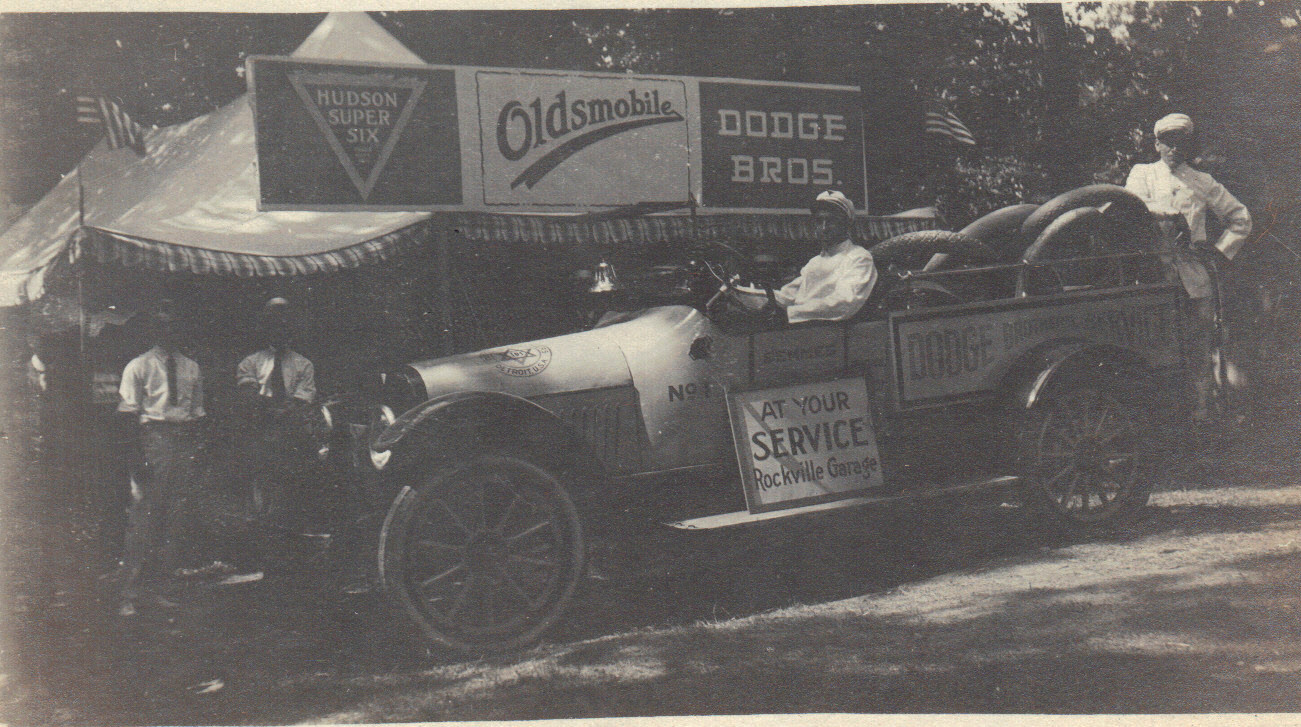
Rockville Garage, 1918 – Hudson Super Six, Oldsmobile, and Dodge Brothers Motor Cars on display at Rockville Fairgrounds. Lewis Reed is seated in the drivers seat of the Rockville Garage Graham Brothers Service Truck.
Source: Allpar
Books

Related Resources


Copyright Notice

Reed Brothers Dodge History (1915-2012) by Jeanne Gartner is licensed under a Creative Commons Attribution-NonCommercial 3.0 Unported License.
 Reed Brothers Dodge History 1915 – 2012
Recent Comments