
May 28, 1928 – Chrysler Buys the Dodge Brothers Company

1928 Chrysler logo
May 28, 1928 marks an important milestone in the history of Chrysler. It was on this day in 1928 that Dodge Brothers, Inc. became a part of Chrysler. It was on this same date that Lewis Reed, founder of Reed Brothers Dodge in Rockville, Maryland also became an original member of the Chrysler family.
During 1920, the Dodge Brothers company lost its founding fathers. John Dodge died in January, and his younger brother Horace succumbed the following December. A New York investment banking firm paid the brothers’ widows, in a single cash payment, $146 million for the Dodge Brothers firm. Within three years, the bankers initiated negotiations, and on May 28, 1928, Walter P. Chrysler purchased Dodge Brothers, Inc. for $170 million, making it, at the time, the largest business transaction in history. When the transaction was complete, the Chrysler Corporation had grown five-fold overnight to become the third of Detroit’s “Big Three” automakers.
The first Plymouth was built in 1928 and Plymouths were sold at Reed Brothers until 1969, when the Plymouth brand was given to the Chrysler dealers.
September 7, 1979: The First Chrysler “Bailout”
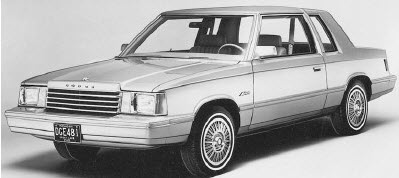
In the early 1980s, the Dodges Aries-K inspired Chrysler’s renaissance.
In 1979, Chrysler was at death’s door and petitioned the U.S. government for $1.5 billion in loan guarantees to avoid bankruptcy. It made gas guzzlers that nobody wanted to buy and it asked for $1.5 billion to keep itself going until a fleet of more fuel efficient cars could take up the sales slack. It was by far the largest government bailout in US history. On September 7, 1979 Chrysler formally petitioned the U.S. government for the loans, and on December 20, 1979 Congress ratified the appropriation in the “Chrysler Corporation Loan Guarantee Act,” which President Carter subsequently signed into law. It was an extremely painful period for Chrysler, but Reed Brothers survived the first Chrysler Bailout and resurgence under Lee Iacocca.
The K-Cars, the Dodge Aries and Plymouth Reliant, were, quite literally, the cars that saved Chrysler from the abyss in 1980. Their only real savior other than the K-Car was a government bailout. Though it came after bankruptcy, they managed to save the company with it by 1983. The K-Cars were inexpensive, reliable, and they delivered economical transportation for 6 people at an affordable price. Sales from the K-Car enabled Chrysler to emerge from bankruptcy and evolve into a profitable company.
Reeling from the combined effects of a recession and a global energy crisis, in 1979 Chrysler was forced to seek government loan guarantees. Meanwhile, Chrysler chairman Lee Iacocca took the company’s case straight to the people in a series of television commercials. Looking straight into the camera, the legendary auto executive pitched the company’s new K-cars with total conviction, asserting, “America, if you can find a better car, buy it.”
Buyers took up Iacocca’s challenge, flocking to the showrooms to buy their own K-cars. Nearly one million Aries were sold (and another million Reliants), allowing Chrysler to pay off its loans a full seven years early. Soon Iacocca was back on the airwaves with another ad campaign. This one was called “The Pride Is Back.”
These models were soon followed by what would become a home run product for Chrysler: minivans.
Nearly thirty years later, in 2008, Chrysler would receive billions in a new bailout from the U.S. government in the aftermath of the financial crisis that decimated automotive sales over the following few years. In 2009, Chrysler files for Chapter 11 bankruptcy protection. On May 14, 2009, Chrysler left 789 dealerships, about a quarter of its dealer base, out in the cold by rejecting their franchise agreements and giving them about a month to sell all their remaining new cars, factory parts and service equipment.
Whether a franchise is run by a second- or third-generation dealer, or is older than even Chrysler itself, didn’t seem to matter when Chrysler decided to cut dealerships ranks during their 2009 bankruptcy process. After almost 95 years selling Dodges, Reed Brothers was one of the 15 dealerships in Maryland and 789 dealerships nationwide notified by Chrysler that their franchise agreement would not be renewed. Chrysler was acquired in total by Fiat in 2014.
Source: Chrysler
Chrysler Buys Dodge
1928 Chrysler logo
May 28, 1928 marks an important milestone in the history of Chrysler. It was on this day in 1928 that Dodge Brothers, Horace and John Dodge, became a part of Chrysler. It was on this same date that Lewis Reed, founder of Reed Brothers Dodge in Rockville, Maryland also became an original member of the Chrysler family.
During 1920, the Dodge Brothers company lost its founding fathers. John Dodge died in January, and his younger brother Horace succumbed the following December. A New York investment banking firm paid the brothers’ widows, in a single cash payment, $146 million for the Dodge Brothers firm. Within three years, the bankers initiated negotiations, and on May 28, 1928, Walter P. Chrysler purchased Dodge Brothers, Inc. for $170 million, making it, at the time, the largest business transaction in history. When the transaction was complete, the Chrysler Corporation had grown five-fold overnight to become the third of Detroit’s “Big Three” automakers.
The first Plymouth was built in 1928 and Plymouths were sold at Reed Brothers until 1969, when the Plymouth brand was given to the Chrysler dealers.
May 14, 2009 Timeline: How Chrysler Crashed
On May 14, 2009, Chrysler left 789 dealerships, about a quarter of its dealer base, out in the cold by rejecting their franchise agreements and giving them about a month to sell all their remaining new cars, factory parts and service equipment. After almost 95 years selling Dodges, Reed Brothers was one of the 15 dealerships in Maryland and 789 dealerships nationwide notified by Chrysler that their franchise agreement would not be renewed.
Here is a timeline on how Chrysler crashed:
1920s
Walter P Chrysler purchased the Dodge company and swiftly built a portfolio of auto brands including Plymouth and Chrysler. Within five years he was competing with Ford and General Motors.
1970s
After the 1973 energy crisis Chrysler’s range of big gas-guzzling cars and a couple of recalls left it with big problems. The legendary Lee Iacocca was hired in 1978. With the help of government loans, the former Ford executive rescued the firm and rebuilt it during the 1980s, buying Jeep along the way.
1990s
Iaccoca retired in 1992. In 1998 Chrysler merges with Daimler-Benz in a $37bn deal to become DaimlerChrysler, based in Germany. It was supposed to be a merger of equals, but Daimler was in the driving seat and Chrysler swiftly fell into losses.
2007
February 13,000 job cuts announced. Daimler says its open to offers for Chrysler.
April Activist investor Kirk Kerkorian tables a bid for Chrysler.
May Daimler sells 80% of Chrysler to private equity group Cerberus for $7.4B. The German group retains a 20% stake.
2008
October General Motors reported to be in merger talks with Chrysler. Nissan considers bidding for 20% of Chrysler to add to its alliance with Renault. Chrysler announces 5,000 job losses. Daimler says its 20% stake is worthless.
November Chrysler boss Bob Nardelli says the firm needs merger or bailout to survive. Sales down 35% in a year. GM asks US treasury department for $10bn so that it and Chrysler can merge. Cerberus demands $7B from Daimler to cover post-acquisition losses. German group says claims are baseless.
December The Senate refuses the bail-out. Chrysler says it is short of cash and likely to file for bankruptcy. All plants to close for a month. President George Bush finally approves a $13B rescue loan for the big three US carmakers.
2009
January US government provides $4B cash. Chrysler reported to be in talks to sell assets, maybe the Jeep brand, to Renault. Fiat proposes taking 35% stake in return for access to technology and overseas distribution networks
March Nardelli backs Fiat plan to save jobs and asks government for another $5B. Obama gives Chrysler 30 days to do a deal with Fiat – or go bankrupt.
April Chrysler’s banks talk to US government about debt for equity swap
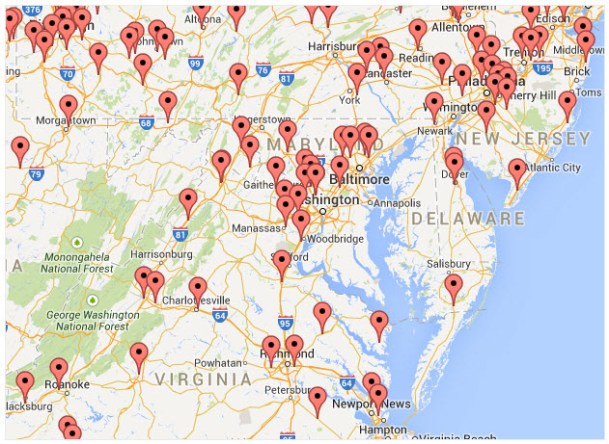
Maryland Dealers shut down
Via: theguardian
Books

Related Resources


Copyright Notice

Reed Brothers Dodge History (1915-2012) by Jeanne Gartner is licensed under a Creative Commons Attribution-NonCommercial 3.0 Unported License.
 Reed Brothers Dodge History 1915 – 2012
Recent Comments